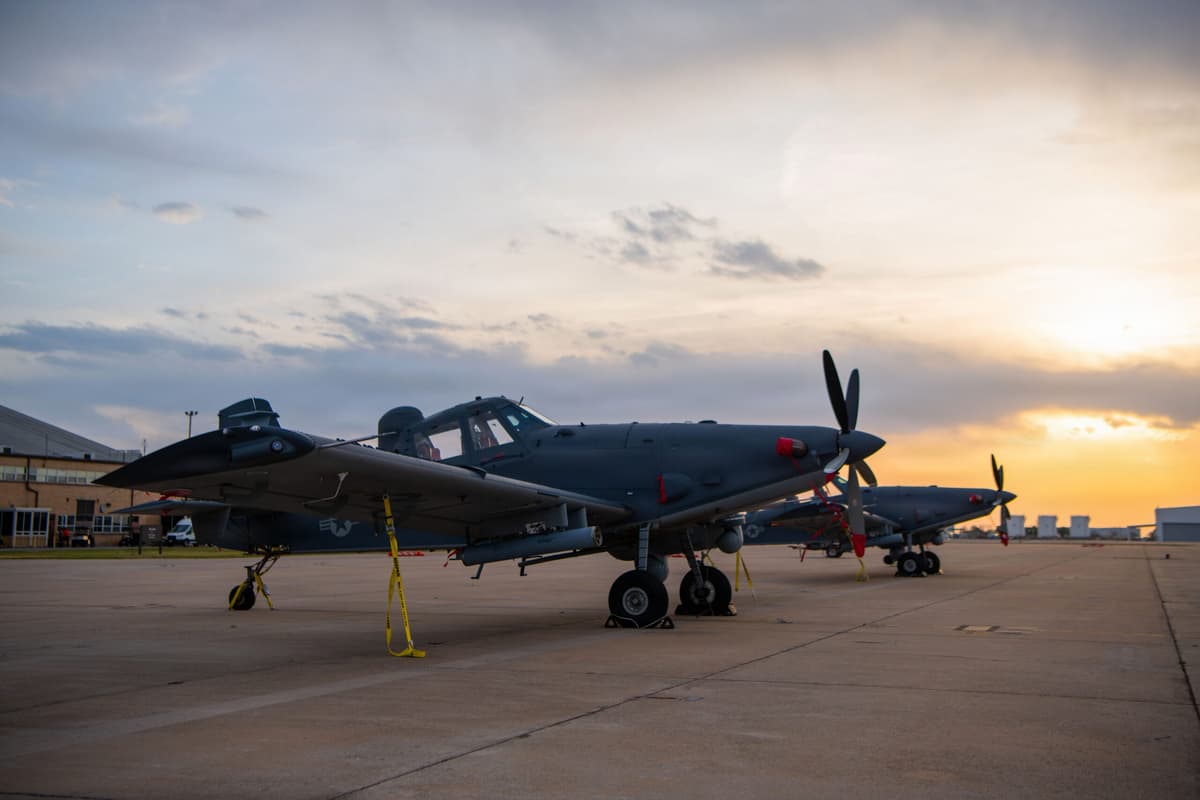
AFSOC’s Skyraider Demos New Sensors, Gains Favor in Congress
Companies Mentioned
Why It Matters
Increased funding and demonstrated capabilities could revive a stalled special‑operations platform, expanding U.S. ISR and strike options while opening export opportunities that sustain domestic aerospace jobs.
Key Takeaways
- •House Armed Services Committee recommends quadrupling Skyraider funding to $280 M.
- •AFSOC still seeks 75 OA‑1K airframes despite budget cuts.
- •L3Harris demonstrated signals‑intelligence pod integration on the Skyraider.
- •Red Wolf missile and Green Wolf electronic weapon integrated for testing.
- •L3Harris courting three+ foreign customers to sustain Waco production line.
Pulse Analysis
The OA‑1K Skyraider II, a heavily modified Air Tractor crop‑duster, has re‑emerged as a focal point for U.S. special‑operations aviation after L3Harris demonstrated a new signals‑intelligence sensor suite and the ability to carry low‑cost cruise missiles and electronic‑attack payloads. The program, initially selected by U.S. Special Operations Command in 2022 for its Armed Overwatch initiative, stalled at 53 aircraft due to budget pressures and competition from unmanned systems. The House Armed Services Committee’s draft 2027 National Defense Authorization Act now proposes a four‑fold increase in funding, from $59.9 million to about $280 million, a clear signal that lawmakers view the platform as a valuable, cost‑effective ISR and strike asset for low‑intensity environments.
Technical upgrades are central to the Skyraider’s renewed appeal. L3Harris has integrated a dedicated signals‑intelligence pod, augmenting the aircraft’s existing electro‑optical infrared sensors, and has successfully demonstrated the attachment of the Red Wolf cruise missile and the Green Wolf electronic‑attack weapon. While neither weapon has yet flown from the airframe, the company asserts that flight testing would be straightforward. These capabilities expand the OA‑1K’s mission set beyond traditional counter‑insurgency scouting to include precision strike, electronic warfare, and high‑fidelity intelligence collection, potentially filling capability gaps where larger, high‑cost platforms are unnecessary.
Beyond domestic demand, L3Harris is actively courting international partners, with discussions underway with more than three prospective foreign customers. Export sales could provide a steady flow of orders to keep the Waco, Texas production line running at scale, offsetting the reduced U.S. procurement. A robust export market would also reinforce interoperability with allied forces and generate additional revenue streams for the U.S. defense industrial base. As Congress leans toward increased investment, the Skyraider could become a cornerstone of affordable, versatile airpower for both U.S. and allied special‑operations units.
AFSOC’s Skyraider Demos New Sensors, Gains Favor in Congress
Comments
Want to join the conversation?
Loading comments...