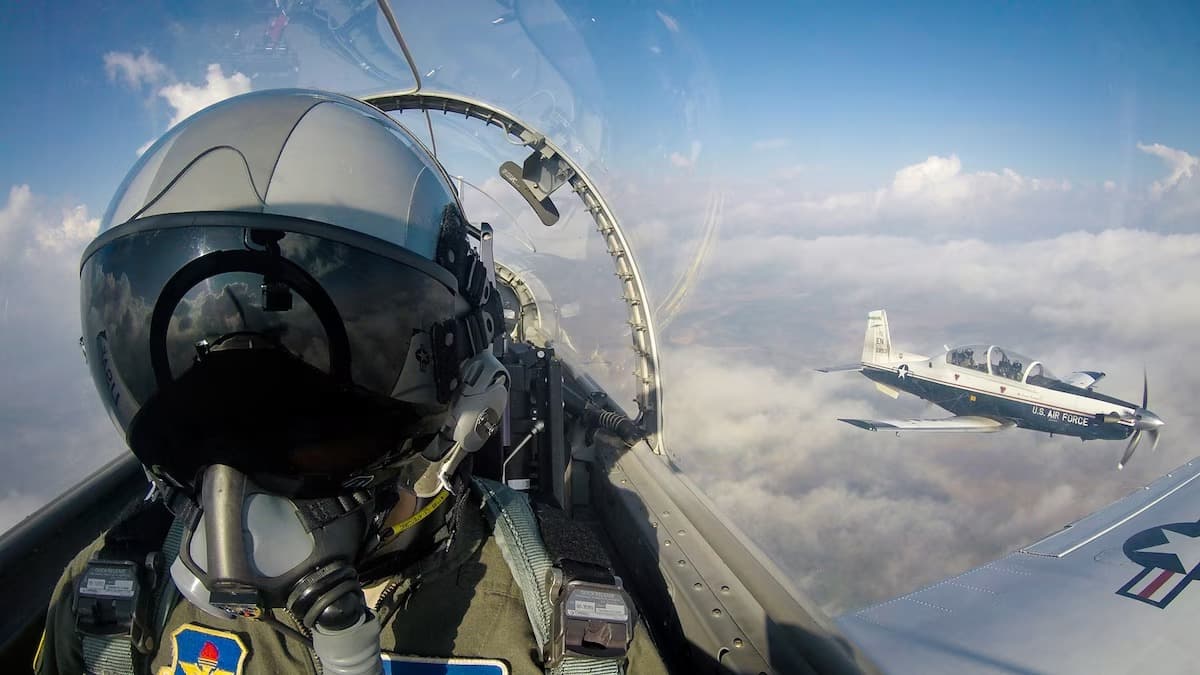
After F-35 “Stealth Shock” & Multiple F-15E Losses in Iran War, U.S. Seeks OMEN to Boost Aircrew Awareness
Why It Matters
Integrating a real‑time COP could dramatically improve aircrew survivability and reduce costly aircraft losses, while opening a multi‑billion‑dollar procurement pipeline for the defense sector.
Key Takeaways
- •US lost eight aircraft, including first F‑35 shot down, in a month
- •DIU requests OMEN, an open‑architecture engine for real‑time common picture
- •Prototype moving‑map app aims to prevent friendly‑fire and terrain mishaps
- •Success could trigger multi‑billion‑dollar follow‑on production contracts
- •Current platforms rely on outdated maps and fragmented datalinks
Pulse Analysis
The Iran war has exposed a stark vulnerability in U.S. air operations: a fragmented battlefield picture that leaves pilots blind to friendly positions, emerging threats, and rapidly changing terrain. Over the past month, eight high‑value aircraft—including an F‑35, four F‑15Es, an A‑10, a KC‑135 tanker, and two MC‑130J transports—have been lost, while more than 15 MQ‑9 Reapers have vanished. These losses, compounded by friendly‑fire incidents in Kuwaiti airspace, underscore the urgent need for an integrated, real‑time situational awareness solution that can operate even when communications are degraded.
In response, the Defense Innovation Unit has issued a call for an open‑architecture Modular Mission Engine (OMEN) that will serve as a common software backbone for a suite of mission‑critical applications. The initial deliverable is a tactical moving‑map tool that fuses data from blue‑force tracking, threat sensors, weather feeds, and aeronautical databases into a single, high‑resolution cockpit display. By leveraging software‑defined radios, on‑board compute, and a language‑agnostic abstraction layer, OMEN aims to provide resilient, cross‑platform functionality for legacy tankers, transports, and next‑generation fighters alike, even in contested, intermittent‑communication environments.
If the prototype meets the DIU’s stringent performance and security criteria, it could unlock a follow‑on production contract worth billions, reshaping the market for open‑mission systems. Beyond the immediate cost savings from reduced aircraft attrition, a successful OMEN deployment would set a new standard for interoperable, data‑centric combat avionics, prompting allied forces to adopt similar architectures. The initiative thus represents both a tactical fix for current operational gaps and a strategic lever for the U.S. defense industrial base to accelerate innovation in modular, software‑driven warfare capabilities.
After F-35 “Stealth Shock” & Multiple F-15E Losses in Iran War, U.S. Seeks OMEN to Boost Aircrew Awareness
Comments
Want to join the conversation?
Loading comments...