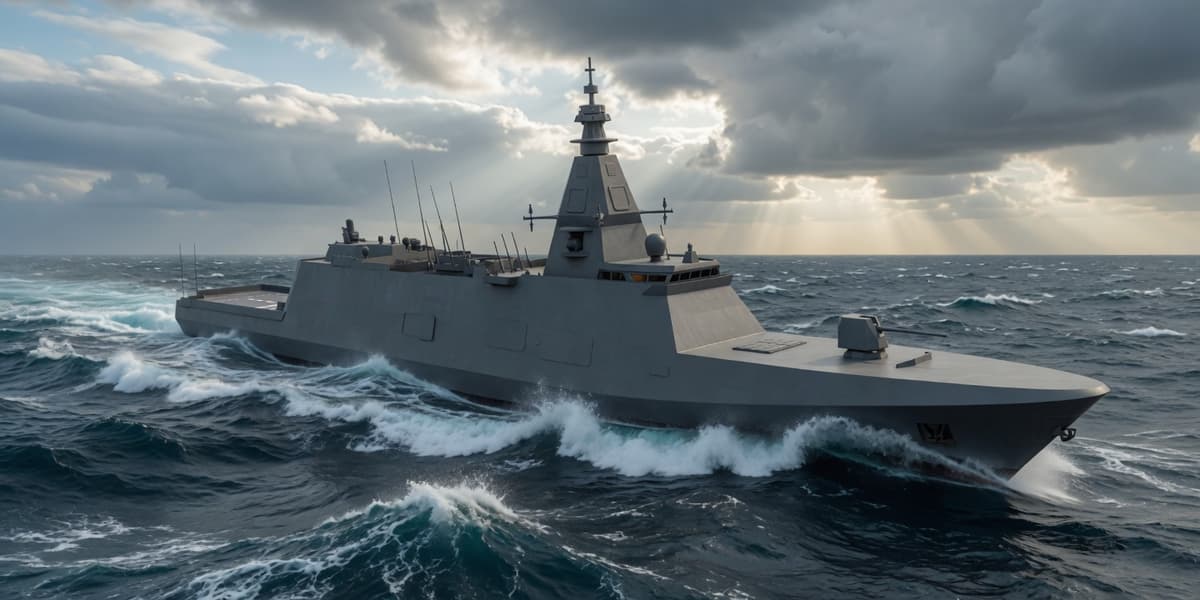
After Historic $7B Australia-Japan Warship Deal, New Zealand Shows Interest in Upgraded Mogami-Class Frigates?
Why It Matters
Securing the frigates strengthens regional maritime deterrence against China and marks Japan’s emergence as a major defense exporter, while New Zealand’s potential purchase could create a shared platform that lowers costs and boosts allied interoperability.
Key Takeaways
- •Australia signs US$7 bn deal for 11 upgraded Mogami frigates.
- •First three ships built in Japan, eight assembled in Perth by 2029.
- •New Zealand eyes the frigates to replace aging ANZAC class by 2030s.
- •Japanese export rule change could allow sales beyond five non‑lethal categories.
- •Integration of Japan’s proprietary combat system poses technical risk for NZ.
Pulse Analysis
The A$10 billion agreement between Australia and Japan signals a watershed moment for Tokyo’s defense industry. After lifting its post‑war export ban in 2014, Japan has struggled to find large‑scale buyers; the Mogami‑class frigate contract not only showcases the country’s advanced shipbuilding capabilities but also underscores a strategic pivot toward deeper security ties with Indo‑Pacific partners. By delivering the first three vessels from Japanese yards and completing the remainder at Austal’s Perth facility, the deal blends domestic production with local industry participation, creating a template for future joint projects.
For New Zealand, the prospect of acquiring the upgraded Mogami‑class addresses several pressing naval challenges. The RNZN must replace its ANZAC‑class frigates, which are approaching the end of their service lives, while managing a vast exclusive economic zone of roughly 4 million km². The Mogami’s high degree of automation reduces crew requirements by half, easing recruitment pressures, and its multi‑mission suite—featuring advanced sonar, a 32‑cell vertical launch system, and support for MH‑60R Seahawk helicopters—offers a versatile platform for anti‑submarine warfare, mine countermeasures, and air defence. These capabilities align with Wellington’s goal of bolstering maritime security and ensuring interoperability with the Royal Australian Navy.
Nevertheless, the path to a NZ purchase is not without hurdles. Japan’s proprietary combat management system differs from the RNZN’s Canadian‑made CMS‑330, raising integration risks that could drive cost overruns and schedule delays, as seen in Australia’s phased approach to system adoption. Moreover, upcoming revisions to Japan’s export regulations—potentially lifting the five‑category limitation—must be navigated carefully to meet allied procurement standards. If these challenges are managed, a shared frigate design could generate economies of scale, streamline training, and cement a trilateral security architecture that counters China’s growing maritime assertiveness across the Pacific.
After Historic $7B Australia-Japan Warship Deal, New Zealand Shows Interest in Upgraded Mogami-Class Frigates?
Comments
Want to join the conversation?
Loading comments...