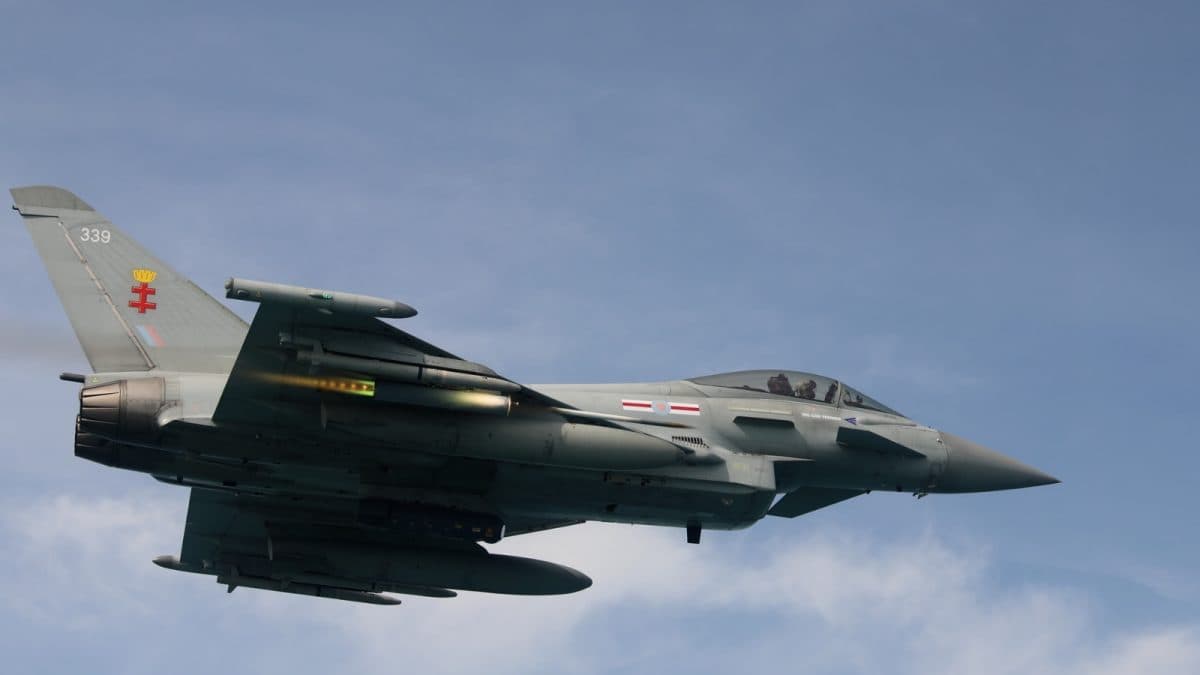
After Iran War, All Eurofighter Users Eye Low-Cost ‘Drone Killer’ Capability After RAF Typhoon Success
Companies Mentioned

Why It Matters
The move signals a shift toward cost‑effective, high‑volume drone‑defeat solutions, reshaping Eurofighter fleet economics and enhancing sustainability in prolonged conflicts.
Key Takeaways
- •RAF Typhoons fielded laser‑guided APKWS rockets in May 2026
- •APKWS rockets cost $20‑30k, vs $2.5‑3 M Meteor missiles
- •All 10 Eurofighter operators show strong interest in the system
- •Pods hold seven rockets, giving dozens of engagements per sortie
- •Low‑cost solution counters mass drone swarms, preserving expensive missiles
Pulse Analysis
The RAF’s swift adoption of the Advanced Precision Kill Weapon System (APKWS) on Eurofighter Typhoons reflects a broader industry pivot toward affordable, precision‑guided munitions for counter‑drone operations. Traditional air‑to‑air missiles like the Meteor, priced at $2.5‑$3 million each, are economically mismatched against inexpensive threats such as the Shahed‑136 drone, which costs $35,000‑$50,000. By leveraging a laser‑guided 70 mm rocket that costs only $20,000‑$30,000 per engagement, operators can preserve high‑value missiles for more demanding targets while still maintaining credible air‑defense coverage.
Eurofighter operators—including the UK, Germany, Italy, Spain, Austria, Kuwait, Oman, Qatar, and Saudi Arabia—are now eyeing the APKWS as a force multiplier. The system’s compatibility with existing Hydra 70 rocket pods means minimal airframe modification and rapid fielding, a crucial advantage in fast‑moving conflict zones like the Middle East and Ukraine. Each pod holds seven rockets, and multiple pods can be mounted, granting a single Typhoon the capacity for dozens of low‑cost engagements per sortie. This depth of firepower reduces the logistical burden of frequent re‑arming and enhances sortie sustainability during protracted drone‑saturation campaigns.
Beyond the immediate tactical benefits, the APKWS integration signals a shift in defense procurement philosophy. Nations are increasingly prioritizing modular, low‑cost solutions that can be scaled across legacy platforms, mitigating budget pressures while addressing the evolving drone threat landscape. As more Eurofighter users express interest, BAE Systems may see a surge in production, potentially driving further price reductions and fostering a new market segment for affordable precision weapons. This trend could reshape future fighter jet armament strategies, emphasizing versatility and cost‑effectiveness over sheer firepower.
After Iran War, All Eurofighter Users Eye Low-Cost ‘Drone Killer’ Capability After RAF Typhoon Success
Comments
Want to join the conversation?
Loading comments...