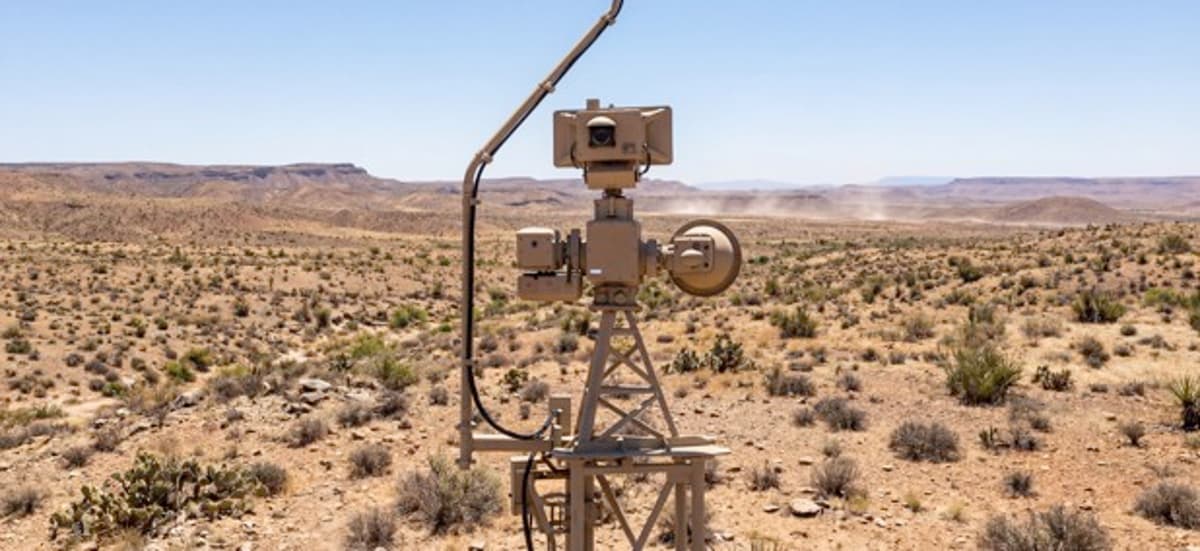
AI-Enabled Watch Towers Set to Proliferate Along the Border
•March 11, 2026
0
Why It Matters
AI‑driven towers promise faster threat detection while cutting personnel and fuel costs, reshaping how agencies secure the nation’s borders. Their effectiveness will influence future federal investment in autonomous surveillance.
Key Takeaways
- •GDIT to upgrade 148 border towers with AI
- •New towers use solar power, reducing diesel logistics
- •On‑board AI performs edge image recognition, cutting bandwidth
- •Satellite links replace low‑bandwidth microwave connections
- •AI models trained on decades of border terrain data
Pulse Analysis
The rollout of AI‑enabled surveillance towers marks a turning point in U.S. border security strategy. By embedding high‑resolution cameras, radar, LIDAR and solar arrays into a modular platform, GDIT reduces operational footprints and eliminates the costly diesel‑refuel cycle that has long plagued remote outposts. Edge computing allows the system to analyze video in real time, flagging potential incursions before they reach agents, while satellite links provide the bandwidth needed for rapid data transmission without relying on line‑of‑sight microwave relays.
Beyond the hardware, the true value lies in the training of machine‑learning models on two decades of terrain‑specific data. These models can differentiate between livestock, civilians and armed individuals, dramatically lowering false‑positive alerts that have historically overwhelmed border patrol analysts. The autonomous capability aligns with Customs and Border Protection’s 2022 strategy to reduce human monitoring burdens, potentially freeing agents for higher‑value tasks such as interdiction and community engagement.
However, technology alone will not resolve the broader policy debate. Studies from RAND and Political Geography show that static towers can shift migrant routes, sometimes increasing environmental costs. The AI upgrades aim to close those gaps, yet policymakers must decide how to act on the richer intelligence stream. As funding for border tech continues to enjoy bipartisan support, the effectiveness of GDIT’s towers will likely set the benchmark for future autonomous surveillance contracts across other critical infrastructure sectors.
AI-enabled watch towers set to proliferate along the border
0
Comments
Want to join the conversation?
Loading comments...