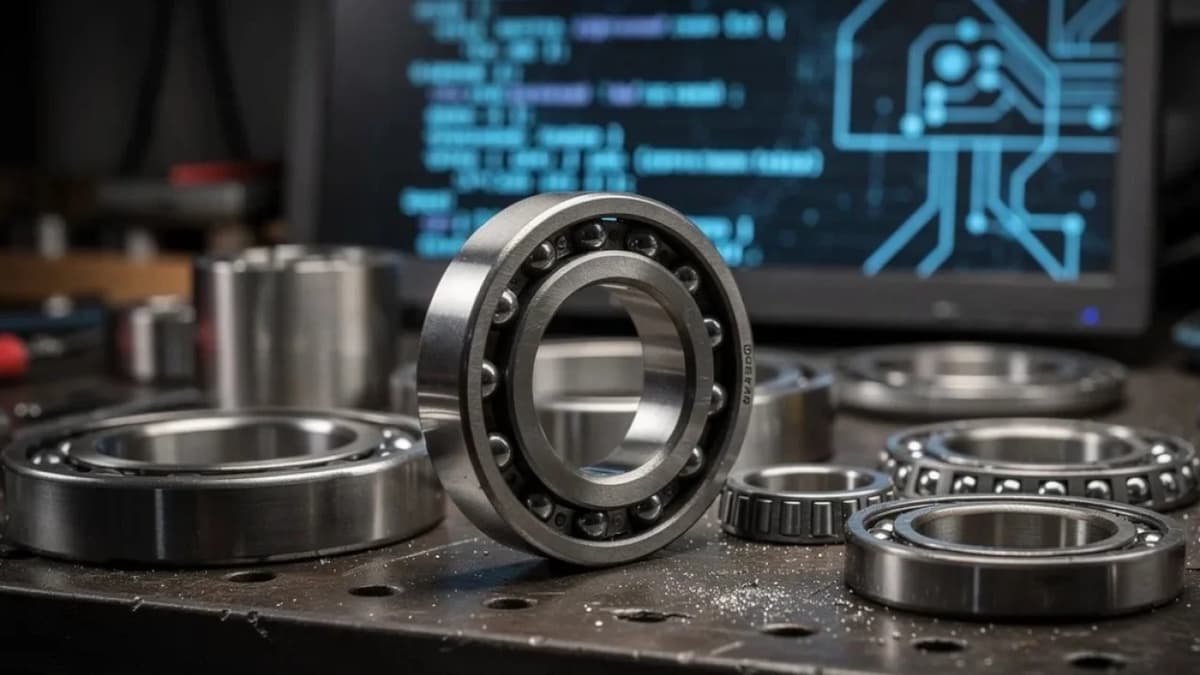
AI Is Massively Increasing China’s New Weapon Development Speed: Scientists
Companies Mentioned
Why It Matters
Embedding AI in core components speeds prototype iteration and lowers production costs, giving China a strategic edge in defense manufacturing and overall military readiness.
Key Takeaways
- •ChatBearing cuts bearing design time from hours to under three minutes
- •AI optimization reduces bearing weight by over 4 percent
- •System outperforms top LLMs by up to 43.6 percent on design tasks
- •AI‑driven design could accelerate Chinese weapons development and production
- •Classified AI infrastructure required before use in sensitive defense projects
Pulse Analysis
The recent study in Acta Armamentarii reveals that researchers at Chongqing University have built ChatBearing, an AI‑powered design agent that merges large‑language models with engineering calculators and a 4,500‑record bearing database. The system can autonomously handle requirement analysis, load calculations, selection, life prediction, strength verification and report generation. In tests on helicopter, wind‑turbine and EV gearboxes, ChatBearing slashed design cycles from two‑three hours to under three minutes and trimmed bearing weight by more than 4 percent. Its scores beat leading models such as Alibaba’s Qwen3‑235B‑A22B by up to 43.6 percent on engineering tasks.
For China’s defense establishment, the breakthrough matters less for the component itself than for the speed it can inject into weapons development. Bearings are critical to turbines, missiles, naval propulsion and drone motors, so faster, lighter designs translate into quicker prototype iteration and lower production costs across the entire military supply chain. Coupled with the country’s massive industrial base, AI‑enhanced design could shift China’s R&D paradigm from simple digitalization to true intelligence, narrowing the gap with the United States, where AI discussions remain focused on autonomous platforms and battlefield analytics.
Nevertheless, the path to operational deployment faces significant hurdles. China’s defense networks are air‑gapped, and experts warn that a secure, classified AI ecosystem is still missing, limiting current experiments to non‑sensitive research environments. Building such an infrastructure will require dedicated hardware, data segregation and strict access controls, echoing similar challenges faced by U.S. and NATO partners. As the Ukraine war underscores the strategic value of industrial endurance, the race to embed AI in core manufacturing could become a decisive factor in future great‑power competition.
AI is massively increasing China’s new weapon development speed: scientists
Comments
Want to join the conversation?
Loading comments...