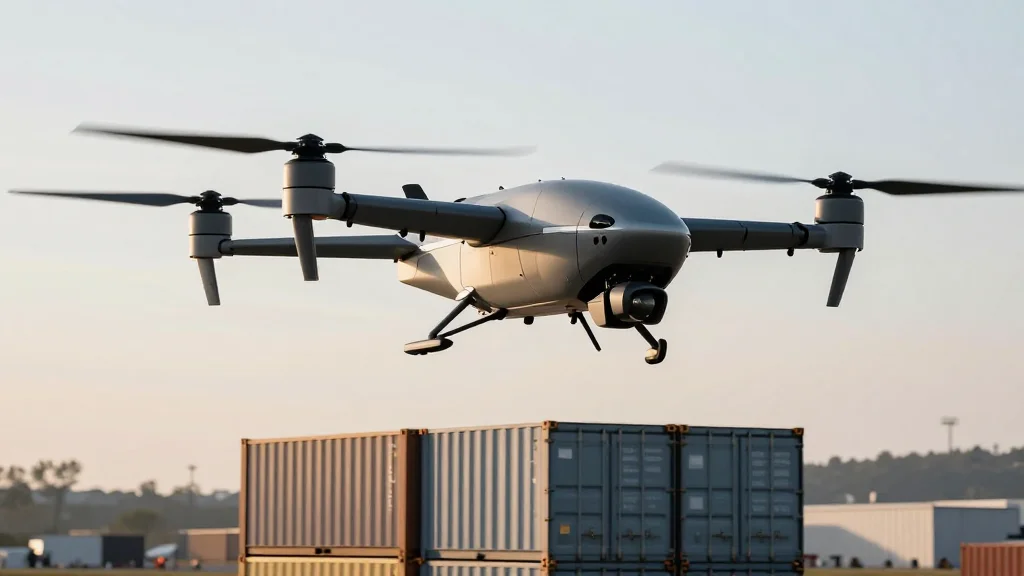
AIR Announces First Flight of Its Heavylift UAS
Companies Mentioned
Why It Matters
The flight validates a scalable heavy‑lift drone solution that can reshape contested‑zone supply chains and open new mid‑mile cargo markets for commercial operators.
Key Takeaways
- •AIR's Cargo-Heavy Lift UAS carries ~550 lb payload.
- •Over 25 units already ordered and paid for.
- •VTOL design places it in DoD’s Group 4 UAS category.
- •Enhanced autonomy reduces need for human pilot intervention.
- •Targets defense logistics, maritime resupply, and humanitarian aid.
Pulse Analysis
The heavy‑lift unmanned aircraft market has accelerated as militaries and logistics firms seek to replace manned helicopters with cost‑effective, high‑payload drones. AIR’s Cargo‑Heavy Lift UAS lands squarely in the U.S. Department of Defense’s Group 4 category, a niche that currently hosts only a handful of VTOL platforms capable of moving several hundred pounds. By delivering a 550‑pound payload, the system bridges the gap between small delivery drones and larger cargo helicopters, offering a new tier of flexibility for remote and contested environments.
Technically, the AIR platform combines next‑generation electric motors with a high‑energy‑density battery pack, delivering the thrust needed for vertical take‑off while maintaining endurance for mid‑range missions. Its avionics suite incorporates advanced flight‑logic algorithms that automate route planning, obstacle avoidance and payload handling, dramatically reducing the pilot workload. This level of autonomy not only cuts operational costs but also mitigates risk in hazardous zones, making the aircraft attractive for both defense logistics and humanitarian relief where human presence is limited or dangerous.
From a business perspective, the announcement of over 25 paid orders signals strong market confidence and provides AIR with a runway for rapid scaling. Defense customers see the platform as a force multiplier for resupply missions in denied areas, while commercial operators eye opportunities in maritime resupply, offshore wind farm servicing, and mid‑mile cargo delivery. The dual‑use architecture positions AIR to capture a diverse revenue stream, potentially reshaping supply‑chain dynamics across sectors and accelerating the broader adoption of autonomous heavy‑lift aviation.
AIR announces first flight of its heavylift UAS
Comments
Want to join the conversation?
Loading comments...