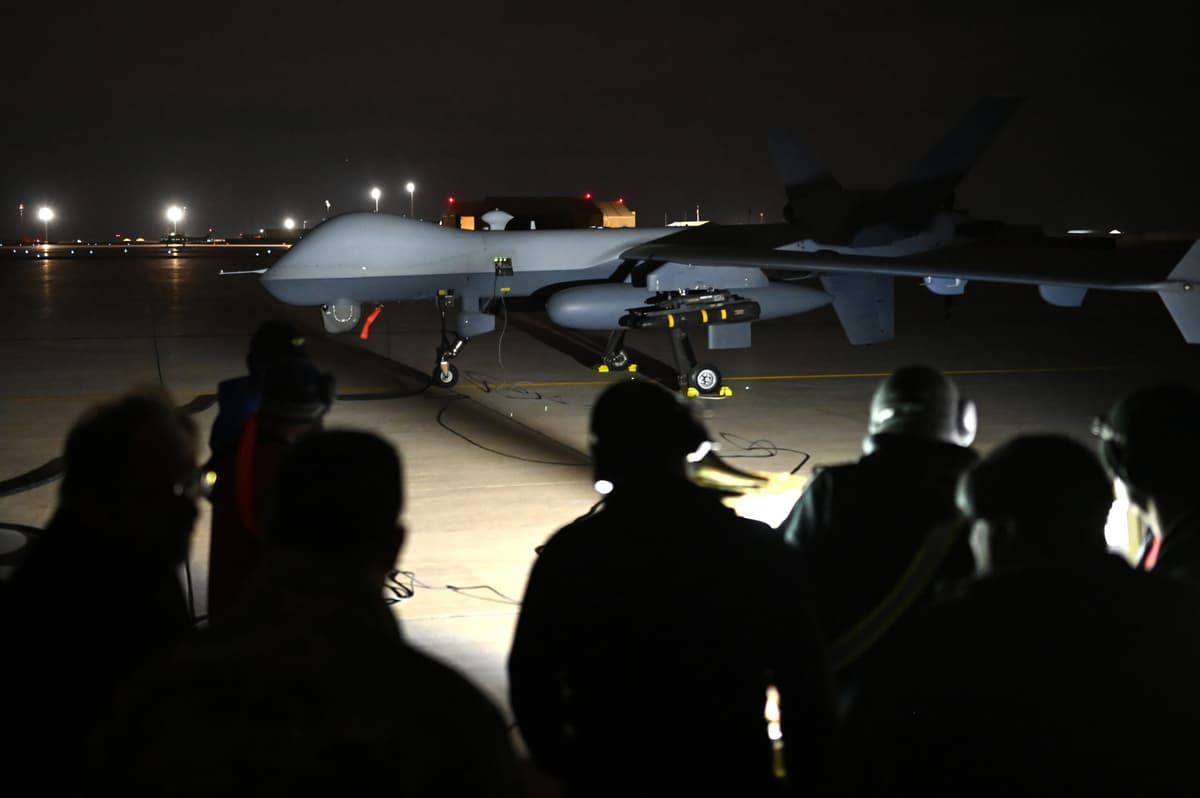
Air Force Chief: MQ-9 Reaper ‘Most Valuable Player’ of Iran War Despite Losses
Why It Matters
The Reaper’s proven strike and ISR performance under contested conditions forces the Air Force to retain and expand the platform, shaping future unmanned combat procurement and budget priorities.
Key Takeaways
- •MQ‑9 Reapers delivered most strikes in Operation Epic Fury
- •Nearly 30 Reapers lost, prompting urgent procurement and buy‑back efforts
- •Air Force plans to retain MQ‑9 fleet while developing next‑gen replacements
- •Reapers provide persistent ISR and strike capability without risking pilots
- •Replacement options include refurbished A‑models and costlier MQ‑9B variants
Pulse Analysis
Operation Epic Fury highlighted how a single unmanned system can dominate a high‑intensity conflict. The MQ‑9 Reaper’s long‑endurance flight profile and versatile sensor suite allowed it to conduct thousands of strikes, track dynamic targets, and support manned aircraft without exposing pilots to hostile airspace. Its ability to loiter for over 24 hours gave commanders real‑time intelligence, making the Reaper the workhorse of the U.S. campaign against Iran’s air defenses and missile launchers.
The heavy reliance on Reapers came at a steep price. Open‑source reports indicate almost 30 aircraft were lost to Iranian surface‑to‑air missiles, ground attacks, and hostile fire in Yemen. Those losses have accelerated a rapid procurement push: the Air Force is buying back remaining MQ‑9A airframes, refurbishing decommissioned units, and evaluating the more expensive MQ‑9B, which costs roughly $30 million per aircraft. With an active‑duty fleet now estimated at about 135 units, the service must balance short‑term attrition replacement with longer‑term modernization, all while seeking congressional funding for the next procurement cycle.
Looking ahead, the Reaper’s performance is reshaping the Air Force’s unmanned strategy. While next‑generation platforms such as the Collaborative Combat Aircraft and one‑way LUCAS drones are in development, they lack the comprehensive sensor packages that enable the Reaper to close the kill chain independently. Industry players like General Atomics are leveraging lessons learned to improve survivability and lethality in the MQ‑9B and future designs. The decision to retain the Reaper alongside multiple future platforms signals a hybrid approach, ensuring persistent ISR and strike capability while the Pentagon transitions to more autonomous, higher‑risk‑environment drones.
Air Force Chief: MQ-9 Reaper ‘Most Valuable Player’ of Iran War Despite Losses
Comments
Want to join the conversation?
Loading comments...