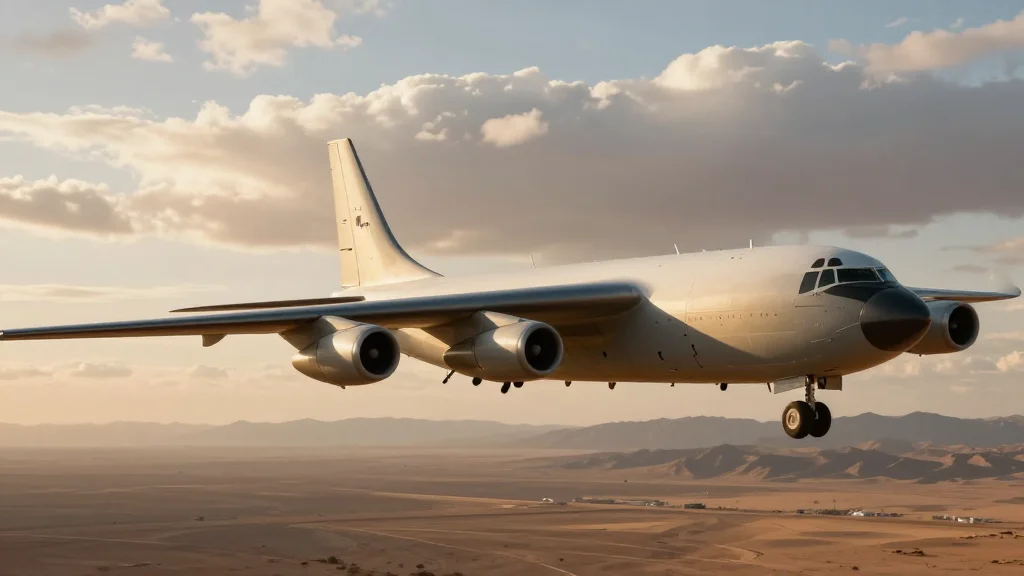
Air Force FY2027 Budget Pushes B‑52 Modernization and New Heavy Bomber Development

Companies Mentioned
Why It Matters
Modernizing the B‑52, B‑1B, and B‑2A ensures that the United States retains a credible long‑range strike capability while managing costs associated with developing entirely new platforms. Extending the service life of these bombers supports deterrence against near‑peer adversaries who are fielding advanced air defense systems and hypersonic weapons. The potential introduction of a New Heavy Bomber could further enhance the U.S. ability to project power across contested environments, preserving strategic flexibility and reinforcing the industrial base that underpins high‑technology aerospace development. The budget’s dual focus on sustainment and innovation reflects a broader defense strategy that seeks to balance immediate readiness with future capability gaps. By investing in upgrades now, the Air Force can field a more capable fleet without waiting for a next‑generation bomber to mature, while the exploratory New Heavy Bomber effort keeps the United States at the forefront of bomber technology, ensuring long‑term strategic advantage.
Key Takeaways
- •FY2027 budget proposes extending B‑52 service life to 2050 through upgrades and refurbishment.
- •Funding allocated to extend the life of the B‑1B Lancer and keep the B‑2A Spirit in service indefinitely.
- •Air Force signals interest in developing a New Heavy Bomber to complement existing platforms.
- •Modernization aims to preserve deterrence against near‑peer threats while managing acquisition costs.
- •Potential New Heavy Bomber program could involve major defense contractors and advanced technologies.
Pulse Analysis
The Air Force’s FY2027 budget reflects a pragmatic approach to strategic bomber stewardship. By choosing to modernize legacy platforms, the service avoids the steep learning curve and procurement risks associated with fielding an entirely new bomber in the short term. This mirrors past decisions, such as the B‑52’s continual upgrades that have kept it relevant for over six decades. The emphasis on life‑extension also signals confidence that existing airframes can be adapted to integrate emerging weapons, including hypersonic missiles and autonomous swarm payloads.
However, the inclusion of a New Heavy Bomber concept indicates that the Air Force is not complacent about future threats. As adversaries develop sophisticated integrated air defense networks and anti‑access/area‑denial (A2/AD) capabilities, a bomber that can carry larger payloads at higher speeds and with stealthier signatures may become essential. The program could reignite competition among legacy aerospace giants, potentially driving down costs through innovation and economies of scale. Yet, it also raises questions about budgetary trade‑offs: how much funding can be diverted from upgrades without compromising the readiness of the current fleet?
Looking ahead, the success of this dual‑track strategy will hinge on congressional approval and the ability of the defense industrial base to deliver both incremental upgrades and breakthrough technologies. If the Air Force can synchronize the modernization of its existing bombers with the development of a next‑generation platform, it will secure a versatile, layered bomber force capable of meeting the full spectrum of future conflict scenarios.
Air Force FY2027 Budget Pushes B‑52 Modernization and New Heavy Bomber Development
Comments
Want to join the conversation?
Loading comments...