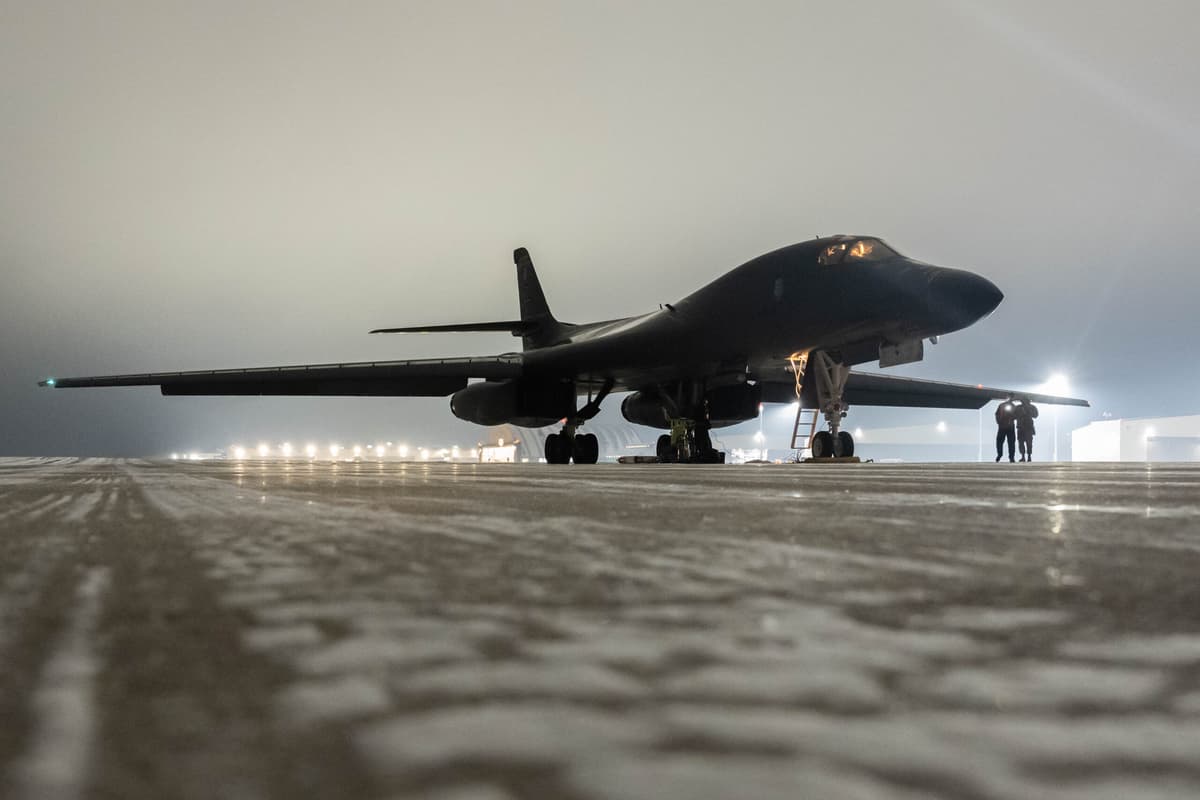
Air Force Plans to Keep B-1s Through 2037, Fly B-2s Longer
Why It Matters
Retaining the B‑1 and B‑2 ensures the United States maintains a credible long‑range strike and nuclear deterrent while the B‑21 program matures, reducing capability gaps and supporting strategic stability.
Key Takeaways
- •Air Force allocates $1.7B to modernize B‑1 and B‑2 bombers
- •B‑1 fleet life extended to 2037 with $342M upgrade
- •B‑2 modernization receives $1.35B, no retirement date set
- •Extended bomber service supports B‑21 rollout and deterrence
Pulse Analysis
The decision to keep the B‑1B Lancer and B‑2 Spirit in the active fleet reflects a broader shift in U.S. strategic planning. After years of earmarking these platforms for retirement, the Air Force now earmarks $342 million for B‑1 upgrades and $1.35 billion for B‑2 enhancements. This infusion of funds modernizes avionics, weapons integration, and survivability, preserving the speed, range, and stealth that have proven decisive in recent operations such as the 2025 Iran strike. By extending the B‑1’s service to 2037, the service mitigates the risk of a capability gap as the B‑21 Raider ramps up production.
The extended service life of the legacy bombers also cushions the B‑21 program’s rollout. While the first operational B‑21s are slated for 2027, sustaining the B‑1 and B‑2 fleets provides a ready‑made strike capability that can be leveraged for both conventional and nuclear missions. This dual‑track approach allows the Air Force to invest in bomber sustainment infrastructure—spare parts, depot capacity, and trained crews—without over‑taxing the limited industrial base. Moreover, the continued operation of the B‑2, the only fully operational stealth bomber capable of delivering massive ordnance, ensures that the United States retains a unique penetration capability while the B‑21 matures.
Strategically, the move signals a commitment to maintaining a robust bomber force amid rising global demand for long‑range strike options. With the B‑1’s large conventional payload and the B‑2’s stealth nuclear role, the Air Force can address both peacetime deterrence and high‑intensity conflict requirements. The decision also aligns with broader defense spending trends under the current administration, which emphasizes readiness and modernization. As the bomber community anticipates further B‑21 production, the extended life of the B‑1 and B‑2 offers a safety net, ensuring that the United States retains credible, flexible strike power throughout the 2030s.
Air Force Plans to Keep B-1s Through 2037, Fly B-2s Longer
Comments
Want to join the conversation?
Loading comments...