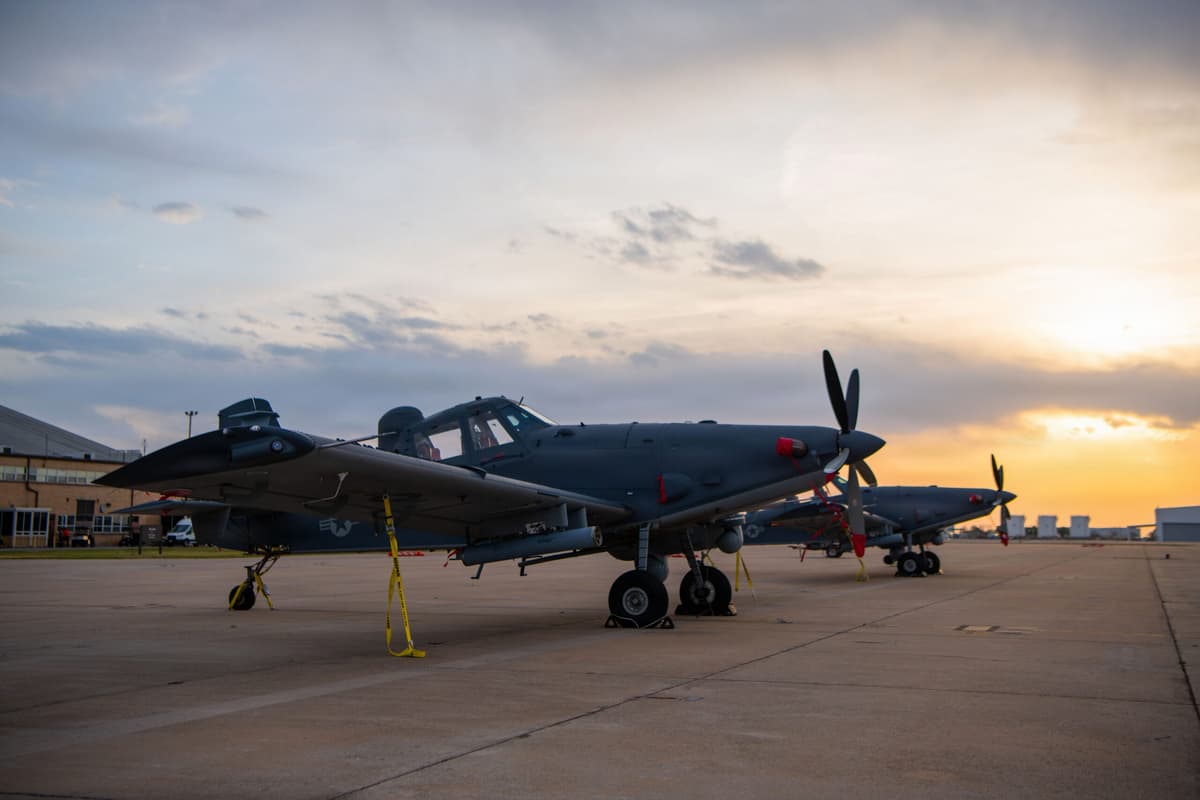
Air Force Special Ops Pushes Forward with ‘Swiss Army Knife’ OA-1K
Why It Matters
The OA-1K provides AFSOC with a versatile, quickly deployable platform that fills a critical capability gap as legacy aircraft retire, directly influencing U.S. special‑operations readiness and force projection.
Key Takeaways
- •OA-1K received 18th airframe; operational testing begins later 2024
- •Can be disassembled, loaded onto C‑5 or C‑17 within hours
- •Payload up to 6,000 lb supports Hellfires, rockets, cruise missiles
- •AFSOC pushes for 75 OA-1Ks; SOCOM trimmed order to 53
- •Modular airframe allows future sensor, weapon and survivability upgrades
Pulse Analysis
The OA-1K "Skyraider II" emerges at a pivotal moment for Air Force Special Operations Command, which has seen more than a third of its aircraft fleet reduced while mission tempo climbs. Unlike legacy platforms, the OA-1K is a purpose‑built, low‑cost combat scout derived from a modified crop duster, offering a blend of ISR, strike, and communications capabilities. Its modest 1,500‑mile range and 250 mph cruise speed suit short‑range, high‑intensity operations where speed and survivability matter more than endurance.
A standout feature of the OA-1K is its transportability. Engineers have demonstrated that a handful of maintainers can break the aircraft down, load it onto a C‑5 or C‑17, and reassemble it within a few hours—far faster than the days‑long ferry flights required for conventional fixed‑wing assets. This rapid‑deployment model expands the joint force’s ability to insert air power into austere theaters, supporting everything from counter‑terrorism raids to crisis response and contested‑airspace missions. The platform’s modular payload bay can carry up to 6,000 lb, accommodating Hellfire missiles, rockets, and emerging low‑cost cruise missiles, while also integrating advanced signals‑intelligence suites.
Funding remains the program’s Achilles’ heel. SOCOM’s recent reduction from a planned 75 airframes to 53 reflects broader defense budget pressures, yet AFSOC continues to argue that the OA-1K is the only new manned aircraft in production for its community. The aircraft’s survivability upgrades—armor‑protected cockpit and engines, defensive systems, and a roadmap for future enhancements—aim to keep it relevant against near‑peer threats. If the OA-1K achieves its promised flexibility, it could become a cornerstone of U.S. special‑operations airpower, delivering cost‑effective capability where larger, more expensive platforms cannot operate efficiently.
Air Force Special Ops Pushes Forward with ‘Swiss Army Knife’ OA-1K
Comments
Want to join the conversation?
Loading comments...