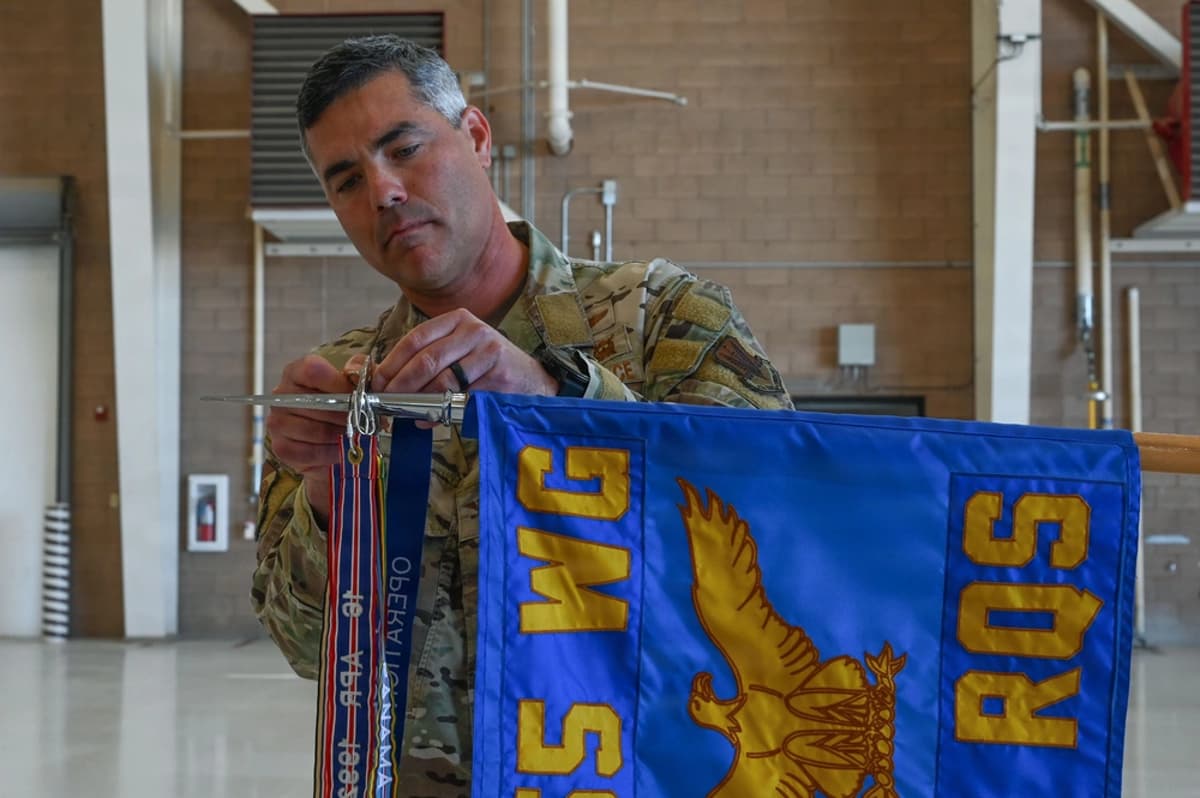
Air Force Units Earn Honors for Rescues During US Evacuation From Afghanistan
Why It Matters
The citation underscores the strategic value of joint rescue forces in high‑risk evacuations, reinforcing the Air Force’s role in future non‑combatant extraction missions.
Key Takeaways
- •55th, 48th Rescue Squadrons, 355th Maintenance won Presidential Unit Citation.
- •Task force rescued thousands, sheltered 12,000 refugees July‑August 2021.
- •Operated 864 alert hours, evaluated 124,000 individuals in 53 days.
- •Earned 1 Bronze Star with Valor, 18 Bronze Stars, 151 commendations.
- •Demonstrated joint, multi‑career field response for rapid evacuation.
Pulse Analysis
The chaotic final weeks of the U.S. withdrawal from Afghanistan forced the military to execute one of the largest non‑combatant evacuation operations in recent history. While the public focus fell on ground convoys and diplomatic negotiations, a 176‑member Personnel Recovery Task Force based at Davis‑Monthan Air Force Base quietly orchestrated air‑borne rescues, security perimeters, and a temporary refuge that sheltered more than 12,000 at‑risk Afghans and Americans. Their effort, spanning 53 days of nonstop alert, exemplifies how air power can adapt to fluid, high‑risk environments when traditional logistics break down.
The task force’s composition—pilots, aircraft maintainers, intelligence analysts, and Special Warfare Airmen—reflected a deliberate cross‑functional approach. Training exercises such as Red Flag‑Rescue prepared these airmen to operate beyond conventional rescue missions, enabling them to establish an "unconventional recovery network" that managed communications, security, and rapid extraction under fire. Over 864 continuous hours, the unit evaluated 124,000 individuals, coordinated aircraft fortifications, and even manned defensive positions to prevent the NATO compound from being overrun. The breadth of awards—one Bronze Star with Valor, 18 Bronze Stars, and 151 Air Force Commendation Medals—attests to the bravery and versatility displayed across career fields.
Looking ahead, the Presidential Unit Citation serves as a benchmark for future joint evacuation planning. It validates the Air Force’s investment in multi‑disciplinary task forces capable of swift, autonomous decision‑making in deteriorating theaters. As geopolitical tensions rise and humanitarian crises proliferate, the lessons learned—from rapid training cycles to integrated air‑ground coordination—will shape doctrine for non‑combatant evacuations, ensuring that the United States can project both kinetic and humanitarian power when the stakes are highest.
Air Force units earn honors for rescues during US evacuation from Afghanistan
Comments
Want to join the conversation?
Loading comments...