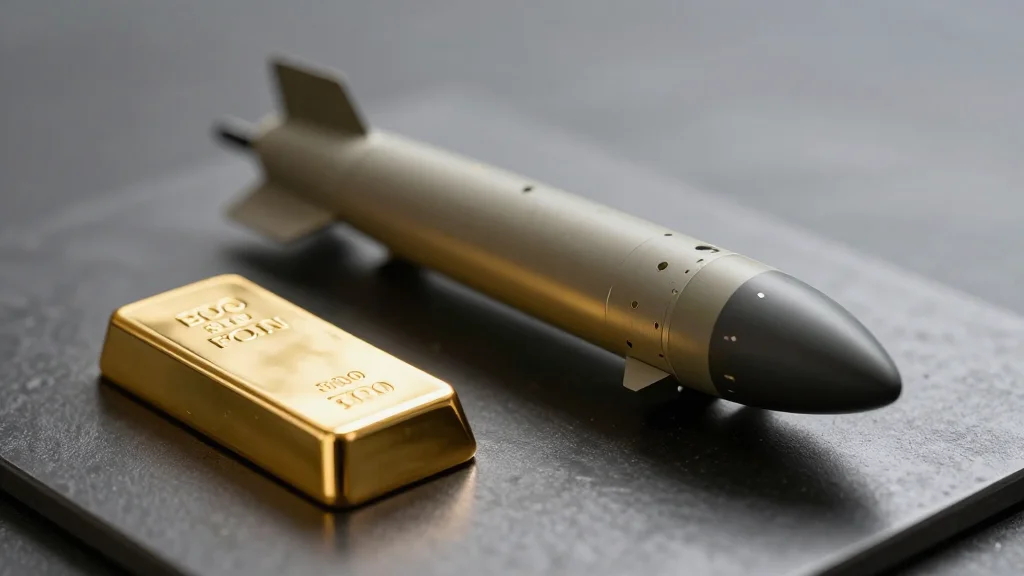
America Shot Its Arsenal Empty in 2 Wars. Now It Needs Beijing’s Permission to Reload
Companies Mentioned
Why It Matters
U.S. reliance on Chinese rare‑earth supplies threatens the readiness of critical missile and air‑defense systems, exposing a strategic vulnerability that could constrain future military operations. The issue is now a top agenda item for the upcoming Trump‑Xi summit, where trade negotiations will directly impact national security.
Key Takeaways
- •US depleted 45% of Precision Strike missiles in Iran
- •Ukraine aid used one‑third of U.S. Javelin inventory
- •Replenishment requires 5‑10 tons of Chinese rare‑earth magnets
- •Trump‑Xi talks will focus on securing rare‑earth access
Pulse Analysis
The United States is confronting an unprecedented depletion of its high‑end munitions after two years of intensive combat support in Iran and Ukraine. While the $25 billion already spent on Operation Epic Fury is sizable, the Pentagon’s request for an additional $200 billion underscores the scale of the shortfall. Precision‑strike missiles, THAAD interceptors, Patriot PAC‑3 units, Tomahawks, and JASSMs have all been consumed at rates that exceed peacetime production, prompting analysts to label the situation a "near‑term risk" of ammunition exhaustion.
Beyond the raw numbers, the real bottleneck lies in the rare‑earth elements that power the guidance, actuation, and propulsion systems of these weapons. China dominates the global supply chain for samarium‑cobalt, neodymium‑iron‑boron, dysprosium, terbium, and yttrium—materials essential for magnets in missiles, interceptors, and the F‑35’s engine actuators. Recent Chinese export controls, which have slashed rare‑earth shipments by up to 74%, have turned these commodities into geopolitical leverage points. As the U.S. seeks to rebuild its depleted stockpiles, it must navigate a supply chain that is effectively under Beijing’s licensing regime.
The strategic implications are now entering the diplomatic arena. President Trump’s May 14, 2026 meeting with Xi Jinping is expected to prioritize rare‑earth access, with U.S. Trade Representative Jamieson Greer emphasizing the need to secure uninterrupted supplies. Failure to negotiate favorable terms could leave the U.S. military dependent on a rival for critical components, constraining its ability to respond to future conflicts. Consequently, the rare‑earth debate is reshaping defense procurement, prompting calls for domestic mining, recycling initiatives, and allied diversification to mitigate the risk of supply‑chain coercion.
America shot its arsenal empty in 2 wars. Now it needs Beijing’s permission to reload
Comments
Want to join the conversation?
Loading comments...