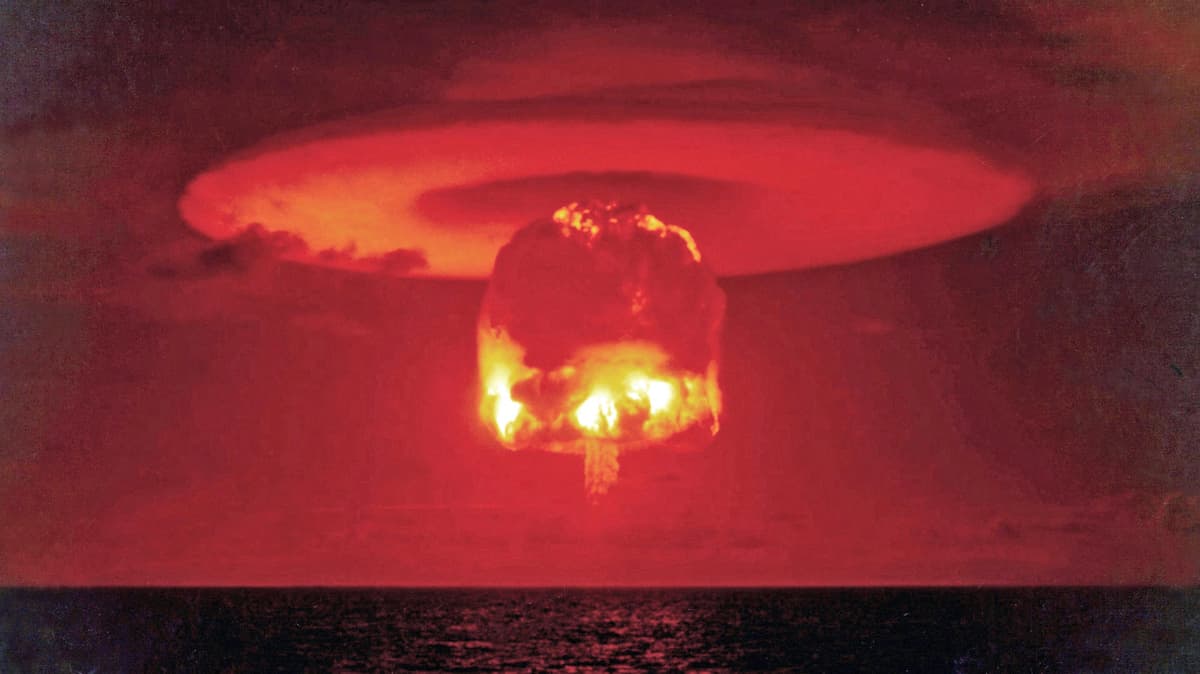
America Tested a Massive New Weapon. Then a Nuclear Nightmare Started Falling From the Sky.
Companies Mentioned
Why It Matters
Castle Bravo’s unexpected fallout revealed critical flaws in nuclear‑test modeling and highlighted the human toll of Cold‑War weapons development, prompting stricter test protocols and ongoing remediation efforts.
Key Takeaways
- •Castle Bravo’s 15 megaton blast exceeded expectations by threefold
- •Heavy coral‑derived particles fell quickly, delivering intense local radiation
- •Project 4.1 turned exposed Marshallese into a covert medical study
- •Radiation linked to up to 55 % of cancers among 82 most‑exposed residents
Pulse Analysis
The Castle Bravo test marked a turning point in the Cold War arms race, showcasing the United States’ push to miniaturize hydrogen bombs for aircraft delivery. While the device, nicknamed “Shrimp,” was intended to produce a manageable fallout pattern, the unexpected 15‑megaton yield and the pulverization of coral created a dense, radioactive cloud that descended within hours. This miscalculation exposed fundamental gaps in atmospheric modeling and underscored the peril of testing advanced weapons over populated regions.
The immediate fallout devastated Rongelap Atoll, where roughly 80 Marshallese residents encountered white, radioactive dust that contaminated food, water, and skin. Symptoms ranging from skin burns to nausea appeared within days, and long‑term studies attribute a staggering 55 percent of cancers among the 82 most‑exposed individuals to the blast. Project 4.1, a classified U.S. medical program, leveraged the tragedy to gather data on whole‑body and internal radiation exposure, raising ethical concerns about consent and the use of vulnerable populations for research. The incident also claimed the life of a Japanese fisherman aboard the Lucky Dragon No. 5, highlighting the broader geopolitical fallout.
Decades later, Rongelap remains a cautionary legacy of nuclear testing. Contamination persists despite a 1957 return and a 1985 relocation, prompting ongoing health monitoring and compensation debates. The Castle Bravo disaster spurred international pressure that eventually led to the 1963 Partial Test Ban Treaty, limiting atmospheric detonations. Today, policymakers and nuclear engineers reference the event to refine safety protocols, improve fallout prediction models, and reinforce the moral imperative of transparency in weapons development.
America Tested a Massive New Weapon. Then a Nuclear Nightmare Started Falling From the Sky.
Comments
Want to join the conversation?
Loading comments...