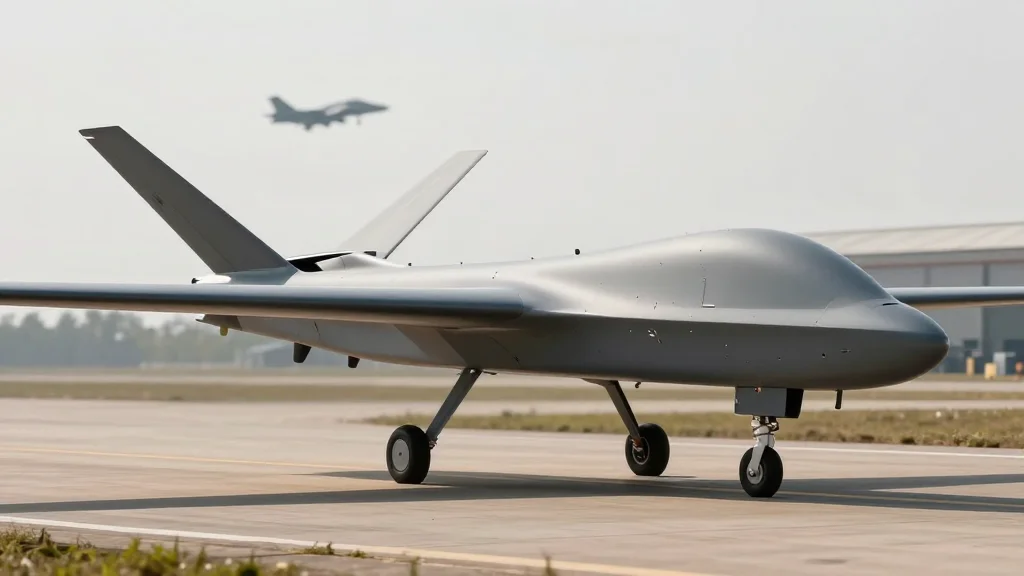
Anduril Readies to Demonstrate CCA’s ‘Manned-Unmanned Teaming’
Companies Mentioned
Why It Matters
Demonstrating coordinated flight between unmanned and manned platforms validates a new force‑multiplication concept, potentially reshaping Air Force combat tactics and procurement costs.
Key Takeaways
- •Anduril's Fury to join multi‑ship CCA flight tests this year
- •Live‑fire demos will include coordinated missions with piloted fighters
- •Air Force plans Increment 1 production decision within fiscal year
- •Ohio plant aims to produce 150 CCA units annually
- •Program targets hundreds of “loyal wingmen” to force‑multiply forces
Pulse Analysis
The Air Force’s Collaborative Combat Aircraft (CCA) initiative is a strategic response to the growing demand for affordable, autonomous combat partners that can extend the reach of legacy fighters. By fielding “loyal wingmen” like Anduril’s Fury, the service hopes to achieve a high‑low mix: sophisticated manned platforms supported by swarms of cheaper, AI‑driven aircraft. This approach promises to preserve air superiority while curbing acquisition and operating expenses, a priority as defense budgets confront competing priorities.
Anduril’s upcoming live‑fire demonstrations mark a pivotal technical milestone. Integrating multiple Furys with other CCA prototypes and piloted jets tests the seamless data‑link exchange and coordinated targeting essential for manned‑unmanned teaming. Successful multi‑ship operations will prove that autonomous systems can reliably execute complex mission sets—air‑to‑air, air‑to‑ground, and electronic warfare—while remaining under the tactical control of human pilots. The program’s focus on disciplined weapons integration and captive‑carry evaluations underscores the rigorous safety and performance standards required before full operational deployment.
Scaling production is equally critical. Anduril’s Columbus, Ohio facility, designed for a 150‑aircraft annual output, signals confidence in moving beyond prototype scarcity to fleet‑level availability. This manufacturing capacity not only accelerates delivery timelines but also positions Anduril as a competitive supplier alongside General Atomics. As the CCA program advances toward an Increment 1 decision, the defense industrial base may see a shift toward modular, rapid‑production aerospace solutions, reshaping how the United States fields next‑generation air power.
Anduril readies to demonstrate CCA’s ‘manned-unmanned teaming’
Comments
Want to join the conversation?
Loading comments...