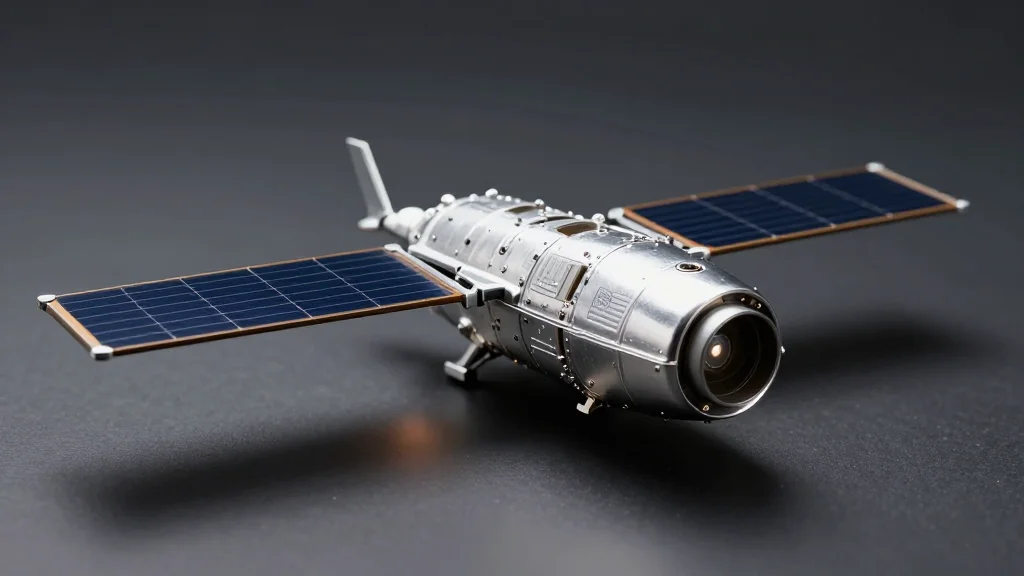
Anduril Wins Slot in $1.8 B Space Force Andromeda Contract

Companies Mentioned

Why It Matters
The Andurila‑Andromeda partnership marks a turning point for the U.S. defense establishment’s reliance on commercial innovators to safeguard critical space assets. By fielding autonomous satellites that can inspect and maneuver around existing GEO platforms, the Space Force gains a more resilient, real‑time picture of the orbital environment, reducing vulnerability to anti‑satellite weapons and debris collisions. Beyond immediate operational benefits, the contract illustrates a broader policy shift: the Pentagon is increasingly willing to allocate billions to non‑traditional defense contractors that can deliver rapid, cost‑effective solutions. This could accelerate the overall pace of space‑control technology development, spur further private‑sector investment, and reshape the competitive landscape among legacy aerospace firms and emerging startups alike.
Key Takeaways
- •Anduril awarded a task‑order slot in the $1.8 billion, 10‑year Andromeda program
- •Andromeda aims to launch autonomous GEO satellites by 2030 for space‑domain awareness
- •14 contractors, including Lockheed Martin, Northrop Grumman, and Intuitive Machines, will compete for task orders
- •The Space Force’s FY 2027 budget allocates $21.6 billion to "space control" within a $71.1 billion Space Force budget
- •Anduril’s space division plans to demonstrate rendezvous and proximity operations in 2026
Pulse Analysis
Anduril’s entry into the Andromeda program reflects a strategic inflection point where the Department of Defense is moving from monolithic, hardware‑heavy procurement toward modular, software‑driven architectures. Historically, satellite surveillance relied on large, expensive platforms built by a handful of contractors. Anduril’s expertise in autonomous navigation and low‑cost manufacturing could compress development cycles, a critical advantage as adversaries accelerate their own anti‑satellite capabilities.
The competitive pressure on legacy firms is already evident. Companies like Lockheed Martin and Northrop Grumman have begun to spin off or acquire agile tech startups to keep pace with the speed of innovation that firms like Anduril bring. If Anduril can deliver on its 2026 demonstration milestones, it will not only secure further funding under Andromeda but also set a precedent for future contracts that prioritize rapid fielding and iterative upgrades over traditional long‑lead, single‑event procurement.
Looking ahead, the success of Andromeda’s autonomous satellites could unlock a new market segment: commercial GEO monitoring services for both defense and civilian operators. As the orbital environment becomes increasingly congested, the ability to autonomously track, inspect, and even reposition satellites will be a premium capability. Anduril’s win therefore signals both a short‑term revenue boost and a long‑term strategic foothold in an emerging space‑security ecosystem.
Anduril Wins Slot in $1.8 B Space Force Andromeda Contract
Comments
Want to join the conversation?
Loading comments...