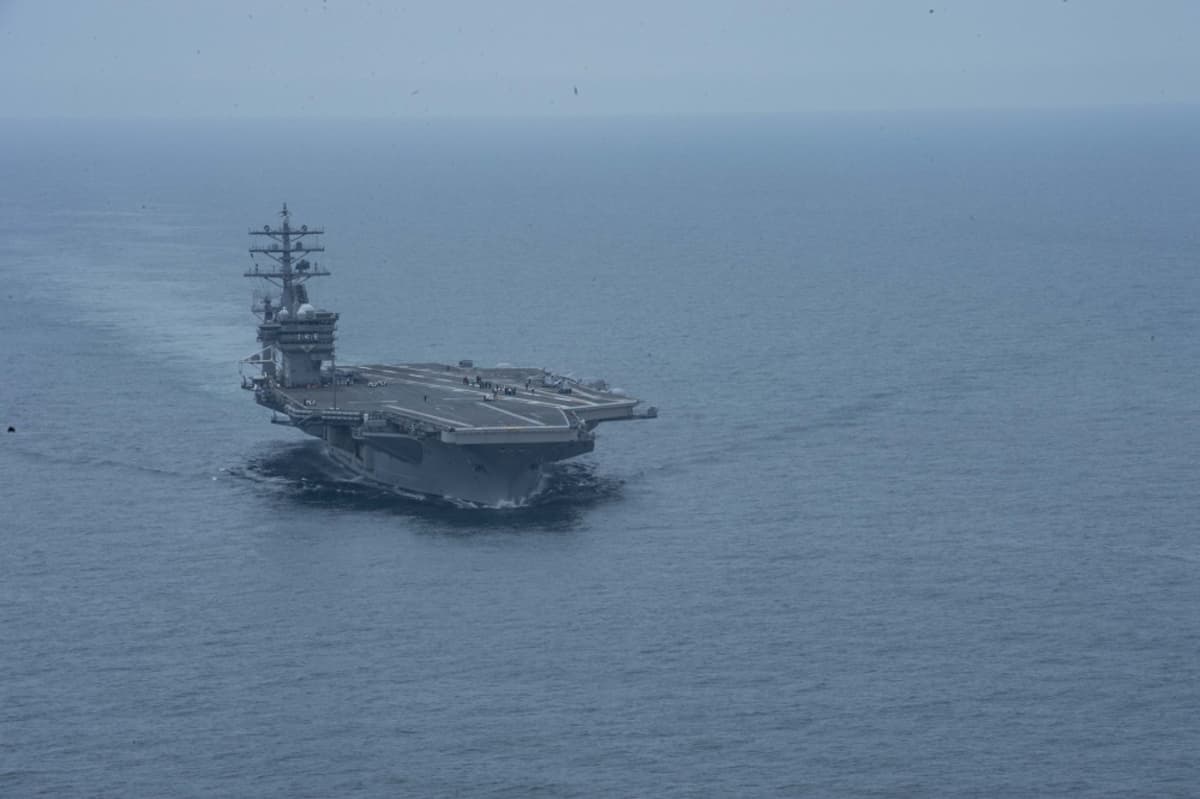
Why It Matters
Repeated fire incidents during maintenance highlight latent safety risks that could delay critical carrier upgrades and affect the Navy’s operational readiness.
Key Takeaways
- •Fire broke out on USS Dwight D. Eisenhower during PIA maintenance.
- •Three sailors suffered minor injuries; all returned to duty quickly.
- •Incident follows recent USS Gerald R. Ford laundry fire.
- •Overhaul has kept carrier docked for 16+ months.
- •Navy says fire was small and quickly contained.
Pulse Analysis
The USS Dwight D. Eisenhower’s fire underscores the complexity of maintaining the United States’ most powerful sea‑based platforms. Carriers like the Eisenhower spend years at sea before entering a Planned Incremental Availability (PIA) phase, a multi‑year effort that upgrades propulsion, combat systems, aviation infrastructure and crew habitability. While these overhauls extend service life and integrate new technology, they also concentrate high‑energy work in confined spaces, creating conditions where a minor spark can ignite a fire. The rapid response by the ship’s crew and Norfolk shipyard staff prevented a larger disaster, but the event serves as a reminder that even routine maintenance carries inherent hazards.
Safety protocols are now under renewed scrutiny after two recent carrier fires—the Eisenhower incident and the earlier USS Gerald R. Ford laundry blaze in the Red Sea. Both were non‑combat related and quickly contained, yet they expose potential gaps in fire detection, suppression equipment, and crew training during extensive refits. The Navy is likely to review its PIA procedures, emphasizing stricter hot‑work permits, enhanced fire‑watch staffing, and real‑time monitoring of high‑risk zones. Any delay in the Eisenhower’s schedule could ripple through the fleet’s deployment cycle, as the carrier is a cornerstone of power projection for the 5th Fleet and beyond.
Strategically, the carrier’s prolonged dock time already stretches over 16 months, and any additional setbacks could compress the Navy’s ability to field a full complement of operational carriers. With defense budgets under pressure, the cost of extending maintenance windows or retrofitting additional safety systems must be weighed against the strategic value of keeping a carrier like the Eisenhower mission‑ready. The incident may accelerate investments in predictive maintenance technologies and automated fire‑suppression solutions, aiming to reduce human error and improve turnaround times for the fleet’s most critical assets.
Another US aircraft carrier struck by onboard fire
Comments
Want to join the conversation?
Loading comments...