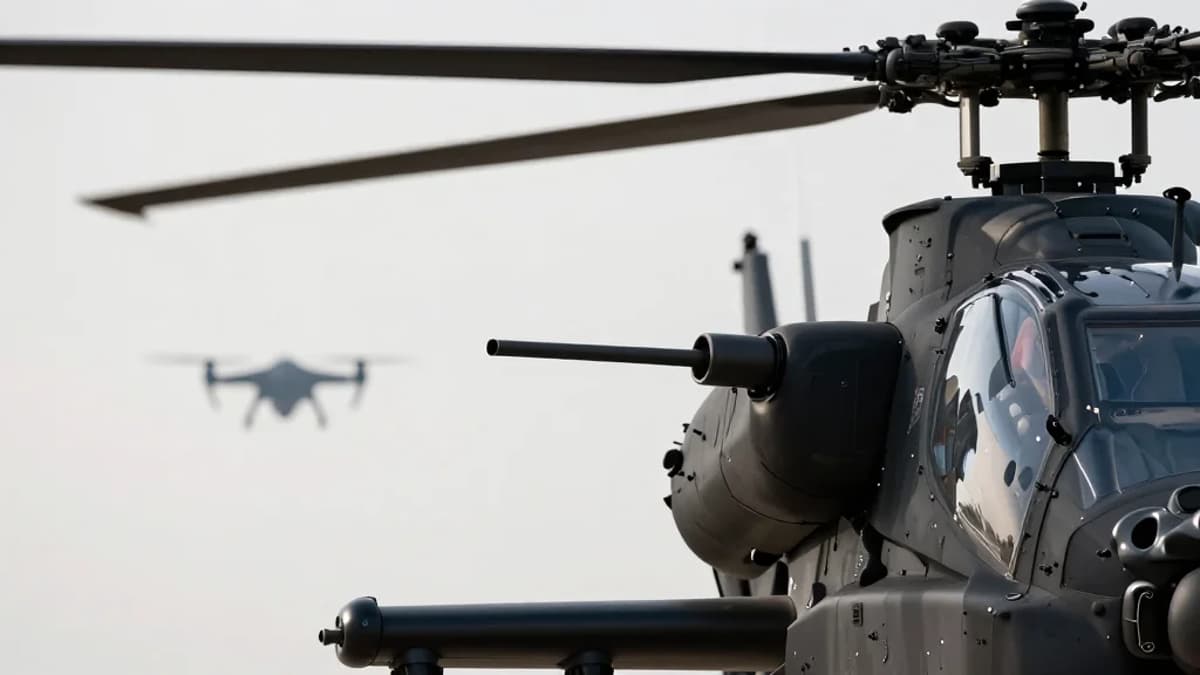
Apache Helicopters Downed Drones With 30mm Proximity Ammo
Why It Matters
The achievement expands the Apache’s mission set, offering the Army a rapid, organic solution to the growing small‑UAV threat and influencing future air‑defense doctrine.
Key Takeaways
- •Apache used 30mm proximity rounds against UAVs.
- •First air-to-air kill by Apache in U.S. exercise.
- •Demonstrates expanding helicopter role in counter‑UAS missions.
- •Proximity ammo increases hit probability against small, fast drones.
- •Yuma test informs future Army air‑defense doctrine.
Pulse Analysis
The proliferation of commercial and tactical drones has forced militaries to rethink traditional air‑defense architectures. While fixed‑wing fighters and surface‑to‑air missiles dominate the high‑end spectrum, the low‑observable, low‑altitude nature of many UAVs makes them difficult to engage with legacy systems. By adapting the Apache’s existing 30 mm cannon with proximity‑fuzed projectiles, the Army leverages a platform already embedded in forward units, providing a flexible, on‑the‑move response that bridges the capability gap between small‑arms fire and costly missile interceptors.
Proximity‑fuzed 30 mm rounds are engineered to detonate when they approach a target within a calibrated distance, creating a lethal cloud of fragments that can neutralize fast‑moving, small‑cross‑section drones. This technology mitigates the need for pinpoint aiming, a challenge when confronting agile UAVs at close range. Integration required minimal hardware changes—primarily software updates to the fire‑control system—allowing the Apache fleet to retain its primary ground‑attack role while gaining a credible air‑to‑air option. Early data from the Yuma exercise indicate a hit probability increase of roughly 30 percent compared with conventional impact rounds.
Strategically, the successful test reshapes Army doctrine by positioning attack helicopters as dual‑role assets capable of both strike and air‑defense missions. Procurement planners are now evaluating larger‑scale fielding of proximity ammunition and potential retrofits for other rotary‑wing platforms such as the UH‑60 Black Hawk. The broader defense industry is likely to see heightened demand for modular, proximity‑fuzed munitions, spurring innovation in lightweight warheads tailored for counter‑UAS operations across multiple service branches.
Apache Helicopters Downed Drones With 30mm Proximity Ammo


Comments
Want to join the conversation?
Loading comments...