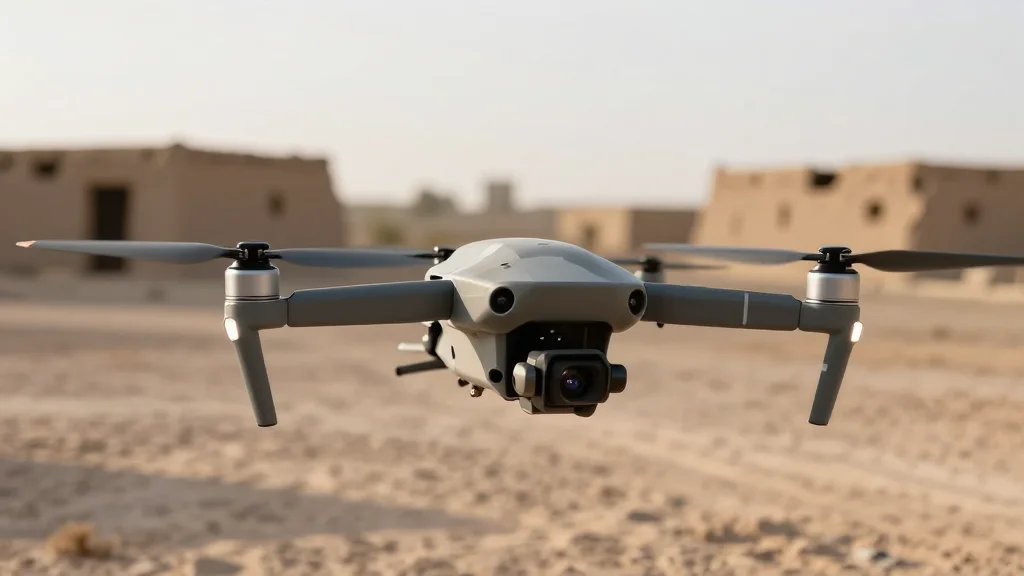
Armed Drones Account for Over 80% of Sudan Civilian Deaths, UN Says

Why It Matters
The Sudan case illustrates how inexpensive, off‑the‑shelf drones can become the deadliest weapons in low‑intensity wars, reshaping the calculus of both state and non‑state actors. By enabling precise, high‑velocity strikes on civilian infrastructure, drones erode the protective norms of international humanitarian law and raise the stakes for export‑control regimes. The conflict also signals a growing market for Chinese‑made combat drones, with the UAE acting as a conduit, highlighting the need for coordinated diplomatic pressure to curb the flow of lethal unmanned systems to volatile regions. For defense policymakers, Sudan serves as a warning that the diffusion of drone technology can outpace existing regulatory frameworks, creating new security dilemmas. The rapid escalation—from a handful of platforms to a 600% increase in drone‑related fatalities—demonstrates how quickly unmanned warfare can dominate a conflict, forcing militaries worldwide to reassess force structures, counter‑drone capabilities, and the ethical implications of autonomous strike systems.
Key Takeaways
- •UN chief Volker Türk says drones cause >80% of civilian deaths in Sudan.
- •880 civilians killed by drones Jan‑Apr 2024; 2,670 total drone‑related deaths in 2025 (600% rise).
- •RSF and Sudanese army both field Chinese‑made CH‑95/FH‑95 drones, likely supplied via UAE.
- •Drone attacks have hit hospitals, schools, markets and displacement camps, especially in Kordofan.
- •UN calls for stricter export controls as drone use fuels proxy conflict and humanitarian crisis.
Pulse Analysis
Sudan’s drone surge is a microcosm of a broader shift in modern warfare: cheap, commercially available UAVs are being weaponized at scale, blurring the line between conventional and asymmetric conflict. Historically, air power required substantial state investment; today, a handful of off‑the‑shelf platforms can deliver strategic effects, as seen in the 600% jump in drone‑related fatalities. This democratization of air power forces defense establishments to prioritize counter‑UAV solutions, from electronic warfare to kinetic interceptors, even in theaters where traditional air defenses are absent.
The geopolitical dimension cannot be ignored. The UAE’s alleged role as a conduit for Chinese drones to the RSF reflects a new kind of arms diplomacy, where middle powers leverage technology to extend influence without direct military involvement. This proxy dynamic complicates traditional non‑proliferation efforts, which have focused on missiles and nuclear material, leaving a regulatory gap for combat drones. International bodies must adapt, perhaps by expanding the Arms Trade Treaty to explicitly cover armed UAVs and their components.
Looking ahead, the Sudanese experience may accelerate a global arms race in low‑cost combat drones. Nations with advanced drone industries will likely see export opportunities, while rival states will seek to acquire or replicate these capabilities. The key policy question is whether the international community can develop a consensus on responsible drone transfers before the technology becomes entrenched in conflicts across Africa, the Middle East, and beyond. Failure to act could cement a new era where unmanned systems, rather than manned aircraft, dominate the battlefield and dictate civilian safety.
Armed Drones Account for Over 80% of Sudan Civilian Deaths, UN Says
Comments
Want to join the conversation?
Loading comments...