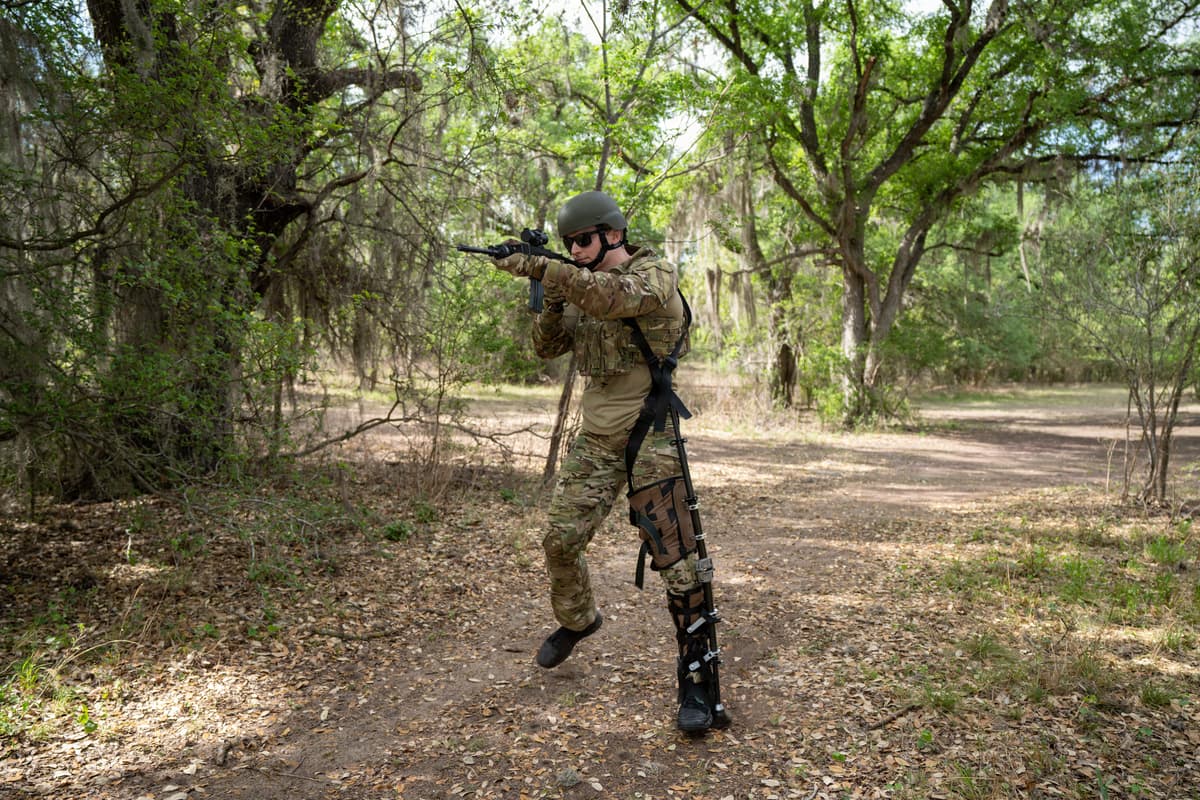
Army Develops Exoskeleton for Lower-Limb Injuries on the Battlefield
Why It Matters
IBEX could keep wounded combatants combat‑effective longer, reducing casualty evacuation loads and enhancing unit firepower against drone threats. Its adoption may reshape battlefield medical logistics and force‑on‑force resilience.
Key Takeaways
- •IBEX weighs 7 lb, folds to a 1‑liter bottle size
- •Device supports standing, walking, and shooting for lower‑leg injuries
- •Over 22,000 non‑amputated lower‑leg injuries recorded 2001‑2018
- •Third funding round secured; commercial partner licensed the technology
- •Reduces need for two‑to‑four soldiers to carry a litter
Pulse Analysis
Modern combat is increasingly dominated by drones that can strike from a distance, turning even survivable limb injuries into tactical liabilities. Lower‑leg fractures and severe sprains, once treatable behind the lines, now leave soldiers vulnerable to further attacks while they wait for evacuation. The Army’s medical community therefore faces pressure to enable wounded warfighters to remain mobile and continue delivering firepower, a need that has accelerated research into wearable assistive technologies.
The IBEX exoskeleton addresses that gap with a lightweight, modular design that can be deployed in seconds. At just seven pounds, the frame collapses to the volume of a one‑liter bottle, allowing medics or teammates to transport it quickly to the injured. Its telescoping frame supports the entire lower limb, relieving pressure on soft tissue, nerves and blood vessels while bearing the soldier’s full weight. Field trials across the Army, Navy and Marine Corps have demonstrated that users can stand, walk and aim their weapons, effectively turning a casualty into a combat‑capable asset until formal medical evacuation arrives.
Beyond immediate tactical benefits, IBEX signals a shift in military medical logistics. By reducing the requirement for two‑to‑four extra troops to carry a litter, the device frees personnel for other critical tasks and shortens casualty extraction timelines. The third round of funding and a commercial licensing agreement suggest a pathway toward broader adoption and potential civilian medical applications, such as emergency response and disaster relief. As the Army integrates IBEX into its standard equipment sets, it may set a new benchmark for resilience and self‑sufficiency on future battlefields.
Army develops exoskeleton for lower-limb injuries on the battlefield
Comments
Want to join the conversation?
Loading comments...