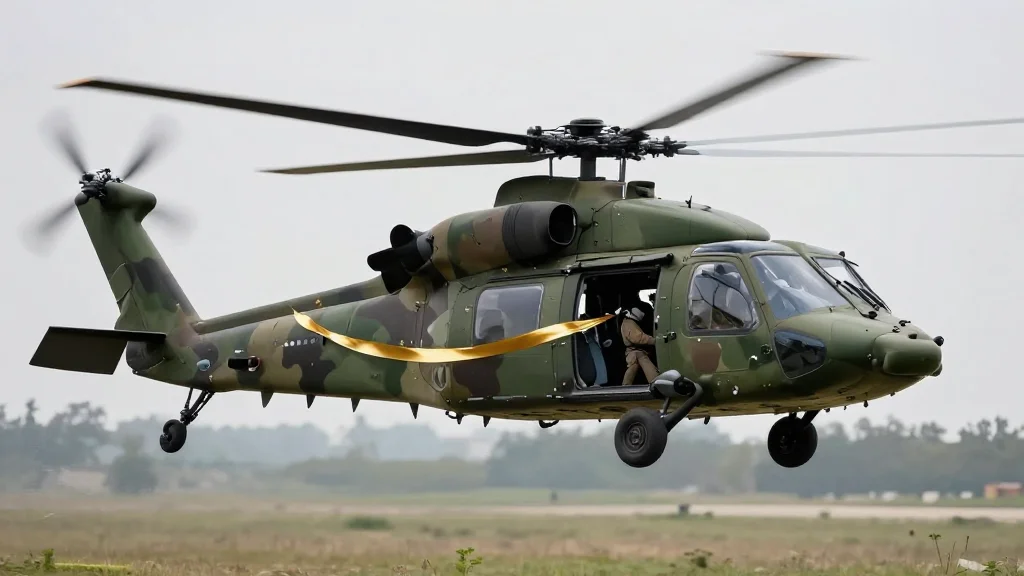
Army Exploring ‘Novel Contracting’ For Future Black Hawk Procurement After Current Multi-Year
Companies Mentioned
Why It Matters
Flexible contracting could lower acquisition costs and keep the Black Hawk fleet viable through 2050, while meeting growing international demand. The approach also influences how the Army balances legacy platforms with emerging tiltrotor technology.
Key Takeaways
- •Army evaluating flexible contracting beyond multi-year Black Hawk deals
- •Current 10th multi-year contract could reach $4.4 billion for 270 helicopters
- •Sikorsky has delivered 148 Black Hawks and begun advanced procurement for 2028
- •Strong foreign military sales sustain demand for new‑build Black Hawks through 2050
- •Army will field Bell MV‑75 tiltrotor by FY ‘30 as a complementary platform
Pulse Analysis
The Army’s exploration of novel contracting reflects a broader shift in defense acquisition toward agility and cost‑effectiveness. Traditional multi‑year contracts provide price certainty but can lock the service into fixed quantities and timelines. By considering hybrid models—such as multiple‑year agreements with adjustable volumes—the Army hopes to align production more closely with fluctuating budget realities and the unpredictable pace of foreign military sales, which have become a major driver of Black Hawk demand.
Budget constraints are sharpening the need for innovative procurement. The FY ‘27 budget request shows a modest $39.3 million line for a single UH‑60M, underscoring the reliance on supplemental funding, congressional add‑ons, and exchange sales to finance new aircraft. Sikorsky’s advanced procurement for 2028 parts signals an early‑stage effort to smooth the supply chain and avoid costly lead‑time spikes. Maintaining a robust organic industrial base ensures sustainment, upgrades, and rapid fielding of commercial modifications that keep the platform relevant through 2050.
Meanwhile, the Army’s tiltrotor ambitions with Bell’s MV‑75 add a new dimension to its rotary‑wing strategy. Rather than supplanting the Black Hawk, the MV‑75 is slated to operate alongside it, demanding platform‑agnostic solutions that can be shared across both fleets. This complementary approach encourages technology maturation that benefits legacy helicopters while supporting next‑generation capabilities. The combined procurement roadmap—flexible contracts, sustained foreign sales, and integrated tiltrotor planning—aims to preserve the Black Hawk’s operational edge and fiscal viability well into the next decade.
Army Exploring ‘Novel Contracting’ For Future Black Hawk Procurement After Current Multi-Year
Comments
Want to join the conversation?
Loading comments...