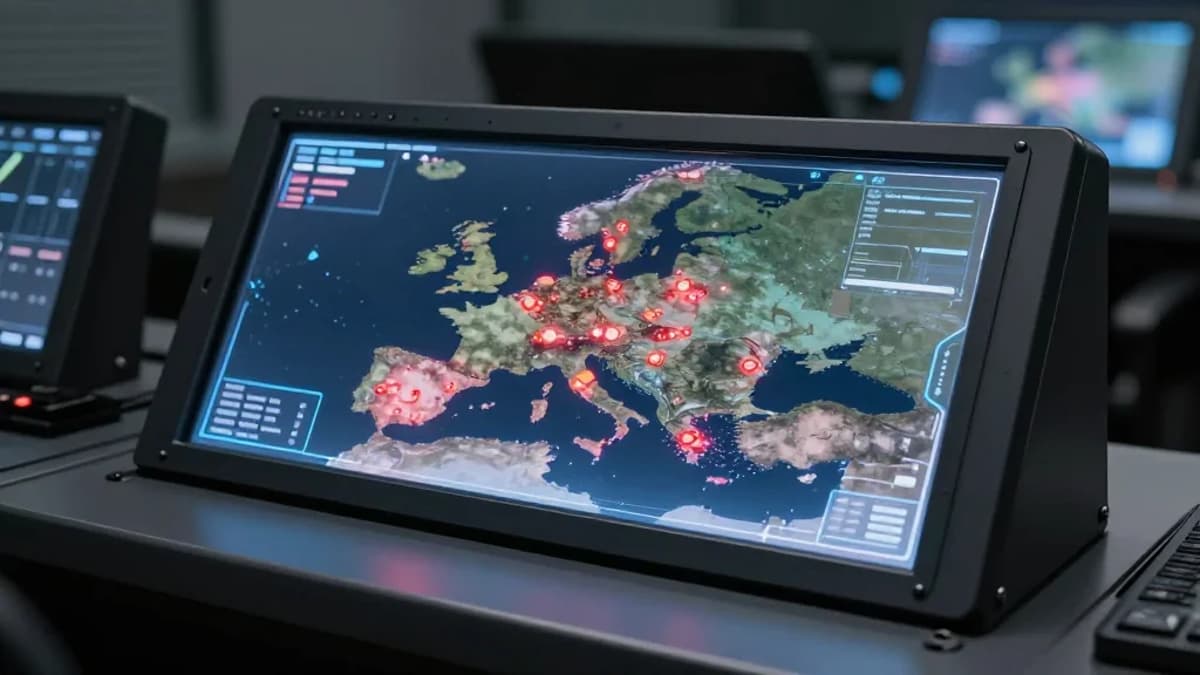
Army Leaders Say Future European Fight Could Mean 1,500 Targets Daily
Why It Matters
The projected daily target count signals a shift toward hyper‑intense, data‑centric warfare, forcing defense budgets and procurement to prioritize speed, automation, and sustainment.
Key Takeaways
- •1,500 daily targets indicate unprecedented combat tempo.
- •AI and automation essential for target processing.
- •Logistics must support high‑rate ammunition consumption.
- •Training will emphasize rapid decision cycles.
- •Force structure may shift toward modular, networked units.
Pulse Analysis
The U.S. Army’s estimate of 1,500 daily targets underscores a transformative era in European security. Traditional kinetic operations, once measured in hours, are now projected to unfold in minutes, demanding a seamless blend of sensors, shooters, and decision‑making tools. By integrating artificial intelligence, machine‑learning algorithms can prioritize threats, deconflict fire missions, and reduce human latency, enabling commanders to sustain a relentless tempo without sacrificing accuracy.
To translate this vision into reality, the Army is overhauling its acquisition pipeline. Programs like the Integrated Visual Augmentation System (IVAS) and the Joint All‑Domain Command and Control (JADC2) framework aim to fuse data from air, land, sea, and cyber domains into a single operational picture. Simultaneously, next‑generation munitions—such as hypersonic glide weapons and precision‑guided artillery—provide the rapid, high‑volume firepower needed to saturate dense target environments. These investments reflect a broader strategic pivot toward near‑peer competition, where speed and precision become decisive factors.
However, sustaining a 1,500‑target daily rhythm presents logistical and doctrinal challenges. Ammunition resupply chains must be resilient, leveraging autonomous transport and forward‑deployed stockpiles to prevent bottlenecks. Training curricula are evolving to embed rapid decision‑making cycles, emphasizing cross‑domain coordination and real‑time analytics. As European allies grapple with similar threat assessments, interoperability will be crucial; joint exercises and shared standards will ensure that multinational forces can collectively manage the high‑tempo demands of future warfare.
Army Leaders Say Future European Fight Could Mean 1,500 Targets Daily


Comments
Want to join the conversation?
Loading comments...