Army Secretary Says Ukraine’s Integrated Battlefield Beats U.S., Launches ‘Operation Jailbreak’

Companies Mentioned
Why It Matters
Ukraine’s rapid integration of drones, sensors and weapons demonstrates a new paradigm for modern warfare—one where data flow, not just firepower, determines success. The U.S. lag highlighted by Driscoll threatens to erode strategic advantage, especially as adversaries field increasingly autonomous and networked systems. By confronting software silos head‑on, Operation Jailbreak could unlock faster fielding of AI‑driven tools, reduce decision latency, and set a precedent for more collaborative defense‑industry relationships. Beyond the tactical realm, the initiative signals a shift in defense acquisition culture. If the Army can prove that open, interoperable architectures accelerate capability delivery, future budgets may prioritize modular, software‑centric contracts over traditional hardware‑heavy procurement. This could reshape the market for defense tech firms, rewarding those that can embed AI and data‑fusion capabilities into legacy platforms.
Key Takeaways
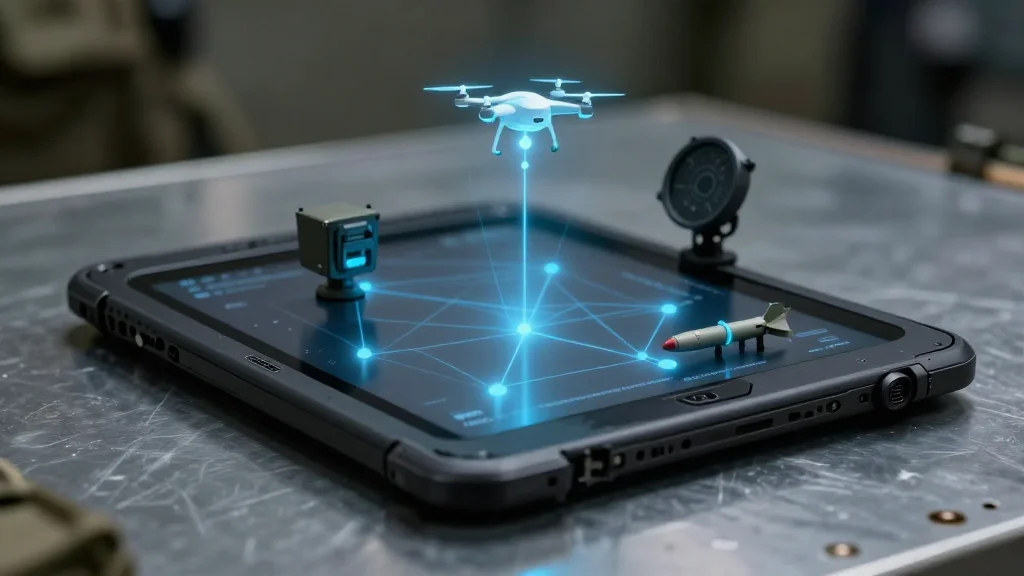
- •Army Secretary Dan Driscoll says Ukraine’s “Delta” system integrates drones, sensors and weapons into a single network, outpacing U.S. capabilities.
- •Operation Jailbreak, launched at Fort Carson, has enlisted 30‑50 defense firms—including Boeing, Lockheed Martin, Palantir and Anduril—to break software firewalls.
- •The hackathon aims to “jailbreak” thousands of pieces of equipment, enabling real‑time data sharing across platforms.
- •U.S. officials warn a future European conflict could require processing up to 1,500 targets per day, a pace only possible with seamless integration.
- •Success could drive a shift toward AI‑enabled decision‑making and more open, modular defense procurement.
Pulse Analysis
Operation Jailbreak arrives at a moment when the U.S. defense establishment is wrestling with two competing imperatives: maintaining technological superiority and navigating an acquisition system built on proprietary silos. Driscoll’s public admission that Ukraine has already leapfrogged the U.S. in networked warfare is a rare acknowledgment of a strategic gap, and it forces senior leaders to confront the cost of inertia. The hackathon model—short, intensive, and industry‑heavy—mirrors the rapid‑prototype culture of Silicon Valley, suggesting a deliberate borrowing of commercial best practices.
Historically, the Department of Defense has relied on long‑term contracts that lock in specific architectures, often at the expense of flexibility. By inviting 30‑50 firms to collectively “jailbreak” equipment, the Army is testing a new collaborative procurement framework that could reduce development cycles from years to months. If the pilot demonstrates measurable improvements in target processing speed or AI‑driven decision latency, Congress may be persuaded to fund similar initiatives across other services, potentially reshaping the defense industrial base toward more open‑source, interoperable solutions.
However, the initiative also raises security concerns. Opening legacy systems to external code increases the attack surface, and the involvement of commercial AI platforms could introduce supply‑chain vulnerabilities. Balancing rapid integration with robust cyber‑hygiene will be the next litmus test for the Army’s modernization agenda. In the short term, the success of Operation Jailbreak will be judged by concrete metrics—how many systems are truly interoperable, and whether AI can meaningfully accelerate the 1,500‑target‑per‑day processing goal. Long term, it could redefine how the United States approaches networked warfare, shifting from a hardware‑first mindset to a data‑first architecture that mirrors the very network Ukraine has already mastered.
Army Secretary Says Ukraine’s Integrated Battlefield Beats U.S., Launches ‘Operation Jailbreak’
Comments
Want to join the conversation?
Loading comments...