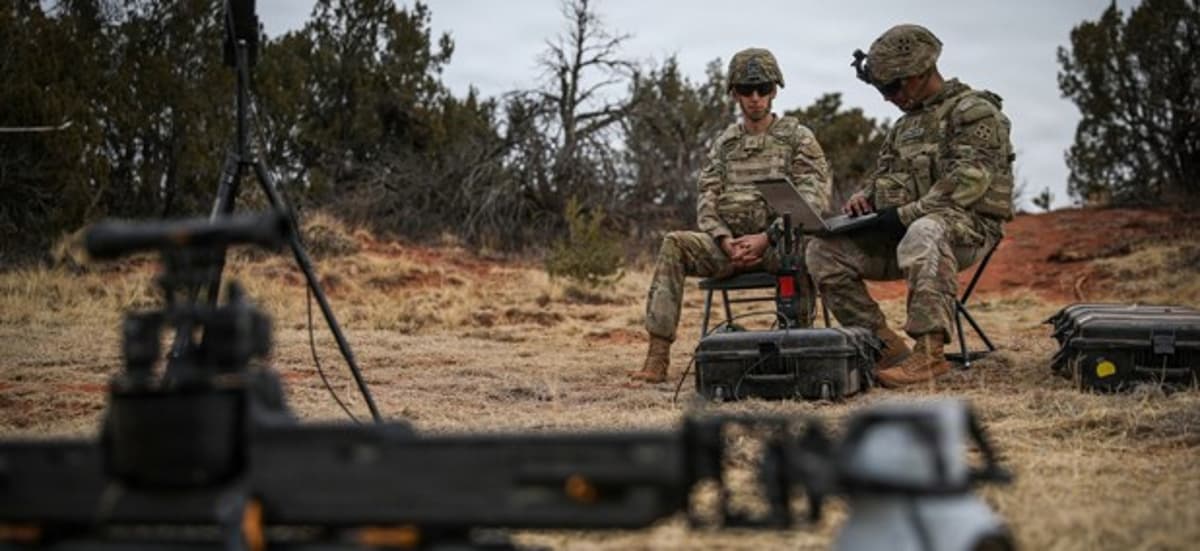
Army Turns to ‘Hackathons’ to Better Connect Dozens of Weapons, Systems
Companies Mentioned
Why It Matters
Standardizing C2 integration shortens acquisition cycles and boosts real‑time decision‑making, giving U.S. forces a decisive edge in high‑intensity conflicts. It also pressures contractors to adopt open‑architecture designs, reshaping the defense supply chain.
Key Takeaways
- •Army launches “Right to Integrate” hackathon series for vendor collaboration
- •Event gathers Anduril, Boeing, Lockheed Martin, and others at Fort Carson
- •Goal: standardize open‑architecture C2 to enable faster data sharing
- •Hackathons aim to replace proprietary interfaces with interoperable systems
- •Faster integration expected to improve U.S. battlefield responsiveness
Pulse Analysis
The push for interoperable battlefield systems has accelerated after the Ukrainian war demonstrated that speed of data exchange can outweigh sheer firepower. The Army’s legacy procurement model, which often rewards siloed, proprietary solutions, has left commanders juggling incompatible platforms. By adopting an open‑architecture philosophy, the service hopes to create a common operating environment where drones, sensors, and weapons can seamlessly exchange situational awareness, mirroring the agility seen on Eastern Europe’s front lines.
The upcoming "Right to Integrate" hackathon is more than a brainstorming session; it is a rapid‑prototype sprint that brings together engineers from top defense firms and Army technologists. Participants will map existing interfaces, identify bottlenecks, and co‑develop API standards that can be retrofitted onto legacy hardware. The one‑day format forces focused problem‑solving, with deliverables ranging from proof‑of‑concept data bridges to roadmaps for full system migration. By convening at Fort Carson, the Army leverages its training grounds as a live testbed, allowing immediate validation of concepts under realistic conditions.
If successful, the hackathon model could reshape defense acquisition by embedding iterative, collaborative development into traditionally linear contracts. Contractors would be incentivized to design modular components that conform to shared standards, reducing long‑term integration costs and shortening fielding timelines. Moreover, an open C2 ecosystem could foster competition among software providers, driving innovation while ensuring that U.S. forces maintain a technological edge in future multi‑domain operations.
Army turns to ‘hackathons’ to better connect dozens of weapons, systems
Comments
Want to join the conversation?
Loading comments...