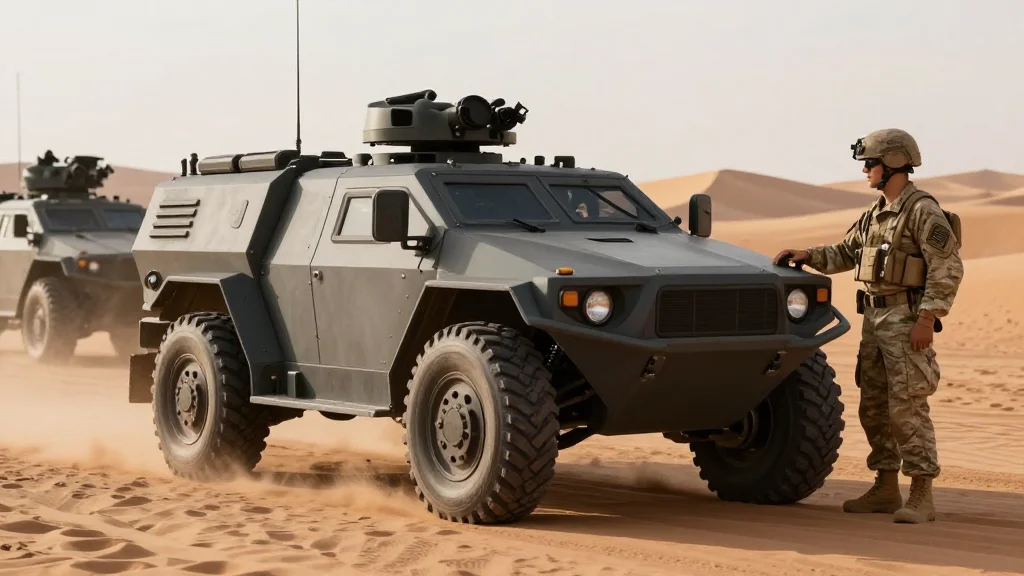
Army Uses Ground Robots & Combat Vehicles in First Assault Warfare Test
Why It Matters
Integrating autonomous robots with manned combat vehicles accelerates the Army’s shift toward AI‑enabled warfare, potentially reshaping force structure and expeditionary capabilities.
Key Takeaways
- •Army fielded 12 unmanned ground vehicles alongside infantry in Morocco.
- •Robots integrated with Stryker and Bradley platforms for coordinated assaults.
- •Test evaluated autonomous navigation, target acquisition, and soldier‑robot communication.
- •Findings will shape future doctrine for robotic combined‑arms operations.
- •African Lion 26 demonstrated rapid deployment of AI‑driven combat systems.
Pulse Analysis
The Army’s push toward robotic warfare has moved from laboratory prototypes to field‑tested concepts, and African Lion 26 in Morocco marked a pivotal milestone. By deploying a fleet of unmanned ground vehicles alongside traditional combat platforms, the service demonstrated that autonomous systems can operate in the same kinetic environment as infantry and armored units. The exercise leveraged AI‑driven navigation and sensor suites to enable robots to identify obstacles, locate targets, and relay data to soldiers in real time, reducing the decision‑making loop on the battlefield.
During the test, each robot was tasked with specific assault roles—ranging from breaching fortified positions to providing reconnaissance for advancing troops. Integration with Stryker and Bradley vehicles allowed for seamless hand‑off of target information and coordinated fire support. Engineers emphasized the importance of robust communications links, as any latency could jeopardize mission success. Early metrics showed a 30% reduction in time to acquire and engage high‑value targets compared with conventional foot patrols, while casualty risk to personnel was markedly lower due to the robots absorbing initial contact.
The implications extend beyond tactical gains. Successful validation of these capabilities will likely accelerate procurement of next‑generation UGVs and influence the Army’s future force structure, potentially reducing the number of manned vehicles required for certain missions. Defense contractors are poised to benefit from increased demand for AI navigation modules, hardened communication networks, and modular payloads. As the service refines its doctrine, the broader defense community will watch closely, anticipating a new era where autonomous platforms become integral to combined‑arms operations worldwide.
Army Uses Ground Robots & Combat Vehicles in First Assault Warfare Test
Comments
Want to join the conversation?
Loading comments...