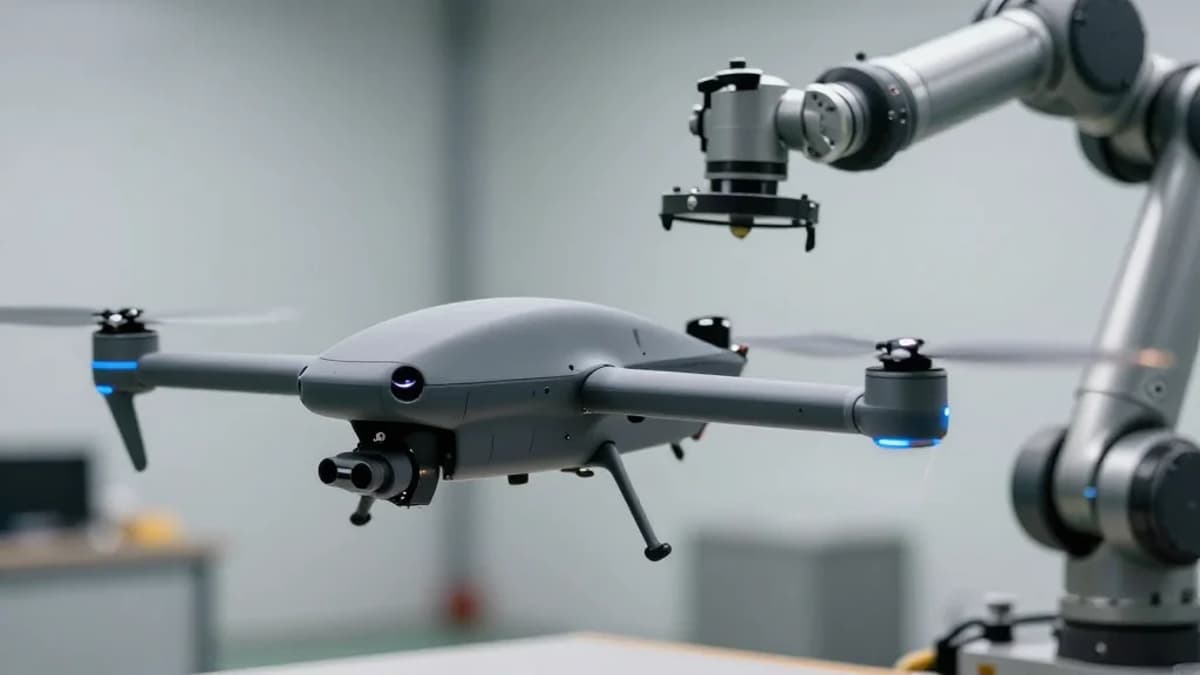
Army’s FUZE Program Speeds Path to Fielding Emerging Tech
•March 6, 2026
0
Why It Matters
FUZE shortens acquisition timelines, delivering battlefield‑ready capabilities faster while strengthening supply‑chain security, a critical advantage as global threats evolve rapidly.
Key Takeaways
- •FUZE funds prototypes, scaling successful tech in months
- •Venture‑capital approach reduces acquisition cycles from years
- •Rapid testing places eight firms in exercises within 20 days
- •Forward‑deployed officers provide real‑world demand signals for R&D
- •Onshoring critical electronics strengthens supply‑chain resilience
Pulse Analysis
The defense sector has long wrestled with the "valley of death"—the gap where promising technologies stall between prototype and full‑scale fielding. FUZE tackles this by borrowing venture‑capital principles: small, rapid investments, aggressive risk‑taking, and swift iteration. This model contrasts sharply with the Department of Defense’s traditional, multi‑year acquisition processes that often render solutions obsolete before they reach troops. By injecting capital early and maintaining tight operational feedback, FUZE aligns research priorities with the Army’s immediate mission needs, accelerating the transition from concept to combat capability.
A concrete illustration of FUZE’s impact emerged at the recent AUSA pitch competition. Within 20 days, eight selected firms were embedded in the Joint Pacific Multinational Readiness Center exercise in Hawaii, and within another 45‑50 days, several of those prototypes moved toward scale. This 75‑day end‑to‑end cycle compresses what historically took years, delivering AI‑driven analytics, autonomous platforms, and other emerging tools directly to soldiers for real‑world testing. Forward‑deployed acquisition officers stationed across Europe, Africa, and the Pacific act as on‑the‑ground demand signals, ensuring that development teams receive actionable feedback from diverse environments—from arctic cold to tropical jungles—thereby reducing the “silo effect” that hampers many R&D programs.
Beyond speed, FUZE addresses strategic supply‑chain concerns that have become acute during recent conflicts. By investing in onshoring critical electronics and minerals, the program bolsters the organic industrial base, mitigating vulnerabilities associated with overseas dependencies. Simultaneously, the initiative promotes a cultural shift toward risk tolerance and focused investment, moving away from spreading limited funds thinly across numerous projects. This dual emphasis on rapid innovation and resilient logistics positions the Army to field cutting‑edge capabilities while safeguarding the supply chain, setting a new benchmark for military acquisition in an era of accelerating technological change.
Army’s FUZE Program Speeds Path to Fielding Emerging Tech
0
Comments
Want to join the conversation?
Loading comments...