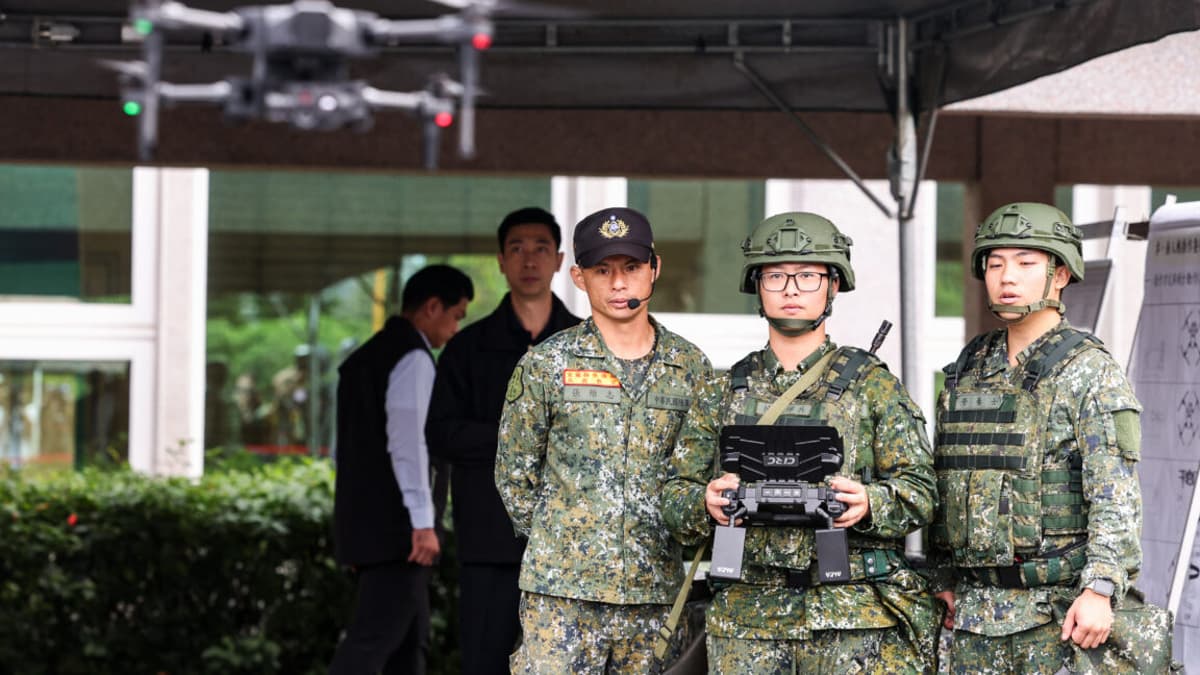
As China Looms, Taiwan Makes More Drones for Defense and the US Military
Companies Mentioned
Why It Matters
The investment strengthens Taiwan’s asymmetric defence against a growing Chinese threat while creating a export‑oriented drone industry that could diversify global supply chains away from China’s dominant players.
Key Takeaways
- •Taiwan proposes NT$6.6 bn (~$210 m) six‑year drone procurement plan.
- •Over 208,000 attack drones and 1,400 recon drones slated 2026‑31.
- •Thunder Tiger’s Overkill drones cleared for Pentagon use, $3k‑$5k each.
- •Production target: 15,000 monthly now, >100,000 by 2030.
- •Exports aim at US, Europe, Ukraine despite DJI’s price advantage.
Pulse Analysis
Amid escalating cross‑strait tensions, Taiwan is turning to indigenous unmanned systems to shore up its defensive posture. The newly proposed NT$6.6 billion budget reflects a strategic shift from reliance on U.S. platforms toward a self‑sufficient drone fleet capable of coastal strike and surveillance. By 2031, the island aims to field over 200,000 attack drones, a move that not only bolsters deterrence but also signals to allies a commitment to modern, networked warfare.
The procurement surge is a catalyst for Taiwan’s burgeoning aerospace sector. Companies like Thunder Tiger have already secured Pentagon certification for their Overkill FPV loitering‑munition drones, priced between $3,000 and $5,000, and are expanding production with a new Ohio facility capable of 60,000 motors per year. Partnerships with U.S. AI firms such as Auterion and Shield AI enhance software capabilities, while component exports support Ukraine’s drone war effort. This dual focus on hardware scale and software sophistication positions Taiwan as a viable alternative to China’s DJI, especially for customers seeking supply‑chain resilience.
Nevertheless, challenges remain. DJI still dominates the global commercial market with 70‑80 % share, and Taiwanese manufacturers must eliminate Chinese‑sourced parts to meet export‑control standards. Scaling production from the current 15,000 units per month to over 100,000 by 2030 will require significant capital investment and workforce training. If Taiwan can navigate these hurdles, its drone ecosystem could become a cornerstone of regional security architecture and a key export pillar for the island’s economy.
As China looms, Taiwan makes more drones for defense and the US military
Comments
Want to join the conversation?
Loading comments...