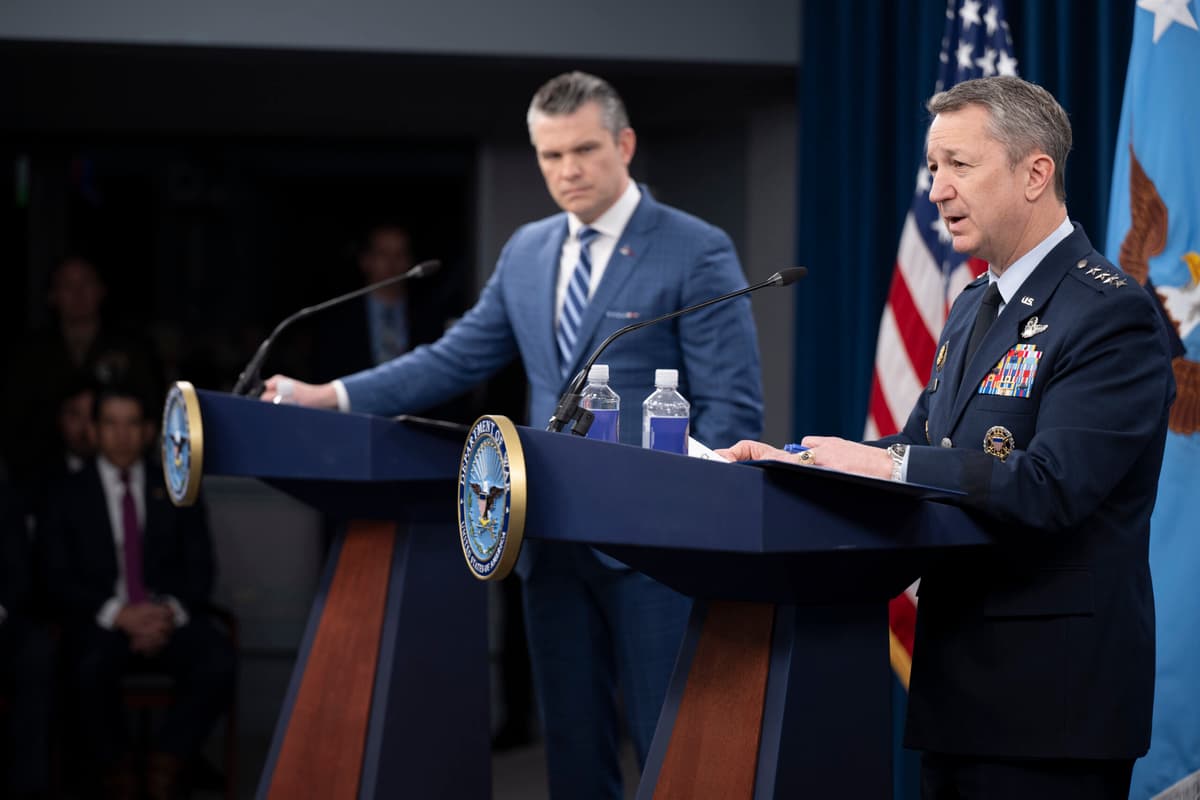
As US Announces Ceasefire with Iran, Pentagon Says Forces Will ‘Stay Ready’
Why It Matters
The stance signals sustained U.S. deterrence in the Middle East, preserving leverage over Iran’s nuclear ambitions and regional stability. It also underscores the logistical and fiscal burden of maintaining a high‑readiness posture far from home.
Key Takeaways
- •Operation Epic Fury struck over 13,000 Iranian targets.
- •80% of Iran’s air defenses and 90% navy destroyed.
- •62 bomber missions; 18 round‑trip B‑2 flights from U.S.
- •U.S. deployed ~300 fighters, bombers, tankers across Europe and Middle East.
- •Pentagon vows forces stay ready if ceasefire lapses.
Pulse Analysis
The ceasefire between the United States and Iran marks a tactical pause, but Pentagon officials made clear that it is not a strategic withdrawal. By keeping a massive air‑power footprint—over 300 fighters, bombers and tankers stationed across Europe and the Middle East—the United States signals that it can re‑engage at a moment’s notice. This posture leverages the logistical capabilities demonstrated during Operation Epic Fury, where 62 bomber missions, including 18 long‑range B‑2 stealth sorties from the continental United States, delivered precision strikes on Iran’s air defenses, naval assets and nuclear facilities.
Beyond the immediate military metrics, the ceasefire carries significant geopolitical weight. Iran’s agreement to halt hostilities is tied to the dismantling of its nuclear program, a core U.S. objective since the 2015 JCPOA. By publicly declaring that 80% of Iran’s air‑defense network and roughly 90% of its navy have been neutralized, the Pentagon aims to pressure Tehran into compliance while reassuring allies in the Gulf of a continued U.S. security umbrella. The involvement of Space Force assets, providing real‑time satellite surveillance, further integrates modern joint‑force concepts and underscores the multi‑domain approach to deterrence.
For defense contractors and policymakers, the episode highlights both opportunity and risk. The sustained deployment of legacy platforms such as B‑1, B‑52 and the newer EA‑37B electronic‑attack jets demonstrates ongoing demand for aircraft upgrades, munitions, and sustainment services. At the same time, the commitment to stay ready imposes a fiscal strain, as maintaining high‑readiness forces abroad requires significant budget allocations. Stakeholders must weigh the cost of prolonged presence against the strategic benefit of preventing Iran from reconstituting its missile and nuclear capabilities, a balance that will shape U.S. defense spending and diplomatic strategy in the years ahead.
As US Announces Ceasefire with Iran, Pentagon Says Forces Will ‘Stay Ready’
Comments
Want to join the conversation?
Loading comments...