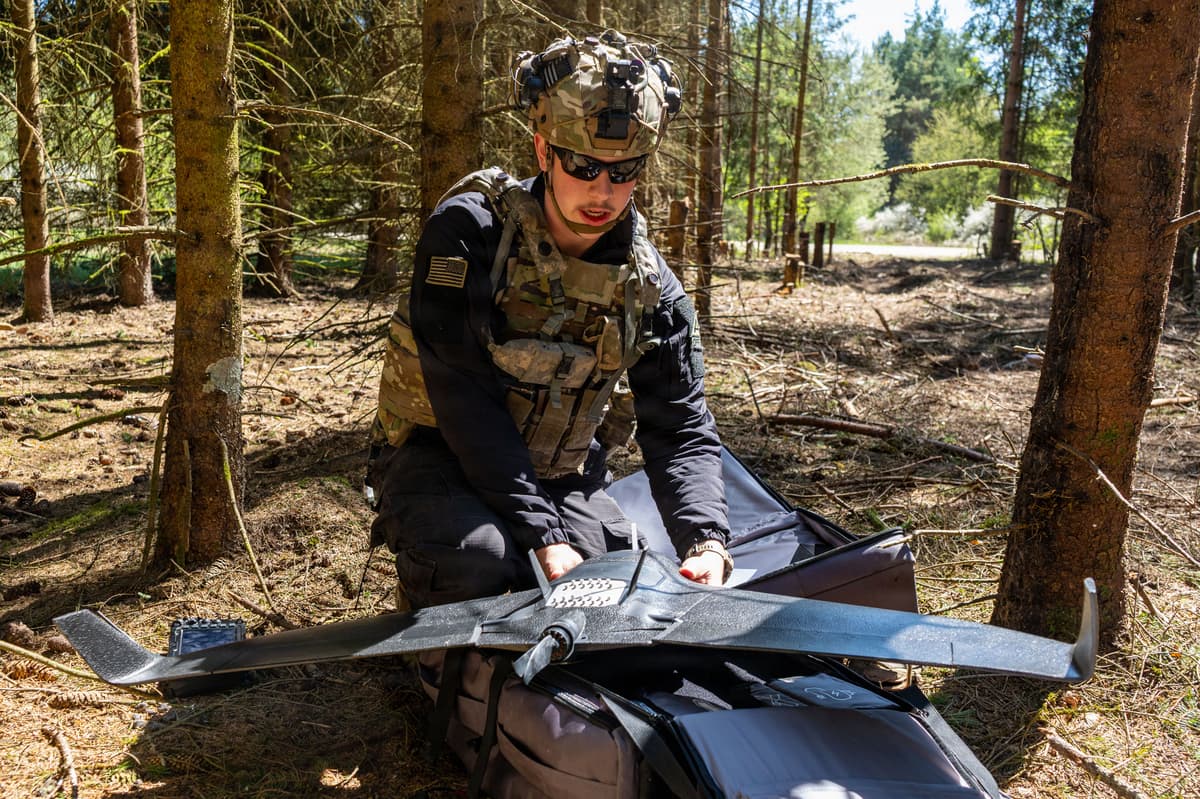
As US Eyes Smaller Military Footprint in Europe, New Unit Trains for Drone Warfare
Why It Matters
By institutionalizing drone‑focused OPFOR training, the Army accelerates readiness for high‑intensity conflicts where cheap UAVs dominate, while the European drawdown could force a rethink of where such capabilities are hosted.
Key Takeaways
- •Eerie Company acts as OPFOR with drones at Germany’s Joint Readiness Center
- •Unit mirrors Ukrainian drone tactics, training U.S. and allies for modern combat
- •Pentagon plans to withdraw 5,000 troops from Germany within a year
- •All service members can qualify as drone pilots, expanding Army skill set
Pulse Analysis
The U.S. Army’s decision to stand up Eerie Company, a 1st Battalion, 4th Infantry Regiment unit stationed at the Joint Multinational Readiness Center in Hohenfels, Germany, reflects a strategic pivot toward drone‑centric training even as the Pentagon prepares to pull roughly 5,000 troops from the European theater. Designed to act as an opposing force, the company blends conventional infantry tactics with unmanned aerial systems that emulate the battlefield dynamics seen in Ukraine. By fielding a dedicated OPFOR unit, the Army can test allied formations against realistic, high‑tempo drone threats without relying on external partners.
Ukraine’s war has become a live laboratory for cheap, commercially available drones and sophisticated electronic‑warfare kits, prompting Western militaries to accelerate their own capabilities. Eerie Company’s primary platform, the Neros Archer FPV system, offers configurable payloads and extended flight profiles that replicate the short‑range reconnaissance and loitering‑munition roles observed on the Eastern Front. Soldiers like Spc. Ryan Hatcher report battery endurance of eight to ten minutes, sufficient for iterative training cycles. The Army’s policy that any service member can qualify as a drone pilot further democratizes the skill set, embedding it across MOSs and units.
The timing of this initiative coincides with a broader drawdown that could reshape the U.S. presence in Europe, raising questions about the long‑term sustainability of specialized training units abroad. If the reduction proceeds, the Army may need to relocate or virtualize the OPFOR capability, potentially leveraging allied ranges or synthetic environments. Defense contractors that supply FPV drones and electronic‑warfare packages stand to benefit from increased procurement, while NATO partners gain a ready model for integrating unmanned systems into combined‑arms doctrine. Ultimately, Eerie Company signals a doctrinal shift that places autonomous aerial assets at the core of future combat readiness.
As US eyes smaller military footprint in Europe, new unit trains for drone warfare
Comments
Want to join the conversation?
Loading comments...