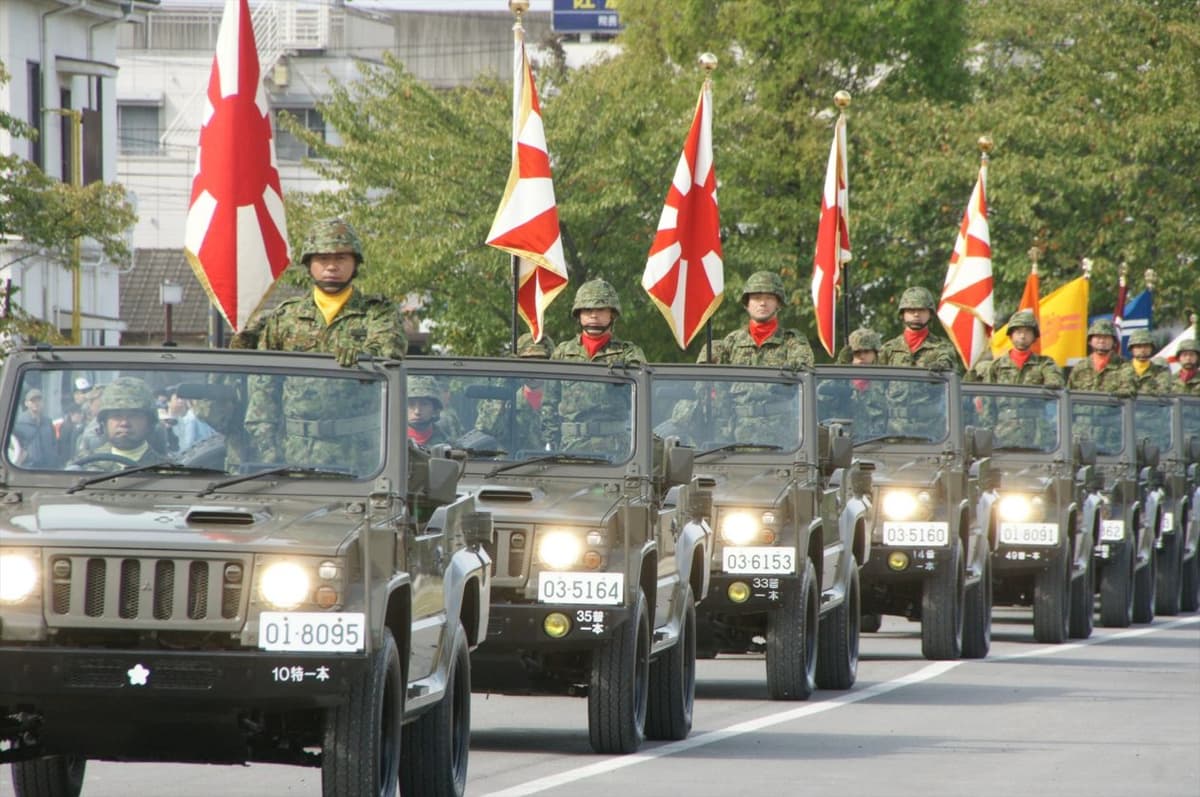
Asian NATO Debate Reignites After Japan’s Landmark Participation in Largest Military Drills in Philippines
Why It Matters
The outcome will determine whether the Indo‑Pacific moves toward a formal collective‑defence bloc or a looser network of strategic partnerships, directly affecting US influence, China’s posture, and regional stability.
Key Takeaways
- •Japan deployed 1,400 combat troops to Balikatan 2026, first since WWII
- •Balikatan 2026 involved 17,000 personnel from seven nations, largest ever
- •Debate resurfaces between Asian NATO concept and pragmatic multi‑alignment among middle powers
- •Japan aims to hit 2% of GDP defense spending by FY2025
- •South Korea‑India joint vision targets $54 billion trade by 2030
Pulse Analysis
The 41st Balikatan exercise, held from April 20 to May 8 in the Philippines, became the largest ever joint drill in the Indo‑Pacific, fielding about 17,000 troops from the United States, Japan, Australia, Canada, France and New Zealand, plus 17 observers. Japan’s contribution of 1,400 Self‑Defence Force personnel marked the first deployment of Japanese combat troops abroad since World War II, a direct outcome of the 2014 constitutional reinterpretation and the Kishida administration’s accelerated defence budget. The shift from bilateral training to a multilateral deterrence architecture signals a new level of operational integration among Washington’s regional partners.
The exercise has revived a long‑standing debate among strategic elites: whether the region should coalesce around an “Asian NATO” – a treaty‑based collective defence model championed by former Japanese minister Shigeru Ishiba – or pursue a more flexible “pragmatic multi‑alignment” that lets middle powers retain strategic autonomy. Proponents of an Asian NATO argue that a formal alliance would deter Chinese aggression and fill the collective‑defence gap left by NATO’s absence in Asia. Critics, including scholars from the Asan Institute, warn that a rigid pact could alienate potential partners and constrain the diverse security portfolios of countries such as South Korea, India and Indonesia.
For policymakers, the choice has concrete budgetary and diplomatic consequences. Japan is on track to raise defence spending to roughly 2 % of GDP by fiscal 2025, while Canada, Australia and New Zealand are expanding their mini‑lateral frameworks to hedge against both Beijing’s assertiveness and Washington’s unpredictable posture under the Trump‑era resurgence. The emerging “alliance‑plus” model—maintaining core US ties while cultivating parallel partnerships across Europe, the Gulf and the Indo‑Pacific—offers a pragmatic path that balances deterrence with economic interdependence. How quickly middle powers can institutionalise these networks will shape the security architecture of the Indo‑Pacific for the next decade.
Asian NATO Debate Reignites After Japan’s Landmark Participation in Largest Military Drills in Philippines
Comments
Want to join the conversation?
Loading comments...