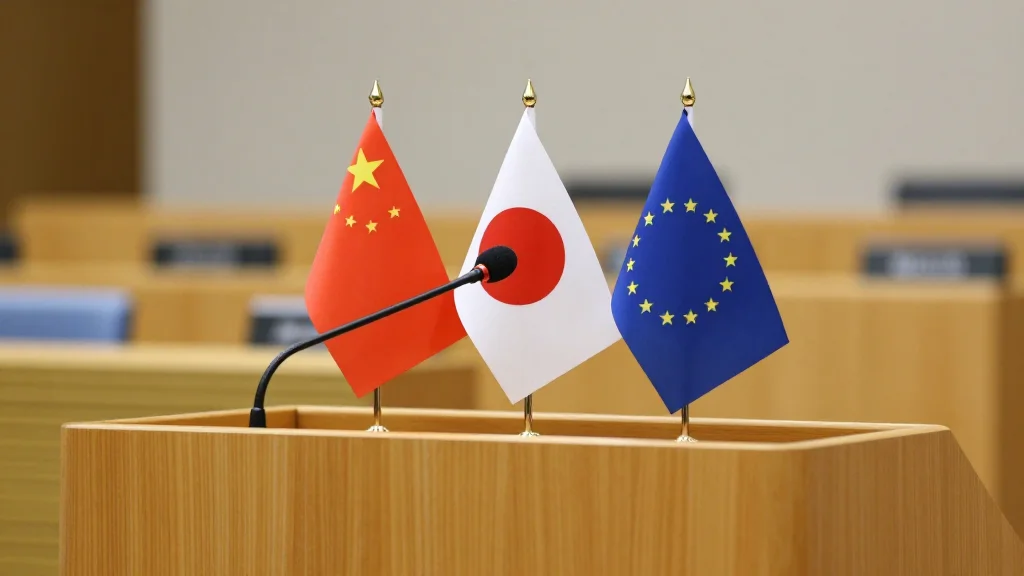
At UN, China Denounces Japan and EU over South China Sea Remarks
Why It Matters
The clash signals heightened geopolitical tension in a region that underpins global trade, raising the risk of naval confrontations and undermining the rules‑based order that safeguards freedom of navigation.
Key Takeaways
- •China condemned Japan and EU comments on South China Sea at UN.
- •Beijing accused Tokyo of provocations in Taiwan Strait and militaristic shift.
- •EU warned South China Sea tensions threaten vital shipping routes.
- •Japan’s destroyer transit sparked Chinese claim of deliberate provocation.
- •Sino‑Japanese relations fell to worst level since 2025 diplomatic row.
Pulse Analysis
The United Nations Security Council became a stage for a sharp diplomatic clash on April 27, when China publicly rebuked remarks from Japan and the European Union concerning the South China Sea. Beijing’s deputy ambassador Sun Lei dismissed the statements as unfounded, insisting the waterway remains one of the world’s most open shipping lanes. The exchange underscores how the South China Sea, a conduit for roughly $3 trillion in annual trade, continues to be a flashpoint where competing claims intersect with broader questions about a rules‑based international order.
Tokyo’s vice‑foreign minister Ayano Kunimitsu used the same forum to reaffirm Japan’s opposition to any forceful alteration of the status quo, while the EU’s Stavros Lambrinidis warned that escalating tensions could jeopardize a critical maritime corridor. Beijing, however, framed the comments as provocations, accusing Japan of “flexing muscles” in the Taiwan Strait and of pursuing an expansionist defence policy. The rhetoric reflects a widening security dilemma: Japan’s recent deployment of offensive missiles and relaxed arms‑export rules are viewed by Beijing as steps toward a more assertive regional posture.
Analysts warn that the verbal sparring could translate into operational friction, especially as both sides increase naval patrols near contested reefs and the Taiwan Strait. For the United States and its allies, maintaining freedom of navigation will likely require more frequent joint exercises and diplomatic outreach to temper Beijing’s narrative of “new militarism” in Japan. Meanwhile, China’s own military buildup and large‑scale drills signal a willingness to assert its claims, raising the risk that miscalculations could disrupt global supply chains and trigger broader geopolitical escalation.
At UN, China denounces Japan and EU over South China Sea remarks
Comments
Want to join the conversation?
Loading comments...