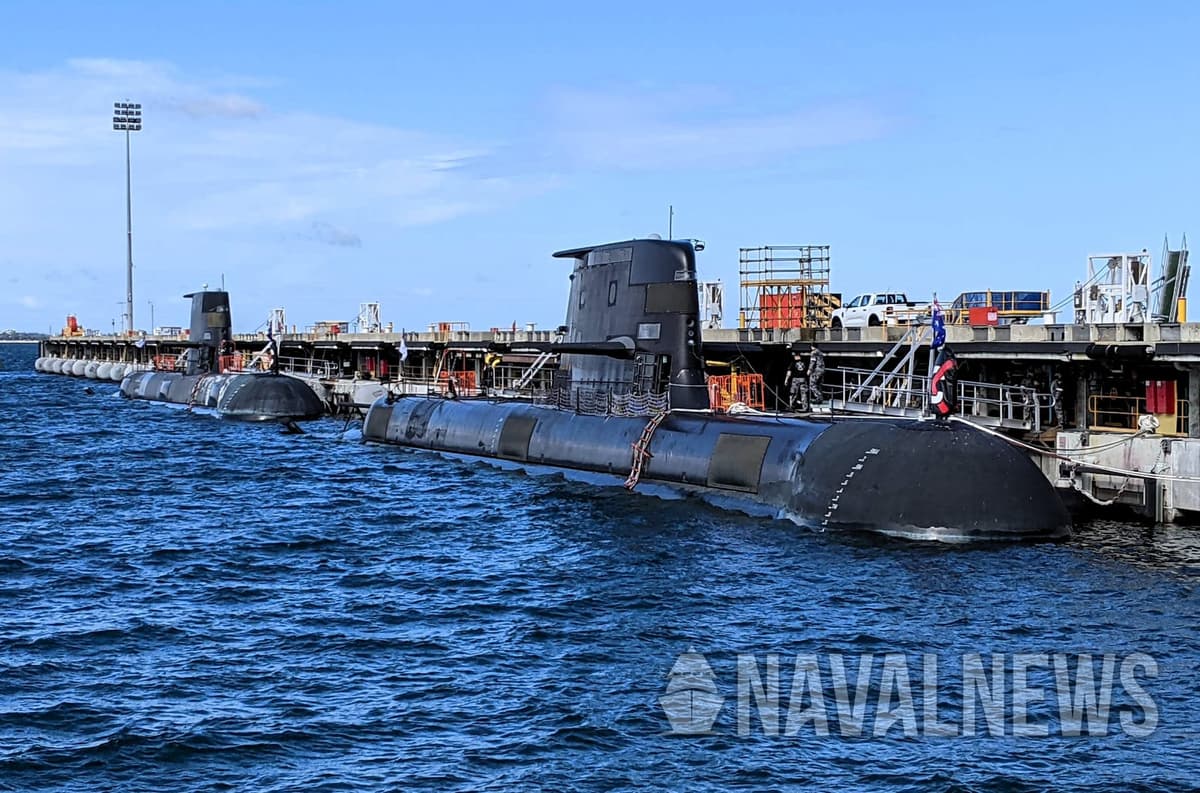
Australia Begins Life Extension Effort for Collins Submarines, Announces A$11 Billion Cost over Ten Years
Why It Matters
Extending the Collins fleet preserves Australia’s under‑sea capability during a transitional period, reducing a potential capability gap before the new nuclear‑powered submarines become operational.
Key Takeaways
- •Australia allocates A$11 bn (~US$7.8 bn) for Collins submarine life extension.
- •First LOTE work starts on HMAS Farncomb, commissioned 1998.
- •Scope may vary; some boats could face limited operational readiness.
- •Prior modernisation plans were delayed, dropping Tomahawk and Safran mast upgrades.
- •Extension aims to keep Collins fleet active into 2040s amid AUKUS.
Pulse Analysis
The Collins‑class fleet, commissioned between 1996 and 2003, has long outlived its original 30‑year design horizon. Decades of policy shifts—from the 2009 Rudd White Paper to the aborted French SEA 1000 deal and the recent AUKUS nuclear‑submarine pact—left the submarines without systematic upgrades, resulting in accelerated wear, corrosion, and capability shortfalls. This historical inertia explains why the government now faces a steep learning curve: the first vessel, HMAS Farncomb, must undergo a comprehensive engineering assessment before a fleet‑wide plan can be solidified.
The newly announced LOTE programme earmarks A$11 billion (≈US$7.8 billion) for a ten‑year window, marking the most substantial investment in the class since its inception. By prioritising sustainment on the youngest boats, such as HMAS Rankin, the Royal Australian Navy hopes to mitigate the risk of uneven readiness across the six submarines. However, officials have signalled that not all vessels will receive identical upgrades; those receiving a reduced scope could see operational restrictions, potentially limiting patrol endurance and sensor performance. This uncertainty underscores the importance of the initial assessment phase, which will define cost baselines and technical requirements for the remaining fleet.
Strategically, the extension buys Australia critical time as it integrates three Virginia‑class nuclear attack submarines under the AUKUS framework, slated for service between 2032 and 2037. Maintaining a functional Collins fleet through the 2040s ensures a continuous under‑sea deterrent while the domestic submarine construction programme matures. Yet the sizeable fiscal commitment raises questions about long‑term affordability, especially if further delays or scope expansions arise. Decision‑makers will need to balance the immediate operational benefits of LOTE against the broader goal of a seamless transition to a modern, nuclear‑powered submarine force.
Australia begins life extension effort for Collins submarines, announces A$11 billion cost over ten years
Comments
Want to join the conversation?
Loading comments...