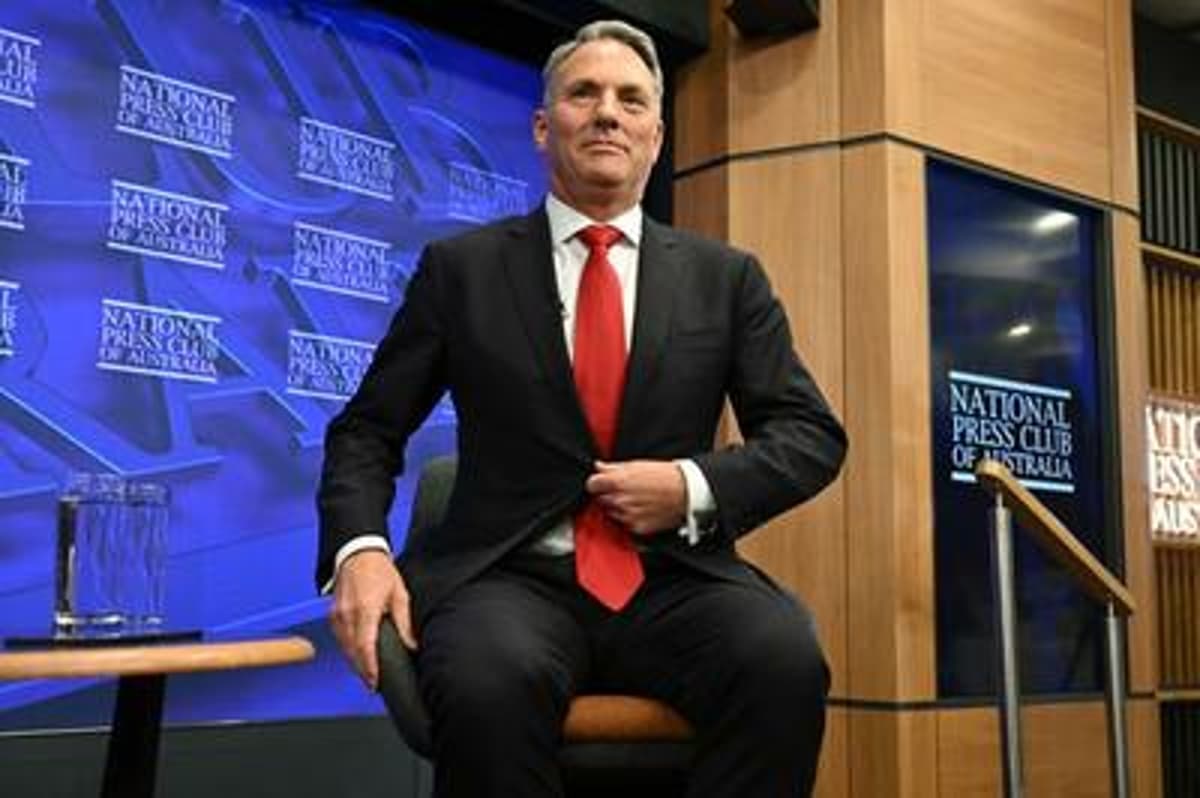
Australia Boosts Military Spending as Iran War Makes Global Impact
Why It Matters
The spending surge strengthens Australia’s self‑reliant defence posture while deepening its strategic partnership with the United States, reshaping the security balance in the Indo‑Pacific amid rising regional tensions.
Key Takeaways
- •Australia adds AU$53 bn (US$38 bn) to defence over ten years
- •Defence budget rises to 3% of GDP by 2033
- •Strategy emphasizes autonomous systems like Ghost Bat jet and Ghost Shark
- •Plans include eight AUKUS nuclear‑powered submarines costing up to US$264 bn
- •Focus on self‑reliance while maintaining US alliance ties
Pulse Analysis
The Iran‑Israel‑US confrontation has rippled across global security calculations, prompting Canberra to accelerate its defence modernization. By committing an additional AU$53 billion over ten years, Australia is delivering its largest peacetime budget increase, lifting defence spending to 3% of GDP by 2033. This fiscal shift reflects a broader trend among Western allies to shoulder more of their own security costs while still relying on the U.S. alliance network. The infusion targets high‑tech capabilities that can operate independently of traditional force structures.
Central to the new strategy is a push for autonomous and uncrewed systems. Indigenous projects such as the Ghost Bat jet and Ghost Shark underwater drone illustrate Australia’s ambition to field cutting‑edge platforms that reduce personnel risk and enhance operational tempo. Coupled with expanded long‑range strike assets and integrated air‑and‑missile defence, these technologies aim to create a layered deterrent capable of responding to threats across the maritime and aerial domains. The emphasis on self‑reliance does not equate to isolation; rather, it seeks to complement alliance commitments by filling capability gaps with home‑grown solutions.
The most visible element of the budget is the AUKUS submarine program, which will deliver at least eight nuclear‑propulsion vessels. With an estimated cost of up to AU$368 billion (US$264 billion) over thirty years, the fleet will dramatically boost under‑sea endurance and stealth, reshaping the Indo‑Pacific power balance. Industry analysts anticipate a surge in domestic shipbuilding, engineering, and supply‑chain activity, while regional actors will monitor how Australia’s enhanced capabilities affect maritime security dynamics. Ultimately, the spending surge signals a decisive pivot toward a more autonomous, technologically advanced defence posture that could set a benchmark for other allied nations.
Australia boosts military spending as Iran war makes global impact
Comments
Want to join the conversation?
Loading comments...