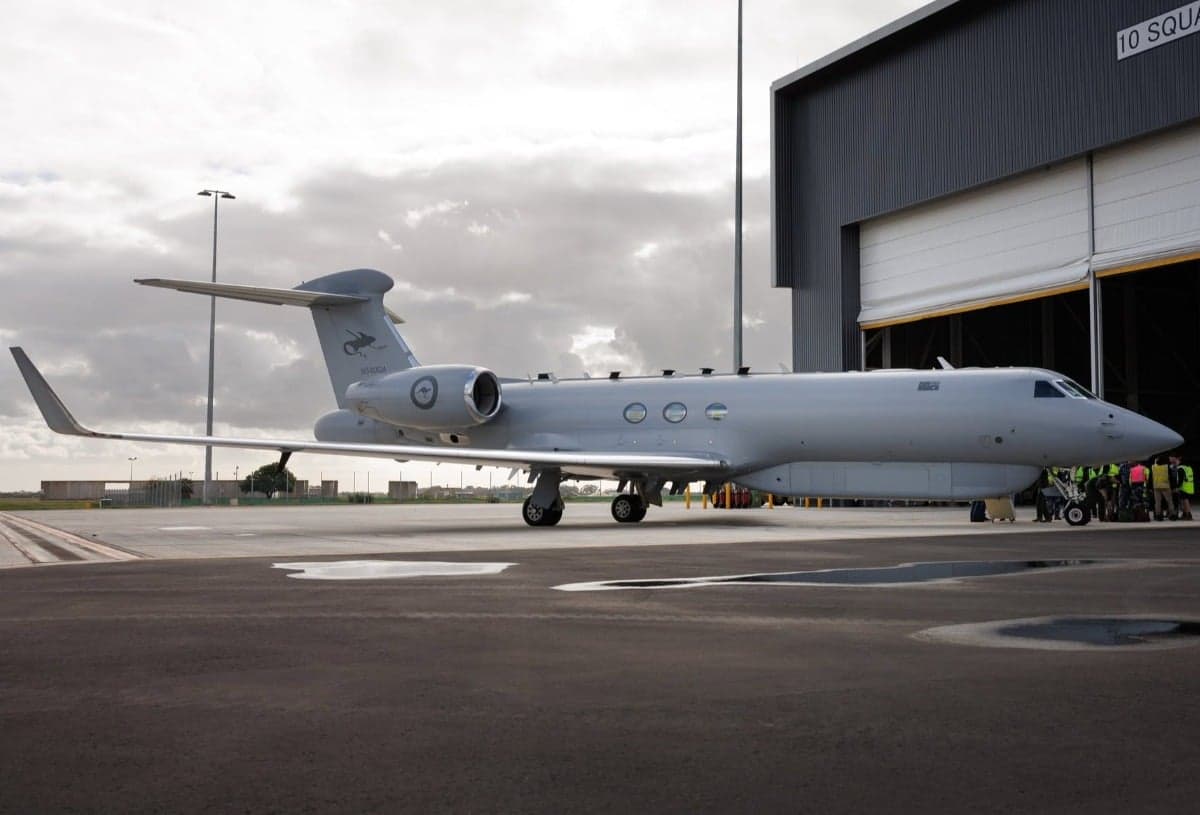
Australia Keeps Growing Its New Spy Plane Fleet
Companies Mentioned
Why It Matters
The new Peregrine fleet gives Australia a modern, high‑altitude SIGINT capability, bolstering its ability to monitor the contested Indo‑Pacific region and support allied operations.
Key Takeaways
- •Third MC‑55A Peregrine delivered, three of four planned aircraft now in Australia
- •Fleet to reach full operational capability by 2028 under No. 10 Squadron
- •Peregrine replaces aging AP‑3C Orion SIGINT platform with Gulfstream‑based ISR
- •L3Harris handles conversion in Texas; SNC supports integration in Australia
- •Platform enhances Indo‑Pacific surveillance alongside P‑8A Poseidon and MQ‑4C Triton
Pulse Analysis
The Indo‑Pacific has become a focal point for great‑power competition, prompting Australia to modernize its intelligence, surveillance, and reconnaissance (ISR) suite. The MC‑55A Peregrine, a Gulfstream G550 airframe rebadged by L3Harris, offers a blend of signals‑intelligence (SIGINT) and electronic‑warfare (EW) capabilities that far exceed the legacy AP‑3C Orion fleet. By detecting, characterising, and geolocating radar and communications emitters from standoff ranges, the aircraft provides decision‑makers with a real‑time electromagnetic picture of adversary activity across a vast maritime domain.
The procurement was executed through the U.S. Foreign Military Sales (FMS) mechanism, allowing the Australian Defence Force to acquire the platform under project AIR 555 Phase 1 while maintaining U.S. oversight of sensitive technology. L3Harris conducts the extensive airframe conversion at its Texas facility, and Sierra Nevada Corporation supplies on‑site support as the jets transition to operational status. Integrated with No. 10 Squadron, the Peregrines will operate alongside the P‑8A Poseidon maritime patrol aircraft and the MQ‑4C Triton high‑altitude drone, forming a layered surveillance network that can monitor sea lanes, monitor electronic emissions, and respond rapidly to emerging threats.
Strategically, the fleet’s full operational capability slated for 2028 will reinforce Australia’s National Defence Strategy, enhancing its capacity to protect key maritime approaches and contribute to allied intelligence sharing. The modern SIGINT platform not only deters potential adversaries but also provides a valuable asset for coalition operations, underscoring the deepening defence partnership between Australia and the United States in a region where information dominance is increasingly decisive.
Australia keeps growing its new spy plane fleet
Comments
Want to join the conversation?
Loading comments...