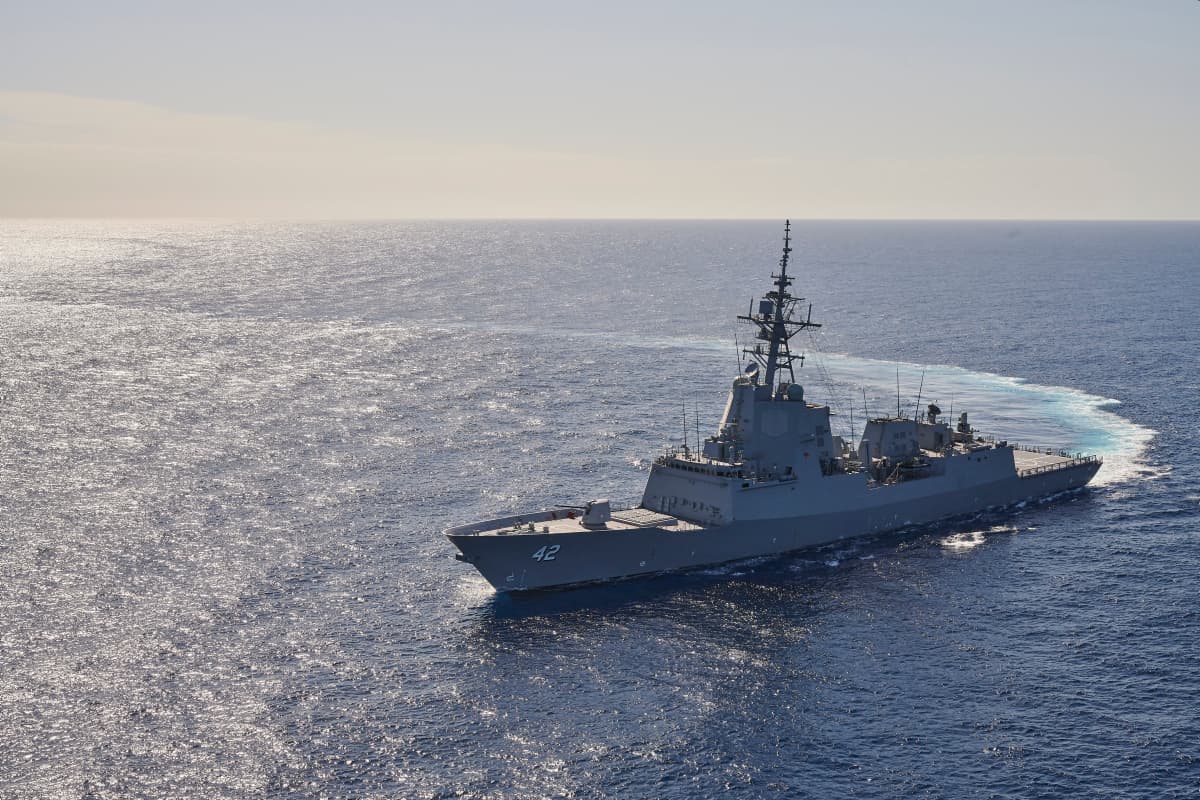
Australia Rolls Out Decade-Long $425B Defense Investment Plan
Why It Matters
The massive funding surge reshapes Australia’s defence posture, strengthening self‑reliance and signalling a more assertive role in regional security while driving growth in the national defence industrial base.
Key Takeaways
- •Australia commits $425B AUD (~$280B USD) to defense over ten years
- •Defense spending to reach 3% of GDP by 2033
- •Focus on sovereign submarines, long‑range strike, and autonomous systems
- •Industrial policy aims to boost domestic jobs and supply chains
- •Strategy emphasizes regional partnerships and rules‑based order
Pulse Analysis
Australia’s 2026 National Defence Strategy marks a decisive pivot toward greater self‑reliance amid a deteriorating strategic landscape in the Indo‑Pacific. The government has earmarked an additional $14 billion AUD (about $9 billion USD) for the next four years and a total of $53 billion AUD (~$35 billion USD) across the decade, pushing defense outlays to roughly 3 percent of GDP by 2033. Prime Minister Anthony Albanese and Defence Minister Richard Marles argue that the funding surge is essential to counter rising great‑power competition, cyber threats, and the spill‑over effects of conflicts in Ukraine and the Middle East.
The Integrated Investment Program translates the strategy into concrete capability upgrades. Funding will underwrite a sovereign fleet of conventionally‑armed, nuclear‑powered submarines, accelerate delivery of more lethal maritime platforms, and expand long‑range strike and integrated air‑and‑missile defence systems. A notable emphasis is placed on autonomous and uncrewed technologies across land, air and sea, as well as counter‑uncrewed air solutions to protect critical infrastructure. In parallel, the plan calls for a resilient multi‑orbit satellite communications network, ensuring secure data links for joint operations and enhancing Australia’s situational awareness in contested domains.
Beyond the hardware, the strategy is a catalyst for Australia’s defence industrial base. By linking procurement to domestic suppliers, the government aims to generate thousands of high‑skill jobs and reduce reliance on foreign vendors. Strengthened partnerships with Indo‑Pacific allies, particularly through joint research and co‑development projects, are expected to deepen interoperability and reinforce the rules‑based order that underpins regional stability. Analysts see the $425 billion AUD (~$280 billion USD) commitment as a signal to both allies and potential adversaries that Australia will play an increasingly proactive role in shaping security outcomes across the Pacific.
Australia rolls out decade-long $425B defense investment plan
Comments
Want to join the conversation?
Loading comments...