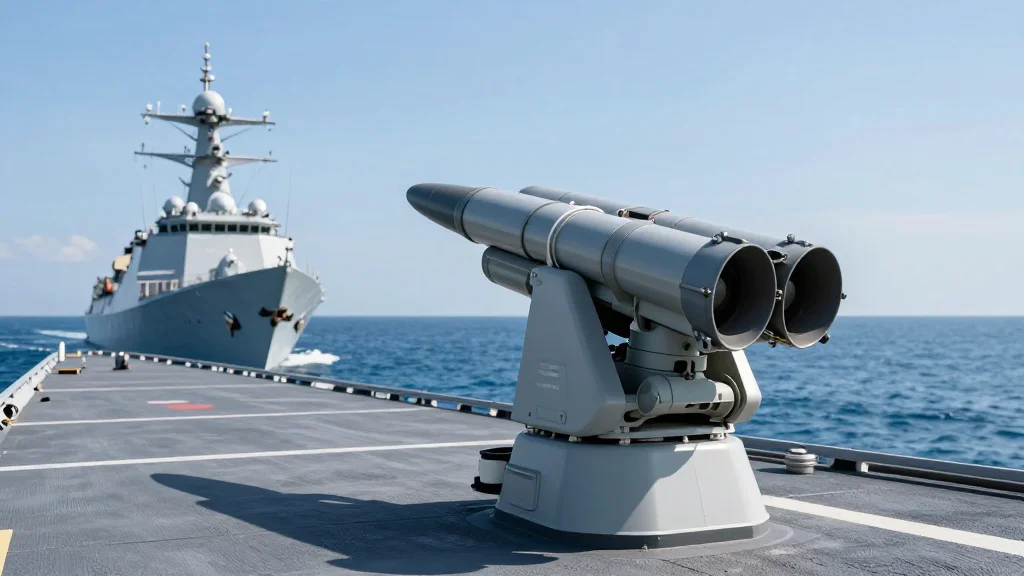
Australian Mogami-Class Frigates to Receive SeaRAM Missile System
Companies Mentioned
Why It Matters
Integrating SeaRAM gives the RAN a proven, layered air‑and‑missile defense on its newest surface combatants, enhancing Australia’s maritime security in a contested Indo‑Pacific. The deal also signals growing reliance on U.S. defense technology within Australia’s naval modernization program.
Key Takeaways
- •Raytheon to supply SeaRAM for first three Australian Mogami frigates
- •SeaRAM integration marks RAN’s first use of the system
- •Deliveries start late 2028; first frigate due Dec 2029
- •SeaRAM provides autonomous 10 km defense against missiles, drones
- •First three Mogami frigates cost about US$6.5 bn total
Pulse Analysis
The SeaRAM system, a hybrid of the Phalanx CIWS and the RIM‑116 Rolling Airframe Missile, brings a proven, low‑footprint defensive layer to the Royal Australian Navy’s upcoming Mogami‑class frigates. By automating target detection and missile launch within a 10‑kilometre envelope, SeaRAM fills the gap between close‑in guns and longer‑range missile interceptors, protecting the vessel against supersonic cruise missiles, swarming drones and hostile helicopters. Its integration marks the first time the RAN will field this U.S.‑origin technology, aligning Australia more closely with allied naval standards.
Australia’s decision to adopt the Japanese‑designed Mogami frigate, after cancelling the larger Hunter‑class program, reflects a strategic pivot toward cost‑effective, versatile platforms. At roughly US$6.5 bn for the first three ships, the Mogami class offers a 6,200‑ton displacement, CODAG propulsion and a 32‑cell vertical launch system capable of carrying surface‑to‑air and land‑attack missiles. Coupled with SeaRAM, the vessels gain a comprehensive self‑defence suite that supports anti‑submarine warfare, strike missions and force‑protection tasks, positioning the RAN to meet evolving regional threats in the Indo‑Pacific.
For Raytheon, the contract underscores its expanding role in the global naval point‑defence market. Manufacturing will occur in Louisville, Kentucky, leveraging existing supply chains that serve U.S. Navy surface combatants and allied navies such as Japan’s. The deal could open pathways for further upgrades, including integration with future radar and combat‑system architectures, and may encourage other Pacific allies to consider SeaRAM as a cost‑effective alternative to larger missile‑defence systems. As maritime competition intensifies, the partnership highlights how proven U.S. technologies are becoming integral to allied shipbuilding programs worldwide.
Australian Mogami-class frigates to receive SeaRAM missile system
Comments
Want to join the conversation?
Loading comments...