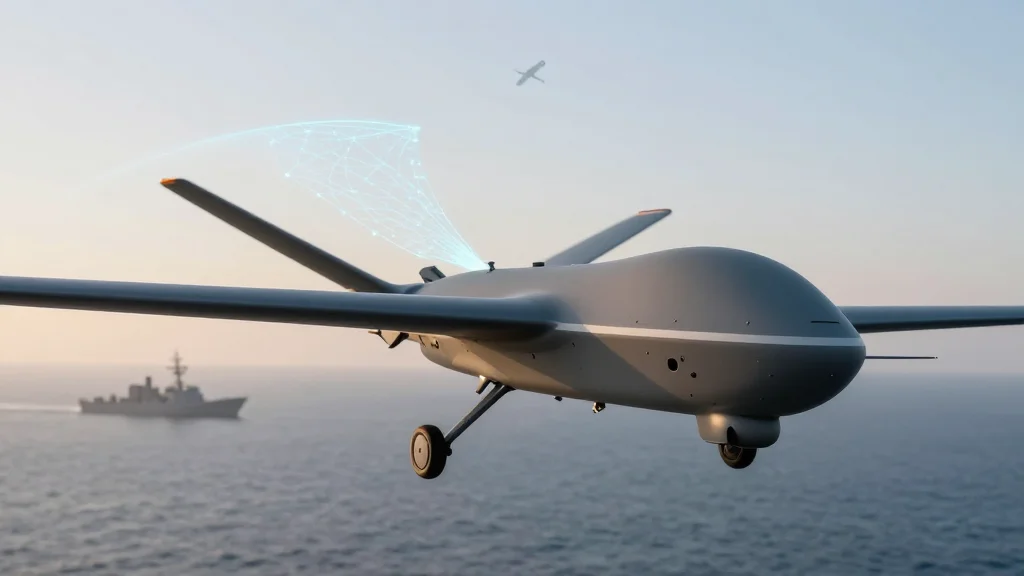
Autonomous Defense Startup Scout AI Raises $100M Series A to Build Foundation Model for Unmanned Warfare

Why It Matters
The capital infusion positions Scout AI to become a leading supplier of AI‑driven command‑and‑control tools, potentially reshaping how modern militaries conduct unmanned warfare and influencing defense procurement priorities.
Key Takeaways
- •Scout AI secured $100M Series A led by Align Ventures, Draper Associates.
- •Fury model aims to coordinate autonomous fleets across air, land, sea, space.
- •Company already earned $11M U.S. Department of War contracts.
- •Demonstrated fully autonomous end-to-end strike mission using AI agents.
- •Team of 34 engineers scaling multi‑agent collaboration to outpace adversaries.
Pulse Analysis
The $100 million Series A for Scout AI reflects a broader surge of venture capital into defense‑focused artificial intelligence. Investors such as Align Ventures and Draper Associates see autonomous systems as the next frontier of military advantage, especially as geopolitical rivals accelerate their own AI programs. This funding round not only validates Scout AI’s early traction—$11 million in Department of War contracts and a functional autonomous strike demo—but also signals confidence that private‑sector innovation can keep pace with government‑driven research pipelines.
At the heart of Scout AI’s strategy is Fury, a foundation model built to orchestrate swarms of unmanned assets in contested environments. Unlike traditional single‑platform control, Fury leverages multi‑agent collaboration, enabling rapid decision‑making even with limited communications. The platform’s ability to integrate air, land, sea and space systems promises a unified operational picture, reducing latency and human workload. Technical challenges remain, including robust perception under electronic warfare, ethical constraints, and ensuring fail‑safe behavior, but Scout’s Ox orchestrator and recent end‑to‑end strike showcase tangible progress toward these goals.
If Scout AI successfully scales Fury, the implications for the defense market are profound. A reliable AI brain could lower the cost per mission, extend the reach of unmanned fleets, and shift doctrinal emphasis toward distributed, autonomous operations. Competitors—from established defense contractors to emerging AI startups—will likely intensify R&D spending, prompting faster regulatory and policy discussions around autonomous weapon systems. For policymakers and industry leaders, monitoring Scout AI’s deployment timeline will be critical to assess both strategic advantage and the need for governance frameworks that balance innovation with accountability.
Autonomous Defense Startup Scout AI Raises $100M Series A to Build Foundation Model for Unmanned Warfare
Comments
Want to join the conversation?
Loading comments...