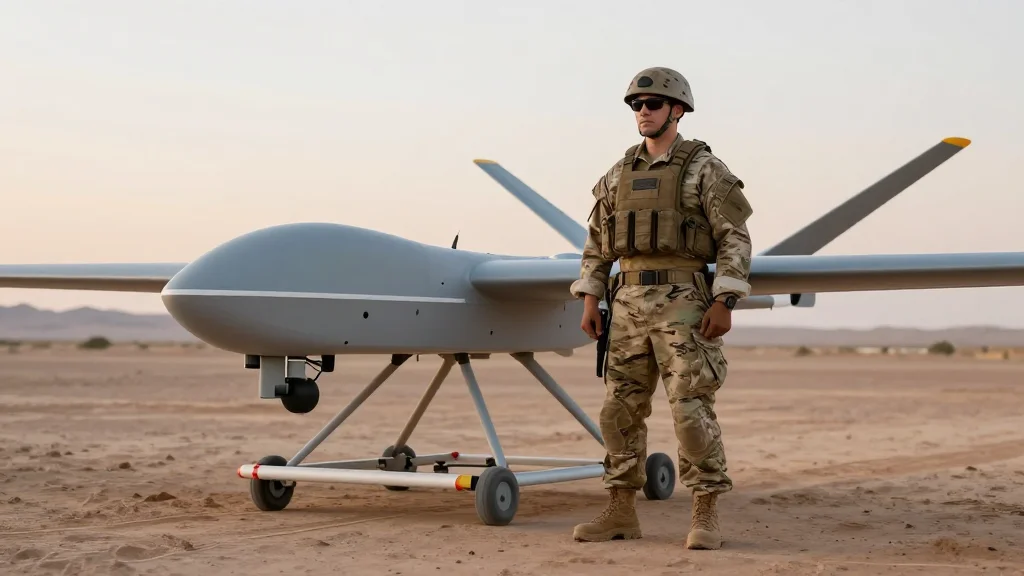
Autonomous Drones Key to Marine Corps’ Future Logistics
Why It Matters
Autonomous UAS give the Marine Corps resilient, scalable logistics and combat options, reducing supply‑line vulnerability and enhancing expeditionary lethality. The approach signals a broader DoD pivot toward AI‑driven, distributed warfare that could reshape defense procurement and industry partnerships.
Key Takeaways
- •Marine Corps disperses aviation to austere sites, reducing base vulnerability
- •Common Aviation Command and Control System unifies crewed and uncrewed platforms
- •Modular software enables pilots to control multiple drones simultaneously
- •MUX program targets VTOL UAS for strike, ISR, and electronic warfare
- •Autonomous drones proved decisive in Operation Epic Fury against Iran
Pulse Analysis
The Marine Corps’ push toward distributed operations reflects a strategic response to near‑peer threats that can target traditional supply hubs. By deploying autonomous unmanned aircraft systems from shifting, low‑profile sites, the service reduces its logistical footprint and creates a more survivable network of aerial assets. This model not only sustains forward‑deployed forces but also enables rapid resupply and reconnaissance in environments where conventional airfields are untenable, fundamentally altering how the Corps projects power in contested regions.
Central to this transformation is the Common Aviation Command and Control System, a modular, open‑architecture platform that standardizes hardware, software, and data links across a family of UAS. Software development is the program’s bottleneck, but it also offers the greatest upside, allowing multiple Marines to hand off control of a single drone in real time, regardless of location. The system’s flexibility supports crewed, uncrewed and optionally piloted configurations, letting operators manage several platforms simultaneously and accelerating the transition from one‑on‑one piloting to true swarm‑level autonomy.
Looking ahead, the MUX program aims to field a VTOL UAS capable of long‑range strike, ISR, and electronic warfare from both Navy vessels and forward operating bases. Its open, modular design lets Marines swap payloads in the field, tailoring capabilities to mission needs. The successful use of autonomous drones in Operation Epic Fury underscores the growing reliance on AI‑enabled systems across the Department of Defense, signaling new opportunities for defense contractors in software, sensor integration, and rapid‑prototype logistics solutions.
Autonomous Drones Key to Marine Corps’ Future Logistics
Comments
Want to join the conversation?
Loading comments...