Autonomous Vehicles Solve (and Create) Problems for Ports
Companies Mentioned
Why It Matters
AI‑driven autonomous vessels give ports continuous situational awareness, closing the gap between detection and action, which is critical as hostile unmanned systems proliferate. Their rapid, cost‑effective integration reshapes maritime security economics and operational doctrine.
Key Takeaways
- •AI-driven ASVs provide 24/7 port surveillance, reducing blind spots
- •Partnerships like OPT‑Mythos AI accelerate autonomous surface vehicle deployment
- •COTS sensor suites enable rapid, cost‑effective integration for maritime security
- •US ports lag Europe but are adopting USVs as force multipliers
- •Non‑kinetic systems like SeaGuard™ repel hostile AUVs without explosives
Pulse Analysis
The maritime domain is entering an era where autonomous platforms are both the threat and the solution. The December 2023 Ukrainian underwater drone attack, reportedly guided by hacked harbor cameras and AI, underscored how quickly adversaries can weaponize autonomous systems. Ports, traditionally reliant on manned patrols, now face blind spots that can be exploited by low‑observable AUVs. To counter this, the industry is turning to AI‑enabled edge processing that fuses sonar, optical, and thermal data, delivering instant object detection and classification. This shift mirrors broader defense trends where data‑driven autonomy reduces human workload while increasing reaction speed.
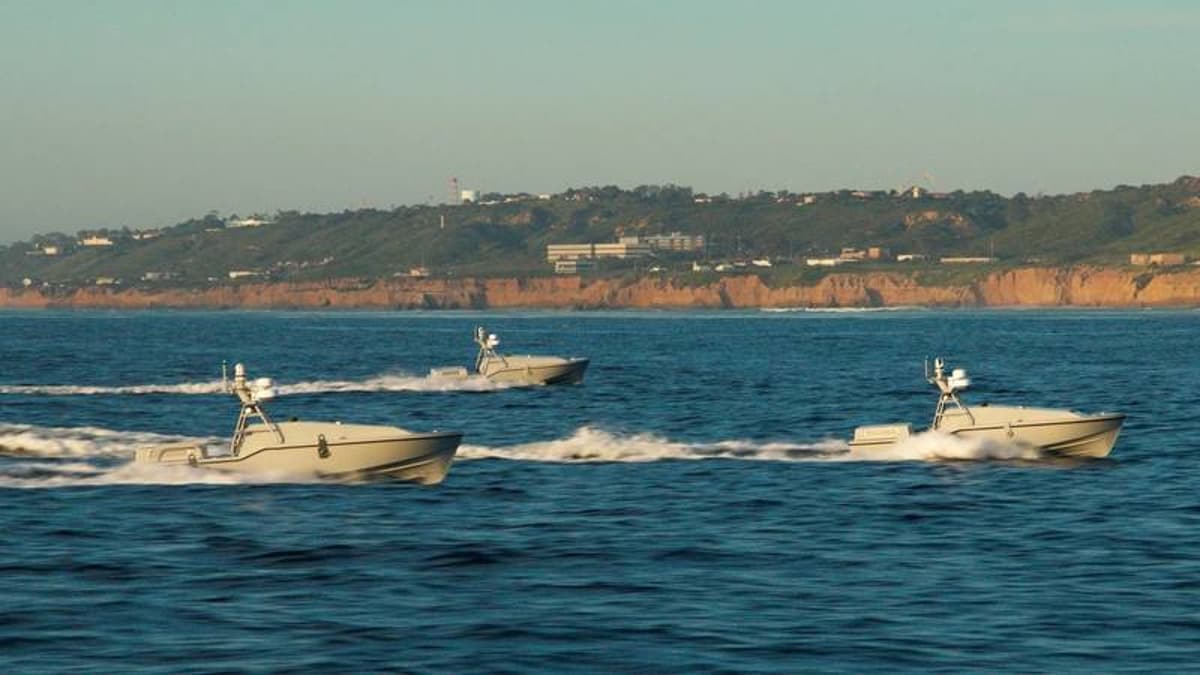
A vibrant ecosystem of partnerships is fueling rapid innovation. Ocean Power Technologies’ alliance with Mythos AI integrates adaptive learning across its WAM‑V fleet, while Open Ocean Robotics’ Enhanced Horizon and Underwater Listener provide real‑time analytics for surface and subsurface assets. The use of commercial‑off‑the‑shelf (COTS) hardware, such as Sonardyne’s SPRINT‑Nav, accelerates deployment and cuts costs, allowing ports to field multi‑domain sensor suites without bespoke engineering. Companies like Saronic, Sofar Ocean, and ThayerMahan are layering detection, classification, and non‑kinetic defeat capabilities—creating end‑to‑end security chains that can neutralize hostile drones without lethal force.
Adoption patterns reveal a geographic divide. European hubs such as Rotterdam and Hamburg, and Asian gateways like Singapore, have already integrated USVs as routine surveillance assets. U.S. ports are catching up, with pilots at Gulfport, California, and the Navy’s Saildrone deployments demonstrating operational viability. The scalability of autonomous vessels promises a force multiplier effect, enabling continuous monitoring at a fraction of traditional costs. As regulatory frameworks evolve and AI models become more robust, ports that invest early in autonomous, data‑centric security will gain a competitive edge, safeguarding trade flows against an increasingly sophisticated underwater threat landscape.
Autonomous Vehicles Solve (and Create) Problems for Ports
Comments
Want to join the conversation?
Loading comments...