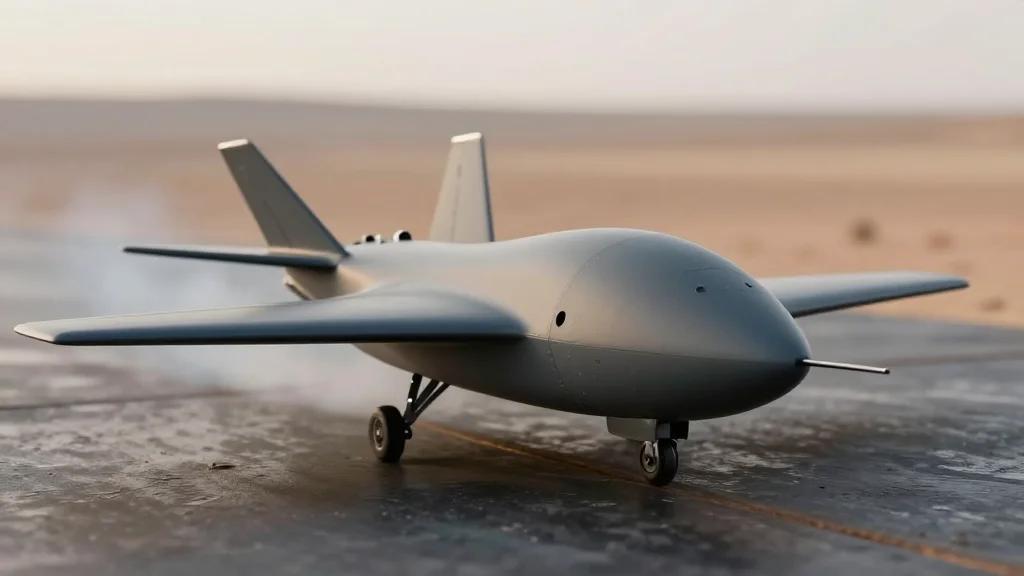
AV Unveils Mayhem 10 Loitering Munition for U.S. Army LE‑SR Competition

Companies Mentioned
Why It Matters
The Mayhem 10’s entry into the LE‑SR competition signals a shift toward more versatile, multi‑payload loitering munitions that can perform both kinetic strikes and electronic‑warfare tasks. For the Army, this could translate into reduced platform footprints, lower sustainment costs, and enhanced battlefield flexibility. For the defense industry, AV’s aggressive timeline and emphasis on secure mesh networking illustrate how emerging firms are leveraging advanced communications to meet the Army’s demand for resilient, network‑centric weapons. Should AV secure a contract, it would validate the business model of rapid prototyping and modular design in the high‑stakes defense procurement arena, potentially prompting larger contractors to adopt similar approaches. Conversely, a rejection could reinforce the dominance of established players and slow the diffusion of newer technologies into the force structure.
Key Takeaways
- •AV unveiled the Mayhem 10 loitering munition on 15 April 2026 at the AAA conference.
- •Mayhem 10 carries a 10‑lb payload and can operate up to 100 km with a 50‑minute endurance.
- •The system supports simultaneous armour‑penetrating warheads, ISR cameras and electronic‑warfare payloads.
- •AV uses M‑Code GPS, Silvus datalink and a MANET secure mesh network for a 25‑40 km link range.
- •AV plans to submit the Mayhem 10 for the Army’s LE‑SR competition, with live‑fire tests slated for summer 2026.
Pulse Analysis
AV’s Mayhem 10 arrives at a moment when the U.S. Army is re‑evaluating its short‑range loitering‑munition strategy. Historically, the Army has relied on a handful of legacy suppliers for such capabilities, but the rapid emergence of modular, multi‑mission platforms is reshaping the procurement calculus. AV’s emphasis on a secure mesh network addresses a critical vulnerability—communication disruption—in modern contested environments, suggesting the company is aligning its product roadmap with the Army’s broader push for resilient, network‑centric warfare.
From a market perspective, the Mayhem 10 illustrates how smaller firms can leverage commercial off‑the‑shelf (COTS) components—such as Silvus datalinks—to accelerate development while keeping unit costs low. If the Army awards a contract, it could trigger a cascade of follow‑on orders from other services and allied nations seeking similar capabilities, effectively expanding AV’s addressable market beyond the initial LE‑SR program. This would also pressure incumbent contractors to innovate faster or risk losing share to agile newcomers.
Looking ahead, the decisive factor will be the Army’s ability to integrate a heterogeneous mix of loitering munitions without over‑complicating logistics and training pipelines. AV’s promise of a modular payload bay could simplify this integration, but the system must still prove its reliability in rigorous testing. The upcoming summer live‑fire trials will be a litmus test not only for Mayhem 10’s performance but also for the viability of a new procurement paradigm that favors speed, flexibility, and network resilience over traditional, monolithic acquisition cycles.
AV Unveils Mayhem 10 Loitering Munition for U.S. Army LE‑SR Competition
Comments
Want to join the conversation?
Loading comments...