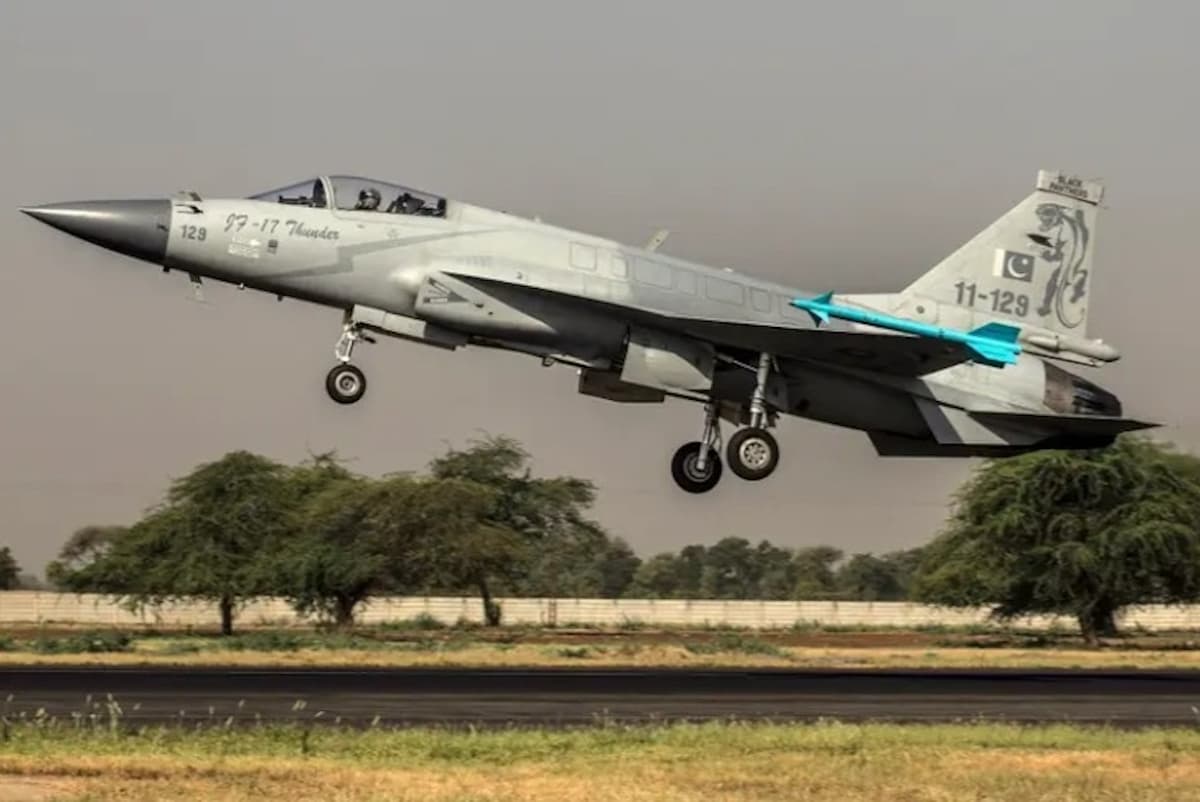
Bangladesh’s JF-17 Fighter Bid Rattles India’s Eastern Flank
Why It Matters
The deal signals a strategic pivot that could force India to divert resources to its eastern frontier and give China and Pakistan greater leverage in South‑Asia security dynamics.
Key Takeaways
- •Bangladesh received a JF‑17 simulator, indicating imminent fighter acquisition
- •New jets would narrow Bangladesh‑India air capability gap
- •Deal deepens Bangladesh’s reliance on Chinese‑Pakistani defense supply
- •India may reinforce the Siliguri Corridor to counter the shift
- •Bangladesh’s pivot could reshape power balance in South Asia
Pulse Analysis
Bangladesh’s air force, now limited to 44 fighters—mostly outdated F‑7s and a handful of MiG‑29s—faces a capability shortfall that the JF‑17 Thunder Block III can address. The Chinese‑Pakistani jet offers beyond‑visual‑range missiles, modern avionics and a lower acquisition cost, making it an attractive upgrade for Dhaka. The recent transfer of a full‑flight simulator from Pakistan is a concrete step toward a purchase, suggesting that Bangladesh aims to modernize its fleet before the aircraft become untenable to maintain.
For New Delhi, the prospect of a better‑armed neighbour on its eastern flank raises operational concerns. While India’s air force still fields over 500 combat aircraft across 29 squadrons, the JF‑17 would enable Bangladesh to patrol its airspace more effectively and potentially contest Indian movements near the 60‑kilometre Siliguri Corridor. That narrow land bridge links India’s mainland to its northeastern states, and any perceived threat could trigger a redeployment of Indian air and ground assets, stretching its defense posture in an already contested region.
Beyond the tactical calculus, the transaction underscores a broader geopolitical shift. Bangladesh’s growing dependence on Chinese weapons—from submarines to air‑defence systems—creates a supply chain that ties Dhaka to Beijing for spare parts, training and software updates. Coupled with renewed defense cooperation with Pakistan, the move nudges Bangladesh away from the India‑friendly policies of former Prime Minister Sheikh Hasina. This realignment not only amplifies China‑Pakistan influence in South Asia but also forces India to reconsider its diplomatic and military strategy toward a neighbour that is increasingly part of a rival security bloc.
Bangladesh’s JF-17 fighter bid rattles India’s eastern flank
Comments
Want to join the conversation?
Loading comments...