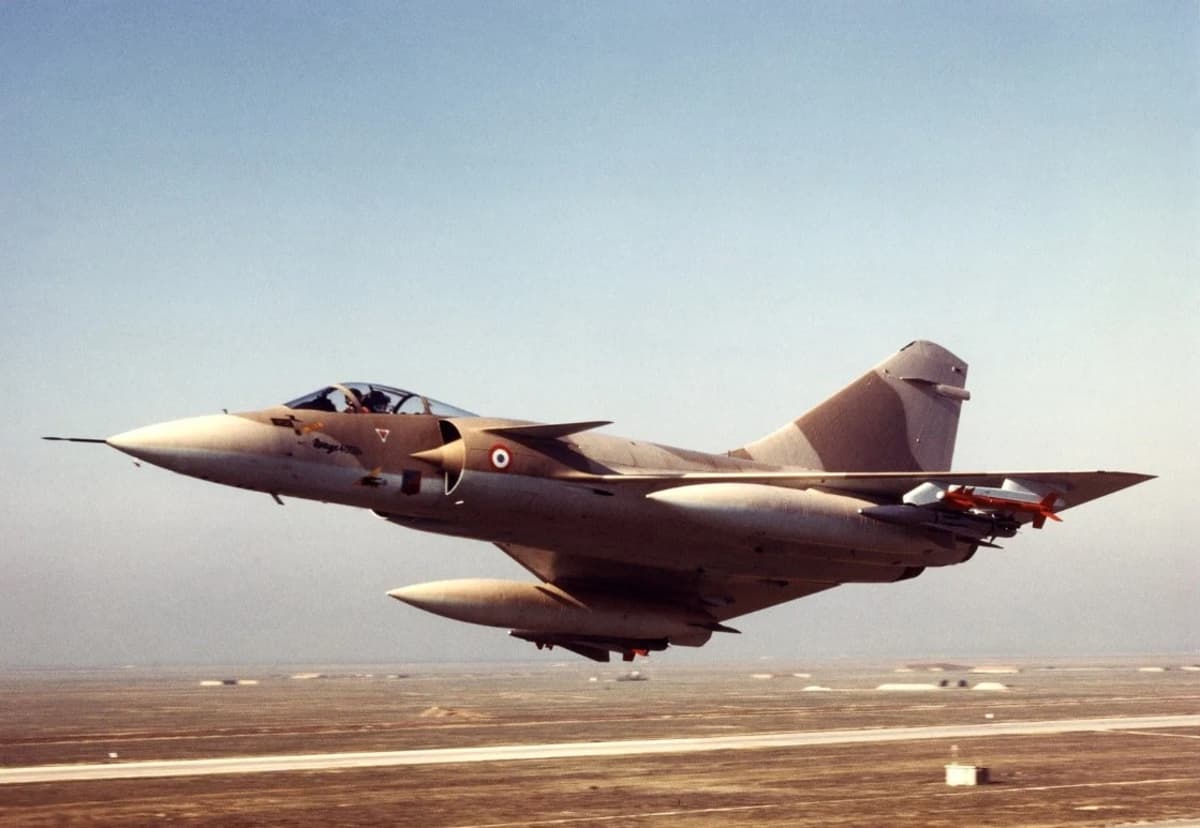
Before Rafale: The French Fighter Jet That India Wanted – But It Never Took Off. A Look at Dassault Mirage 4000
•February 20, 2026
0
Why It Matters
The Mirage‑4000’s failure illustrates how strategic procurement decisions and carrier requirements can shape a nation’s aerospace industry, while Rafale’s resurgence highlights the commercial payoff of state‑supported, versatile fighters.
Key Takeaways
- •Mirage‑4000 was a twin‑engine heavy fighter prototype
- •No French or foreign orders led to program cancellation
- •Size prevented carrier operations, a French priority
- •Rafale succeeded after government funded carrier‑capable design
- •India considered Mirage‑4000 before opting for Rafale
Pulse Analysis
The Mirage‑4000 project emerged in the late 1970s as Dassault’s ambitious attempt to bridge the gap between the single‑engine Mirage‑2000 and a next‑generation multirole platform. Leveraging twin Snecma M53 engines, carbon‑composite structures, and a high thrust‑to‑weight ratio, the prototype achieved Mach 2 and demonstrated impressive range and payload capabilities. However, the aircraft’s larger airframe conflicted with France’s strategic emphasis on carrier‑compatible fighters, a requirement that would later define the Rafale’s design philosophy.
French defence policy in the 1980s prioritized a single, versatile fighter that could serve both the Air Force and Navy, reducing the financial burden of parallel programmes. When the Mirage‑4000 failed to secure domestic orders and export interest waned—despite early talks with Saudi Arabia, Iran, and India—Dassault was forced to abandon the programme. The decision freed resources for the Rafale, which incorporated many of the Mirage‑4000’s technological advances while meeting carrier‑operability criteria, ultimately positioning it for export success.
Today, the Rafale’s resurgence, highlighted by a prospective 114‑jet purchase from India, underscores the commercial impact of aligning technical innovation with national procurement strategy. The Mirage‑4000 serves as a cautionary tale: advanced performance alone does not guarantee market adoption without political backing and clear operational requirements. For emerging markets evaluating fighter options, the lesson is clear—government support and platform versatility remain decisive factors in the competitive aerospace landscape.
Before Rafale: The French Fighter Jet That India Wanted – But It Never Took Off. A Look at Dassault Mirage 4000
0
Comments
Want to join the conversation?
Loading comments...