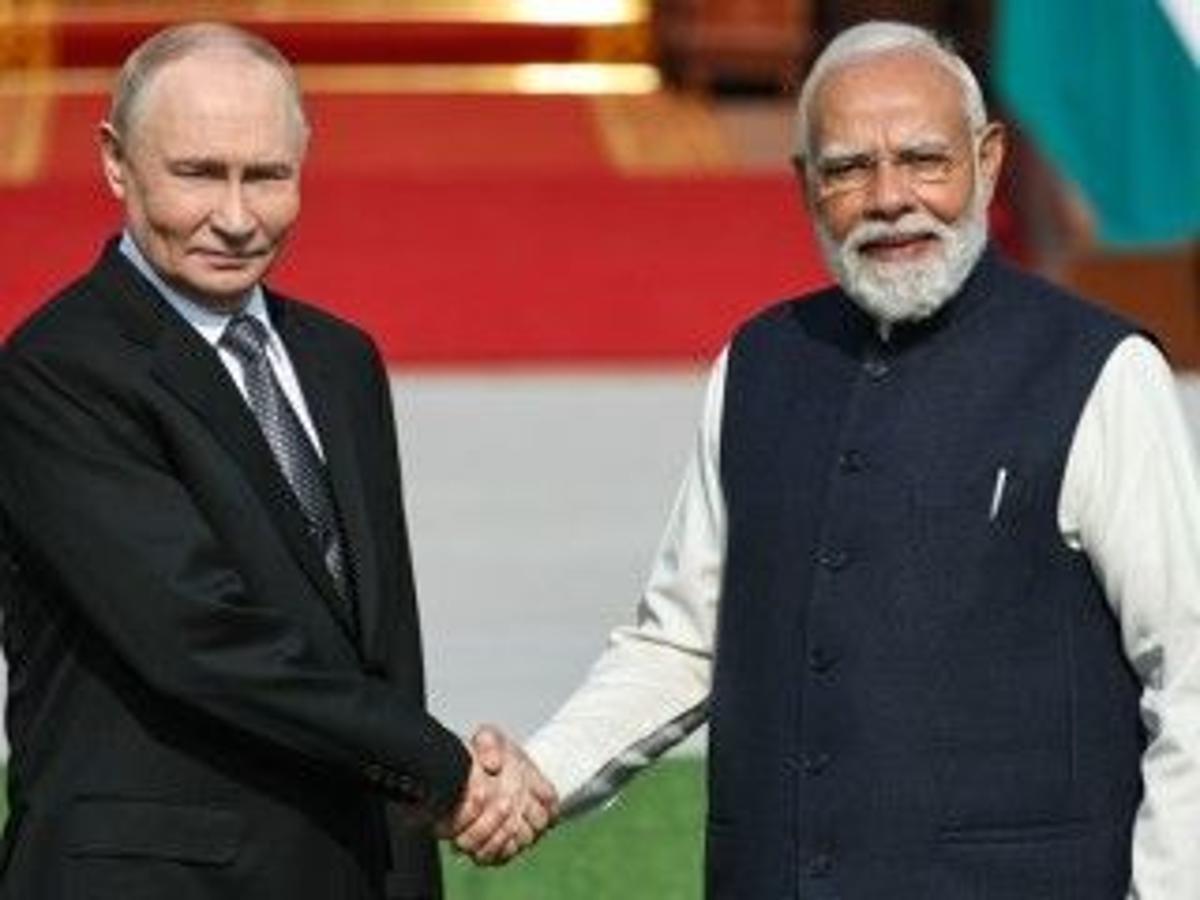
The claim highlights Russia’s reliance on a shrinking but strategically re‑oriented arms market to fund its war effort, underscoring the challenges for Western sanctions regimes.
Putin’s $15 billion arms‑export claim arrives at a time when independent metrics paint a far more fragmented picture. SIPRI estimates Russia’s share of global arms sales at 7.8%, but total volumes have slumped by nearly two‑thirds compared with pre‑war levels. The ambiguity of "foreign‑exchange earnings"—whether it reflects gross contracts, delivered hardware or net cash flow—allows Moscow to inflate the narrative and mask fiscal strain. Analysts therefore treat the figure as a political signal rather than a hard economic indicator.
Geographically, Russia’s export footprint has shifted toward a narrow set of customers. Over two‑thirds of shipments go to India, China and Kazakhstan, while Africa accounts for 12% of total volume, driven by contracts with Algeria, Egypt, Sudan and the Central African Republic. In Africa, arms deliveries are intertwined with resource extraction, as Russian forces secure gold, diamonds and uranium in exchange for military hardware. In Asia, Russia’s absence from major airshows contrasts with high‑value deals such as the $2 billion Pantsir‑S1 sale to Saudi Arabia and a prospective $6.5 billion Su‑35 package for Iran, indicating a pivot toward selective, high‑margin partnerships.
The evolving export landscape has direct implications for sanctions policy. While Western curbs have choked traditional markets, Russia’s ability to reroute sales through sanctioned vessels and secondary partners sustains its defense industry and, by extension, its war machine. Policymakers must therefore broaden targeting to include logistics networks, commodity‑linked financing and the shadow‑fleet that underpins these transactions. A holistic approach that couples arms‑export restrictions with measures against ancillary economic channels will be essential to erode the financial lifelines that keep Russia’s military operations afloat.
Karolina Kisiel · 10 February 2026, 15:13 · 8 min read
During the latest meeting of the Commission for Military Technical Cooperation with Foreign States, Putin claimed an estimated $15 billion in foreign‑exchange earnings from arms deliveries to more than 30 countries in 2025. He further stated that over 340 projects aimed at expanding military and technological cooperation with 14 countries are either planned or in the development stage for 2026‑2028.
These figures remain dubious given the lack of full transparency in Russia’s economic data, including the defence sector, after its full‑scale invasion of Ukraine in 2022. It is not unlikely that Russia purposefully inflates the profitability of its defence contracts to obscure the true state of its economy and sow uncertainty among its adversaries.
Moreover, the term “foreign‑exchange earnings” is vague: it does not specify which transactions are included, whether the value is gross or net, or whether it refers to delivered goods or merely contracted ones. This ambiguity leaves substantial room for interpretation.
SIPRI’s latest report on international arms transfers found that between 2020 and 2024 Russia ranked among the top five exporters, with a 7.8 % share of global arms exports. At the same time, Russian arms exports fell 64 % compared with the 2015‑2019 levels.
Other reports suggest that by the end of 2024 Russia’s arms transfers had decreased by 92 % relative to 2021. This decline can be explained by resource over‑exertion and the fact that much of the military equipment has been actively used since the start of the invasion.
In 2020‑2024, Russia’s major arms deliveries went to:
74 % – Asia and Oceania
12 % – Africa
7.4 % – Europe (Armenia, Belarus, Serbia)
6.4 % – Middle East
Two‑thirds of all Russian arms transfers went to three states:
38 % – India
17 % – China
11 % – Kazakhstan
During the meeting, Putin explicitly highlighted continued cooperation with African and Asian countries.
African countries receiving the largest volumes of Russian arms include Algeria, Egypt, Libya, Mali, Sudan, Ethiopia, Angola, Rwanda, the Democratic Republic of Congo, and Nigeria. According to the Associated Press, Russia uses cargo ships to deliver tanks, armoured vehicles, artillery, and other equipment (e.g., radio‑jamming gear) to West Africa. Two such vessels, Baltic Leader and Patria—both sanctioned by Western states—have reportedly docked in Conakry, Guinea.
The continued military presence in Africa, through the African Corps (formerly the Wagner Group), gives Russia access to strategic resources. GIS reports that Russia maintains:
1,000‑1,500 military personnel in Sudan
1,200‑1,800 in the Central African Republic
> 1,000 in Mali
These forces enable access to gold (Sudan, Mali), diamonds (CAR), and uranium (CAR), which can be used for economic or military purposes.
The Stockholm School of Economics argues that, despite ongoing Russia‑Africa trade, its strategic benefits remain limited, with outreach concentrated in a few countries rather than reflecting a broader partnership. Nonetheless, trade numbers may grow in 2026 as Russia’s footprint fades in some Asian markets.
Beyond Africa, Putin pointed to arms transfers to Asia, but the depth and strategic significance vary considerably by country.
Russia has been absent from Asia’s biggest airshows for two consecutive years, including the Singapore Airshow.
In contrast, Russia showcased its new MLRS, the Sarma, at a Saudi Arabian weapons show and sold the Pantsir‑S1 air‑defence system to Saudi Arabia for $2 billion.
Russia continues cooperation with China, its second‑biggest partner in arms transfers. A leaked document shows the Russian defence industry is still producing components for Chinese Su‑27 and Su‑30 fighters at a high cost, with component prices rising by nearly 200 % to avoid straining relations with Beijing.
Russia signed a five‑year military‑cooperation agreement with Myanmar, though details remain scarce.
India remains Russia’s strongest foothold in Asia. CSIS notes that India is one of Russia’s biggest arms and defence trading partners. In late 2025 Indian defence executives held meetings in Moscow to discuss potential joint ventures. However, India’s caution—driven by concerns over Western technology access and secondary sanctions—has limited its purchases. Indian imports of Russian arms fell from 1,091 (2020) to 463 (2024) in trade‑indicator values (millions).
Iran may become another significant destination. Leaked documents from Rostec indicate a $6.5 billion deal for 47 Su‑35 fighter jets, which would represent almost half of Putin’s claimed arms‑export revenue if completed.
The statement also recognised continued cooperation with the Caucasus and Central Asia, especially Kazakhstan, Uzbekistan, and Armenia, which accounted for 93.4 %, 68.2 %, and 42.4 % of Russian arms importance between 2020 and 2023, respectively. Kazakhstan ranks among the world’s top 40 arms importers.
The examples above illustrate that Russian arms‑transfer cooperation is focused on specific geographic points. Saudi Arabia, Iran, India, and Kazakhstan emerge as the most consequential hubs.
Given the data uncertainties, restraint in making definitive numerical estimates is warranted, but the threat posed by Russia’s ongoing military and economic cooperation remains clear. Even as Russian arms exports fade in some regions, they are expanding in others, sustaining the Russian war machine.
These entanglements underscore the need for Western sanctions to target not only Russia itself but also the secondary channels it uses to circumvent restrictions. The Indian case shows that states with significant exposure to Western markets may recalibrate their engagement with Russia, potentially limiting Moscow’s capacity to offset sanctions.
Finally, arms transfers are not the only way Russia keeps its economy afloat. “Shadow‑fleet” operations, Arctic activities, and ongoing energy exports collectively sustain Russia’s war effort and must be addressed holistically. Assessing Russia’s military posture must go hand‑in‑hand with monitoring its economic pursuits that enable its military power.
Comments
Want to join the conversation?
Loading comments...