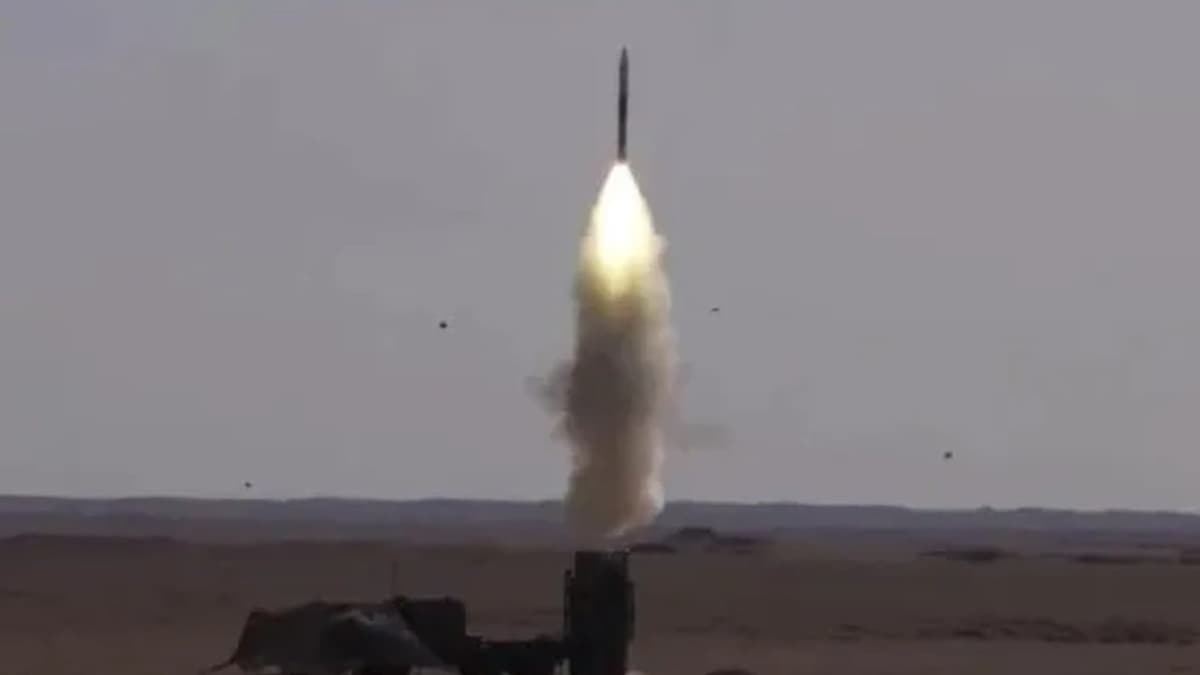
Beijing Deploys New Missiles Matching Patriots Opposite Taiwan
Why It Matters
Deploying the HQ‑16F gives the PLA a modern, long‑range air‑defence layer that narrows the technology gap with U.S. systems and strengthens China’s ability to contest Taiwan’s airspace. The move signals heightened military readiness in the Taiwan Strait, affecting regional security calculations.
Key Takeaways
- •HQ‑16F reaches 160 km, comparable to Patriot PAC‑2
- •Thrust‑vectoring design enables high‑maneuverability without wings
- •Directed‑fragmentation warhead differs from Patriot’s hit‑to‑kill
- •73rd Group Army, opposite Taiwan, first to field system
- •Active electronically scanned array radar tracks 12 target batches
Pulse Analysis
China’s latest air‑defence rollout reflects a broader push to modernise the People’s Liberation Army’s missile portfolio. The HQ‑16F, a derivative of the Hong Qi‑16 family, blends a wing‑less airframe with thrust‑vectoring motors, allowing rapid course corrections and reduced drag. Its 160 km reach and 27 km ceiling place it squarely in the medium‑range bracket, filling a capability gap between short‑range point‑defence missiles and long‑range systems. By integrating an active electronically scanned array radar that can monitor over 250 km and engage multiple targets simultaneously, the system offers a sophisticated, network‑centric shield for the Eastern Theatre Command.
Strategically, the HQ‑16F narrows the performance gap with the U.S. Patriot PAC‑2 and PAC‑3. While the Patriot relies on kinetic hit‑to‑kill technology, Beijing’s missile employs a directed‑fragmentation warhead that concentrates blast energy toward the target, potentially improving effectiveness against low‑observable or maneuvering threats. The successful live‑fire test by the 73rd Group Army—positioned directly across the Taiwan Strait—demonstrates Beijing’s intent to field a credible deterrent capable of countering advanced aircraft, tactical ballistic missiles, and supersonic cruise missiles that could be employed in a cross‑strait conflict.
The deployment also reshapes the regional security calculus. Neighboring states and U.S. forces must now account for a Chinese air‑defence layer that can protect both land and naval assets, given the missile’s compatibility with vertical launch systems. Export‑oriented variants like the HQ‑16FE hint at potential sales to allied nations, extending China’s influence in the global missile market. As the PLA continues to integrate such systems across its theatre commands, analysts will watch for further enhancements in sensor fusion and networked command‑and‑control that could amplify the HQ‑16F’s battlefield impact.
Beijing deploys new missiles matching Patriots opposite Taiwan
Comments
Want to join the conversation?
Loading comments...