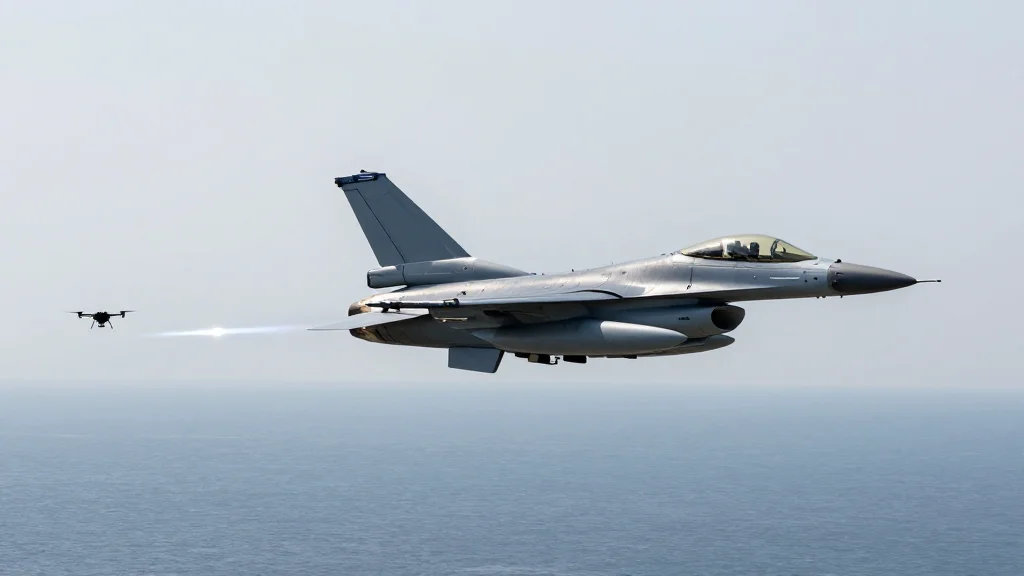
Belgium Tests Thales FZ275 Laser‑Guided Rockets on F‑16 in Counter‑Drone Trial

Companies Mentioned

Why It Matters
The test demonstrates that European nations can develop and field cost‑effective C‑UAS weapons without relying solely on U.S. technology, strengthening NATO’s collective defense posture. By leveraging existing F‑16 platforms, Belgium can quickly field a deterrent against hostile drones, protecting critical infrastructure and forward bases. The trial also signals a broader shift toward modular, multi‑role munitions that can be adapted for both kinetic and non‑kinetic missions, a trend likely to shape procurement strategies across the alliance. If the FZ275 proves operationally viable, it could spur a new market segment for laser‑guided rockets tailored to drone interception, prompting other European defense firms to accelerate similar programs. This would diversify the supply chain, reduce dependence on single‑source imports, and potentially lower costs for NATO members facing budget constraints while confronting an increasingly sophisticated unmanned threat landscape.
Key Takeaways
- •Belgian Air Force fired inert Thales FZ275 laser‑guided rockets from an F‑16 at a medium‑size drone off Lombardsijde.
- •The test used LAU‑131A/A pods; each pod carried a single 70 mm rocket, providing a 42‑round capacity per aircraft.
- •Belgium operates 43‑44 F‑16AM/BM fighters and has ordered 34 F‑35A jets, with 11 delivered and 11 more planned.
- •The FZ275 is being evaluated alongside BAE Systems’ AGR‑20F FALCO, indicating a multi‑system European C‑UAS approach.
- •Successful live‑fire could accelerate NATO adoption of low‑cost, indigenously produced drone‑killing munitions.
Pulse Analysis
Europe’s C‑UAS market has been in a catch‑up phase, largely importing American solutions that are expensive and sometimes over‑engineered for the threat spectrum faced by NATO’s smaller air forces. Belgium’s FZ275 trial flips that script by repurposing a legacy air‑to‑ground rocket into a precision drone interceptor, a move that could redefine cost‑benefit calculations for member states. The key advantage lies in leveraging existing airframes—F‑16s that will remain in service for another decade—thereby extending their relevance without the need for costly platform upgrades.
Historically, NATO’s drone‑defeat strategy has hinged on high‑end missiles and electronic warfare suites, which, while effective, strain defense budgets. The FZ275’s modest size and inert warhead configuration for testing suggest a scalable approach: nations can field a large number of rockets at a fraction of the price of a missile, creating a dense defensive envelope. This could be especially valuable in the Baltic and Black Sea regions, where low‑observable, swarming drones are increasingly used to overwhelm air defenses.
Looking forward, the trial’s success may catalyze a wave of similar programs across Europe, prompting standardization of launch interfaces and data links to ensure interoperability within NATO. If the FZ275 moves from inert to live‑fire status, procurement contracts could open up for other allies, potentially spawning a competitive market that drives prices down further. The broader implication is a shift toward a layered C‑UAS architecture where high‑cost missiles address high‑value threats, while inexpensive laser‑guided rockets handle the bulk of medium‑size drone incursions, delivering a more resilient and affordable defense posture for the alliance.
Belgium Tests Thales FZ275 Laser‑Guided Rockets on F‑16 in Counter‑Drone Trial
Comments
Want to join the conversation?
Loading comments...