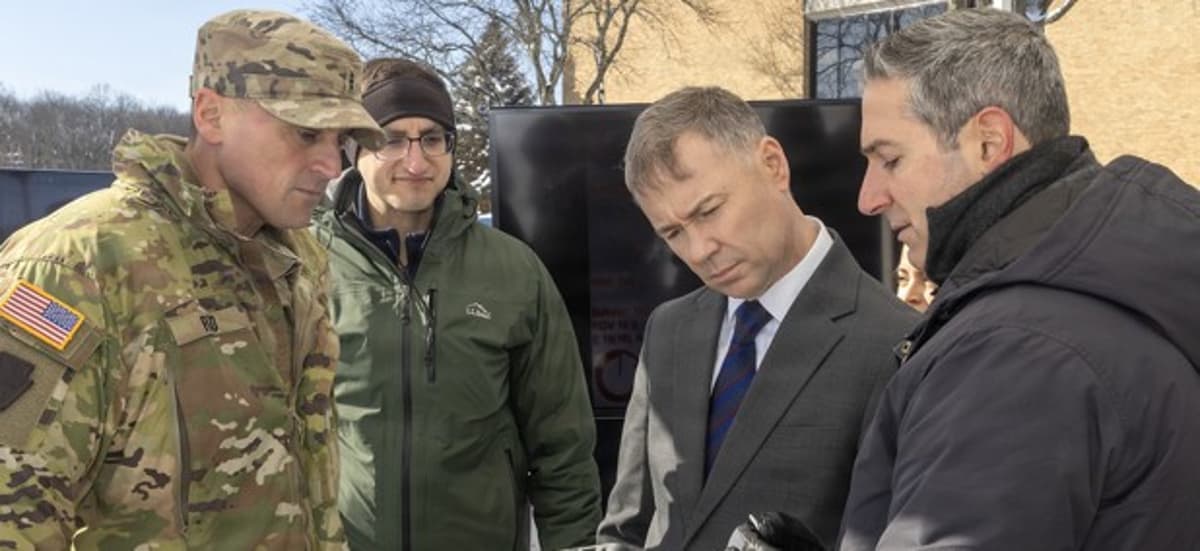
‘Best Drone’ Innovation Winner Developing Enemy Drone Recovery System with the Army Research Lab
Why It Matters
Project RED turns captured enemy drones into intelligence assets, enhancing battlefield situational awareness while reducing adversary reuse. The initiative signals a shift toward autonomous, data‑centric counter‑UAS solutions and encourages broader innovation across Army units.
Key Takeaways
- •Project RED uses AI to locate and retrieve enemy drones
- •Army Research Lab partnership adds autonomy and flight stability
- •Competition win highlights soldier‑driven innovation in unmanned systems
- •Suggested sub‑categories could level the playing field for smaller units
- •Calls for more drone training and compact ground stations
Pulse Analysis
The U.S. Army’s inaugural Best Drone Warfighter competition, held in February, put a spotlight on the rapid evolution of small‑unmanned aerial systems (sUAS) in combat. Among the entries, a Pennsylvania Army National Guard team captured the innovation award with Project RED – a Recovery Exploitation Drone designed to locate downed enemy drones, seize them with a robotic arm, and return them for data extraction. This capability addresses a growing intelligence gap, turning adversary hardware into a source of actionable information while denying opponents the chance to reuse their assets.
Project RED’s architecture blends computer‑vision AI with autonomous flight controls, allowing the system to identify hostile drones in cluttered environments and execute a precise pick‑up maneuver. The Army Research Laboratory (ARL) has entered a one‑year R&D agreement to refine the platform’s stability, enhance autonomous decision‑making, and harden the system against electronic interference. By integrating AI‑driven target recognition with a mechanical manipulator, the prototype demonstrates a shift from purely kinetic counter‑UAS solutions toward a more nuanced, data‑centric approach.
The competition’s broader impact extends to training, procurement, and industry collaboration. Soldiers like Sgt. Javon Purchner advocated for dedicated FPV‑drone training courses, while the winning team’s suggestions for sub‑category awards could democratize innovation across units with varying budgets. Industry partners stand to benefit from a clear demand for compact ground stations and portable transport solutions, as highlighted by the participants. As the Army plans a second Best Drone Warfighter event with nighttime and electronic‑warfare scenarios, Project RED sets a benchmark for future autonomous recovery systems.
‘Best drone’ innovation winner developing enemy drone recovery system with the Army Research Lab
Comments
Want to join the conversation?
Loading comments...