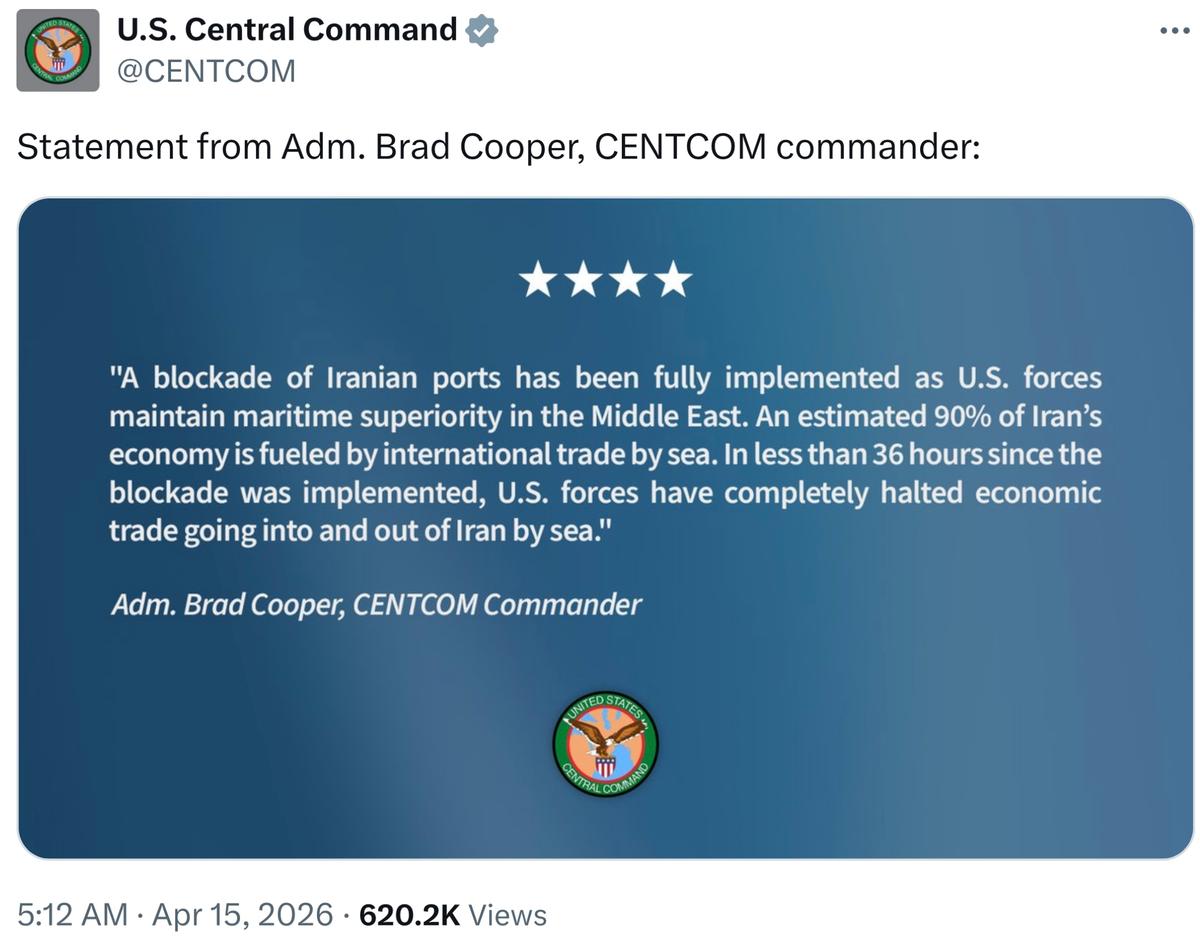
Blockade of Iranian Ports Fully Implemented – US CENTCOM Commander

Key Takeaways
- •Blockade halts 90% of Iran’s maritime trade in 36 hours
- •U.S. destroyers and USS Tripoli enforce impartial restrictions
- •F‑35B aboard Tripoli signals high‑end air support capability
- •Potential ripple effects on oil markets and regional security
Pulse Analysis
The United States has escalated its maritime pressure on Tehran by instituting a comprehensive blockade of Iranian ports, a move reminiscent of Cold‑War era containment strategies but executed with modern precision assets. Guided‑missile destroyers, renowned for their anti‑surface and anti‑air capabilities, now patrol the Strait of Hormuz alongside the amphibious assault ship USS Tripoli, which projects power with an embarked F‑35B stealth fighter. This layered approach underscores a shift from purely diplomatic sanctions to kinetic enforcement, signaling to both Iran and its allies that the U.S. can sustain a prolonged sea‑control posture.
Economically, the blockade strikes at the heart of Iran’s external revenue streams. Approximately 90 % of the nation’s trade moves by sea, encompassing oil exports, petrochemical imports, and essential consumer goods. Cutting off this flow within 36 hours compresses the timeline for any market adjustment, likely prompting a sharp uptick in regional oil prices and forcing Tehran to seek alternative overland routes that are costlier and less secure. The immediate impact may also reverberate through global supply chains, especially for countries reliant on Iranian crude, prompting a reassessment of energy procurement strategies.
Geopolitically, the enforcement of an impartial blockade raises the stakes for regional actors. While the U.S. frames the action as neutral—targeting any vessel entering or leaving Iranian waters—the presence of high‑value assets like the F‑35B could invite counter‑measures from Iran’s missile forces or proxy groups operating in the Gulf. Allies such as Saudi Arabia and the United Arab Emirates may welcome the pressure on Tehran, yet they also risk being drawn into a broader confrontation. The blockade thus serves as both a lever of coercion and a flashpoint, compelling policymakers worldwide to weigh the benefits of curbing Iran’s revenue against the dangers of an expanded maritime conflict.
Blockade of Iranian Ports Fully Implemented – US CENTCOM Commander
Comments
Want to join the conversation?