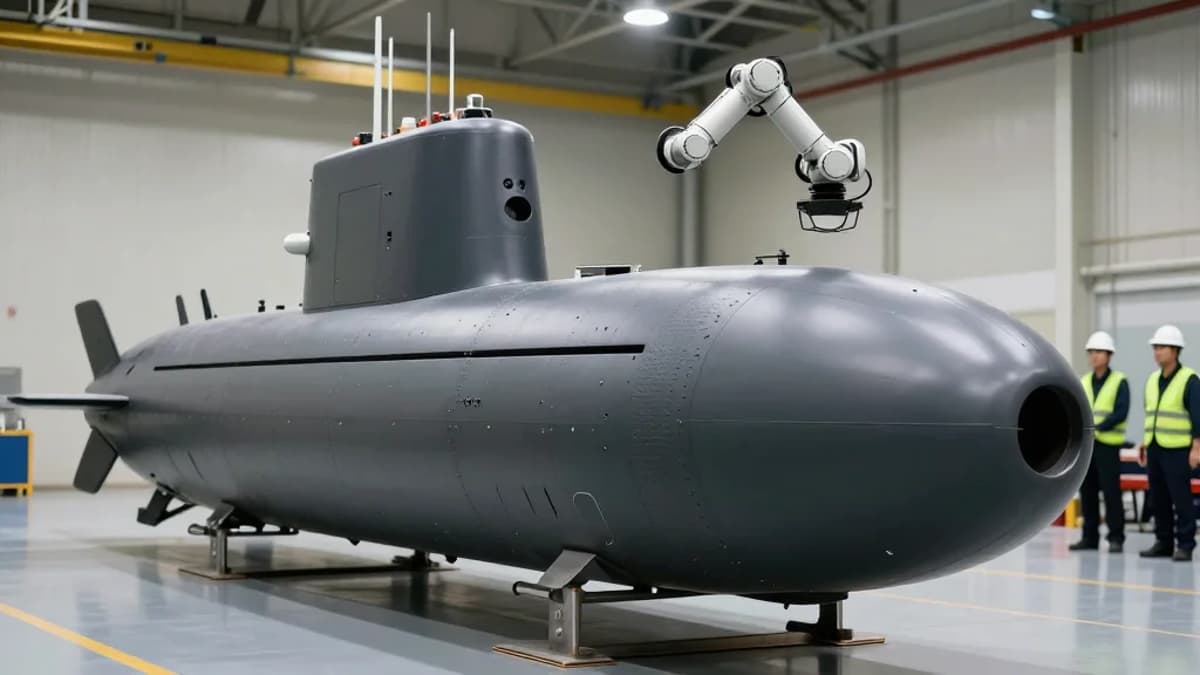
Boeing Christens Second Extra-Large Orca Submarine Drone
•March 7, 2026
0
Companies Mentioned
Why It Matters
Orca’s unprecedented size and autonomy give the U.S. Navy a cost‑effective, long‑range undersea capability, reshaping maritime surveillance and mine‑countermeasure strategies. Persistent delivery delays risk eroding confidence in defense‑industry timelines and could impact future funding.
Key Takeaways
- •Boeing delivered Orca XLE2, second extra‑large UUV.
- •85‑ton, 85‑ft vessel carries 8‑ton payload, 6,500 nm range.
- •Operates autonomously, launchable from pier without support ship.
- •Supports ISR, mine warfare, seabed operations for U.S. Navy.
- •Program delayed beyond 2019 contract; future delivery timeline unclear.
Pulse Analysis
The Orca XLE2 represents a watershed in unmanned undersea technology, marrying the endurance of a traditional submarine with the flexibility of an autonomous platform. Its hybrid electric propulsion enables 6,500 nautical miles of range, while the 33‑foot mission bay accommodates diverse payloads—from high‑resolution sonar suites to mine‑neutralization systems. By eliminating the need for a manned mothership, the Navy can deploy these assets from existing ports, reducing logistical footprints and operational costs, a critical advantage as maritime domains become increasingly contested.
Strategically, the Orca family expands the U.S. Navy’s ability to conduct persistent intelligence, surveillance, and reconnaissance (ISR) across vast oceanic expanses. The platform’s size permits integration of advanced sensor arrays and communications packages that smaller UUVs cannot host, enhancing seabed mapping and threat detection capabilities. In mine‑warfare scenarios, the vehicle’s payload capacity allows carriage of both detection and neutralization modules, offering a rapid, low‑risk response to emerging threats in chokepoints and littoral zones.
Despite its technical promise, the Orca program has been hampered by delivery delays that diverge sharply from the original 2019 contract, which called for five vessels by the end of 2022. The staggered rollout—spanning 2023 to 2026—has raised concerns among Pentagon officials about schedule reliability and cost overruns. Continued delays could jeopardize future procurement decisions and undermine confidence in Boeing’s ability to meet defense timelines, underscoring the importance of aligning ambitious engineering goals with realistic production schedules.
Boeing Christens Second Extra-Large Orca Submarine Drone
0
Comments
Want to join the conversation?
Loading comments...