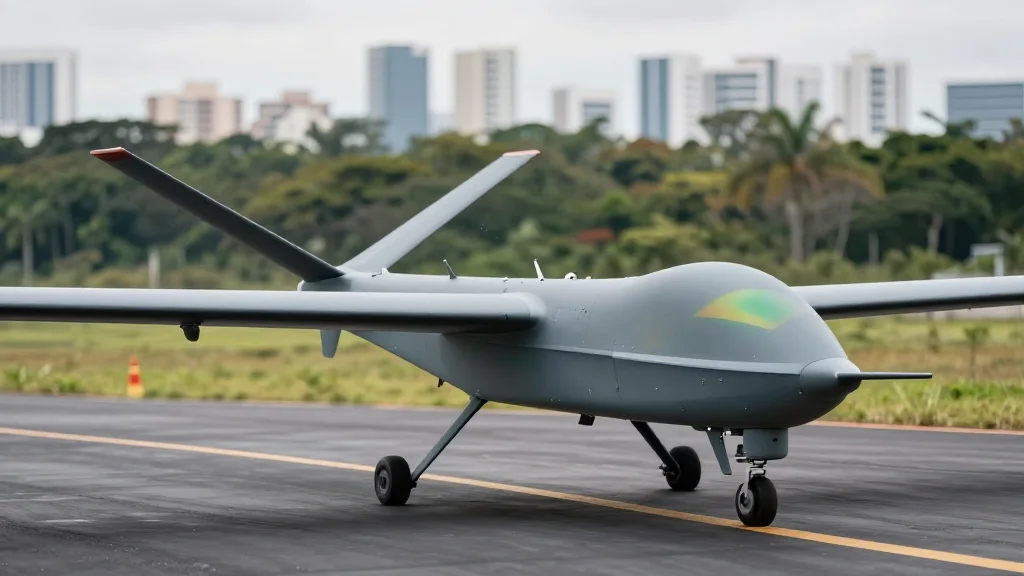
Brazil Air Focus: Army Set to Dominate Country’s $631.67 Million UAV Market From 2028
Why It Matters
The Army’s outsized budget reshapes Brazil’s defense procurement landscape, creating a hotspot for aerospace firms, while regional rivals’ relative commitments could spur a South American drone race.
Key Takeaways
- •Brazil's UAV market valued at $631.7 million through 2028
- •Army projected to spend $279.2 million, outpacing Navy's $227.5 million
- •84% of procurement budget ($533 million) remains unawarded
- •Unassigned funds create lucrative opportunities for drone manufacturers
- •Argentina's UAV spend represents 4.16% of its 2024 defense budget
Pulse Analysis
Brazil’s UAV sector is entering a rapid growth phase, driven by a government push to modernize its armed forces and secure airspace. At $631.67 million, the market eclipses all other South American nations, reflecting both strategic ambition and a burgeoning domestic industrial base. The size of the market also underscores Brazil’s role as a potential hub for technology transfer and joint ventures, attracting global players eager to tap into a region traditionally dominated by legacy defense suppliers.
The Brazilian Army’s forecasted $279.15 million spend from 2026 positions it as the primary driver of procurement, overtaking the Navy despite the latter’s earlier adoption of UAVs. This shift signals a doctrinal emphasis on land‑based intelligence, surveillance, and reconnaissance capabilities. With $533 million of the budget still unawarded, manufacturers have a clear runway to compete for contracts ranging from medium‑altitude long‑endurance platforms to support services. Companies that can demonstrate cost‑effective, locally adaptable solutions stand to win a substantial share of the upcoming awards.
Regionally, Argentina’s UAV investment, while smaller in absolute terms, accounts for 4.16% of its 2024 defense budget—higher than Brazil’s relative commitment. This contrast suggests a competitive dynamic where neighboring forces may seek complementary capabilities or even collaborative procurement to achieve economies of scale. As both countries expand their drone fleets, the South American market could evolve into a testing ground for next‑generation autonomous systems, influencing broader global supply chains and prompting policy discussions on export controls and airspace regulation.
Brazil air focus: Army set to dominate country’s $631.67 million UAV market from 2028
Comments
Want to join the conversation?
Loading comments...