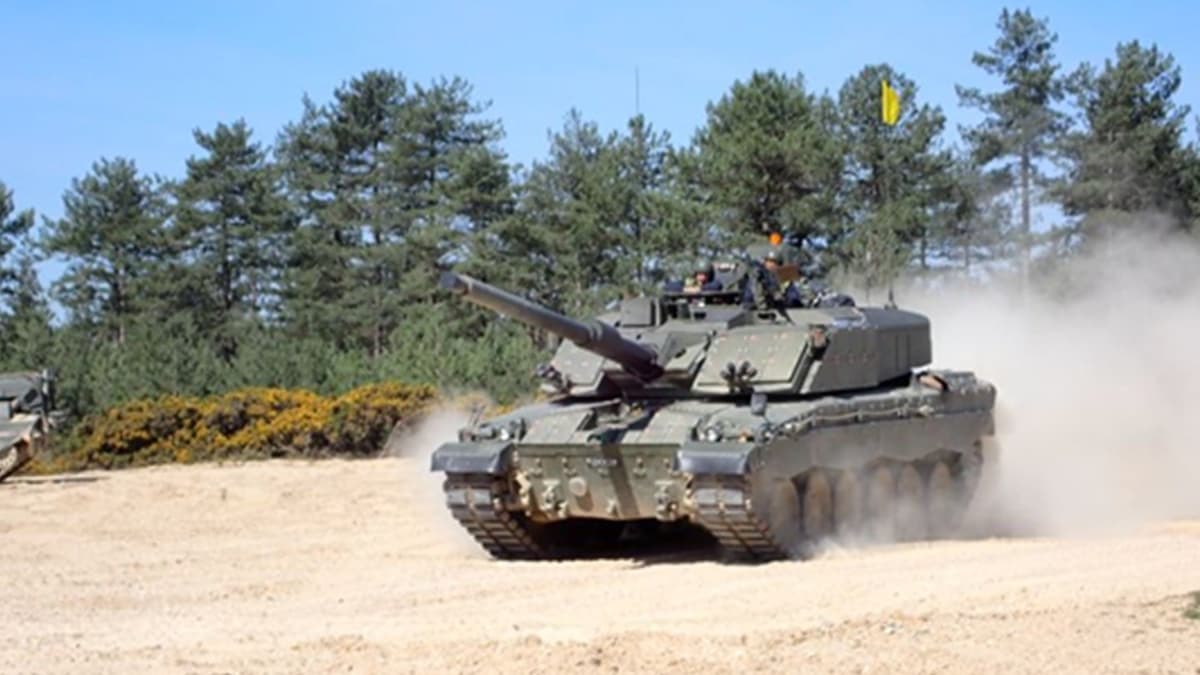
British Army’s Challenger 3 Continues Pre-Trials Testing
Companies Mentioned

Why It Matters
Challenger 3’s progress signals a major capability boost for the UK’s armored forces, but fleet shortfalls could delay the Army’s modernization and affect readiness.
Key Takeaways
- •BFM serials provide early performance data for Challenger 3.
- •New turret adds Rheinmetall L55A1 120 mm smoothbore gun.
- •Fleet size uncertain; 148 tanks need operational Challenger 2 hulls.
- •Current Challenger 2 availability estimated around 150 vehicles.
- •Initial operational capability targeted for 2027, may slip later.
Pulse Analysis
The use of Battlefield Mission (BFM) serials marks a pragmatic step in the Challenger 3 development cycle. By assigning unique identifiers to each test vehicle, RBSL can systematically capture data on mobility, firepower and survivability, feeding insights back into the engineering baseline before formal trials commence. This iterative approach reduces risk and accelerates the refinement of the tank’s integrated systems, positioning the platform to meet contemporary battlefield demands.
Technically, Challenger 3 represents a substantial leap over its predecessor. The replacement turret houses Rheinmetall’s L55A1 120 mm smoothbore gun, delivering greater kinetic energy and compatibility with NATO ammunition standards. Complementary upgrades include advanced thermal imaging, laser range‑finders, upgraded armour modules and an active protection system capable of intercepting incoming threats. Together, these enhancements aim to restore the British Army’s edge in high‑intensity armored engagements and support expeditionary operations.
Nevertheless, the programme faces a logistical bottleneck: each Challenger 3 requires a functional Challenger 2 hull as a host. Official figures suggest roughly 150 Challenger 2s remain operational, casting doubt on the feasibility of fielding the intended 148‑tank fleet. The Army’s shift to a Type 44 regiment structure, allocating 44 tanks per unit, further tightens the numbers. Coupled with supply‑chain constraints, these factors could push the projected 2027 initial operational capability into the late 2020s, underscoring the importance of aligning acquisition timelines with realistic asset availability.
British Army’s Challenger 3 continues pre-trials testing
Comments
Want to join the conversation?
Loading comments...